
Disclosure: As an Amazon Associate, Bookish Wisdom earns from qualifying purchases. This doesn't change our picks or your price.
TL;DR: Every ten years, the secretive Alexandrian Society chooses six of the world's most talented young magicians to compete for a place among its members, who guard the lost knowledge of ancient libraries. This time, six rivals are brought together. They will live and study together for a year, but only five will be initiated, and the price of failure may be deadly.
Table of Contents
The Atlas Six at a Glance
| Author | Olivie Blake |
| First published | 2020 |
| Type | Fantasy |
| Best for | readers who want dark academia with magic, rivalries and moral gray characters |
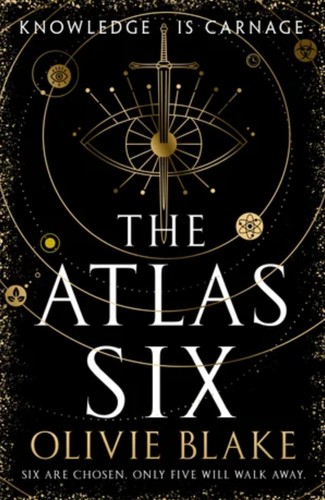
The Atlas Six is the first book in Olivie Blake's Atlas trilogy. It was self-published in 2020 and went viral on BookTok before being republished in 2022. Below you will find a part-by-part summary, five key takeaways, ideas worth remembering and a note on who will enjoy it.
Content note: Includes violence, death, manipulation and sexual content.
Main Characters
- Libby Rhodes: A talented, anxious physicist.
- Nico de Varona: Libby's rival, a confident physicist.
- Parisa Kamali: A seductive telepath.
- Callum Nova: A manipulative empath.
- Tristan Caine: A man who can see through illusions.
What Happens, Part by Part (Contains Spoilers)
The invitation
Atlas Blakely, the Society's Caretaker, recruits six medeians, or powerful magic users. Libby and Nico control physical forces but cannot stand each other. Reina Mori, a naturalist, makes plants grow. Parisa reads minds. Callum can control emotions. Tristan can see the truth beneath illusions. Each one accepts the offer for their own reasons.
The library
The six live in a manor that holds the Society's library, with knowledge from the lost Library of Alexandria. They train, study and compete. They learn that only five will be initiated, and that one of them must be “eliminated.” At first, they assume this means expulsion, but they slowly realize it may mean death.
Alliances
The candidates form shifting alliances. Parisa and Callum test each other. Libby and Nico learn to work together, and their combined powers are extraordinary. Tristan, torn between loyalty and ambition, is drawn into the plans of a mysterious group seeking to destroy the Society.
Libby disappears
Libby suddenly vanishes. The others believe she is dead, but they are told that the Society's power requires the “elimination” to happen. Under pressure, they decide that Callum should be the one eliminated. Tristan is chosen to kill him, but he hesitates.
The twist
Tristan does not kill Callum, and the group is initiated with the elimination unfinished. Libby is revealed to be alive but trapped far away, and someone she thought she knew is behind it. The book ends with secrets exposed and alliances broken, leading into The Atlas Paradox.
5 Key Takeaways
- Knowledge is a form of power.
- Ambition can override morality.
- Rivals can become allies.
- Trust is dangerous in competition.
- Secret societies often hide dark truths.
Ideas Worth Remembering
These are paraphrased, not direct quotes:
- Talent alone does not make someone good.
- Choices made under pressure reveal character.
- Power comes with hidden costs.
Who Should Read The Atlas Six?
Read The Atlas Six if you enjoy dark academia, morally gray characters and complex relationships. It suits adults.
About Olivie Blake
Olivie Blake is the pen name of Alexene Farol Follmuth, an American writer. She self-published The Atlas Six before it became a viral success and was republished by Tor. Her other books include Alone with You in the Ether and One for My Enemy. Under her real name, she wrote the young adult novel My Mechanical Romance.
Questions to Think About After Reading
These prompts work for solo reading, a book club or a classroom discussion of The Atlas Six:
- Which character is the most morally complex?
- Why does Tristan fail to kill Callum?
- What does the Society truly want?
How to Use This Summary
Use this page as a quick reference before a book club meeting, an exam, or a decision about whether The Atlas Six is worth your time. The takeaways are written to stand on their own. If a point interests you, go back to the book for the author's full story, characters and style, which no short summary can replace.
A Note on Accuracy and Spoilers
This summary is based on the published text of The Atlas Six, not on any film, series or stage adaptation, which often change the story. Details are kept at the level of the main events so that nothing is invented. Editions differ slightly in length and wording, so page numbers and small details may vary between copies.
Should You Read the Book?
Yes, if you like character-driven fantasy. It is slow and talky, but full of intrigue.
Check price of The Atlas Six on Amazon
What to Read Next
- The Atlas Paradox by Olivie Blake: the second Atlas book
- Babel by R.F. Kuang: dark academia about magic and empire
- The Secret History by Donna Tartt: a classic dark academia story
Related: 15 Books Like The Atlas Six You’ll Love
Frequently Asked Questions
What is The Atlas Six about?
Six talented magicians compete to join a secret society that guards ancient knowledge.
Who wrote it?
Olivie Blake.
What is the Alexandrian Society?
A secret group that protects lost knowledge.
Who are the six?
Libby, Nico, Reina, Parisa, Callum and Tristan.
What is the elimination?
The removal of one candidate, possibly by death.
Is it a series?
Yes, the Atlas trilogy.
Was it self-published?
Yes, first in 2020.
What age is it for?
Adults.
How long is it?
About 380 pages.
Is it dark academia?
Yes.
What comes next?
The Atlas Paradox.
Is it action-packed?
No, it focuses on talk and relationships.
Is there a TV series?
An adaptation has been in development.
Is The Atlas Six worth reading?
It depends on what you want. The book is best for readers who want dark academia with magic, rivalries and moral gray characters. If that describes you, it is likely a good fit. If not, the titles under What to Read Next may suit you better.