
Disclosure: As an Amazon Associate, Bookish Wisdom earns from qualifying purchases. This doesn't change our picks or your price.
TL;DR: Before the 2008 financial crisis, a handful of outsiders saw that the US housing market was built on risky subprime mortgages. Michael Lewis tells the story of investors like Michael Burry and Steve Eisman, who bet against the market and profited when it collapsed, while major banks lost billions.
Table of Contents
The Big Short at a Glance
| Author | Michael Lewis |
| First published | 2010 |
| Type | Nonfiction |
| Best for | readers who want a gripping, funny explanation of the 2008 financial crisis |
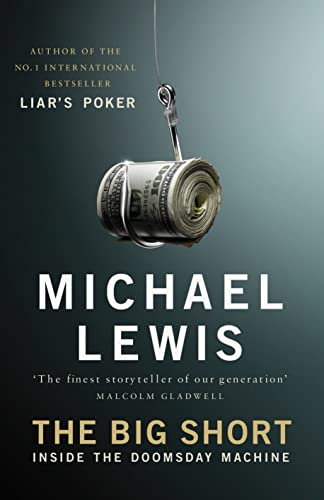
The Big Short: Inside the Doomsday Machine is a nonfiction book by Michael Lewis, published in 2010. It became a bestseller and an Oscar-winning 2015 film. Below you will find a part-by-part summary, five key takeaways, ideas worth remembering and a note on who will enjoy it.
Key Concepts
- Michael Burry: A one-eyed former doctor who ran Scion Capital.
- Steve Eisman: A blunt money manager at FrontPoint Partners.
- Greg Lippmann: A Deutsche Bank trader who pitched bets against mortgage bonds.
- Cornwall Capital: A tiny fund run by Charlie Ledley, Jamie Mai and Ben Hockett.
- Howie Hubler: A Morgan Stanley trader who lost billions.
The Main Ideas, Part by Part
The housing bubble
In the early 2000s, banks gave mortgages to people who could not afford them. These subprime loans were bundled into bonds, which were then repackaged into complex products called CDOs. Ratings agencies gave many of them top ratings.
Michael Burry
Burry, a former doctor with Asperger's syndrome, studied mortgage bonds in detail and concluded they would fail. He persuaded banks to sell him credit default swaps, a kind of insurance that paid out if the bonds failed. His investors were furious as he waited years.
Eisman and Lippmann
Greg Lippmann pitched the idea of betting against subprime mortgages. Steve Eisman, already angry about predatory lending, took the bet. His team visited Florida and Las Vegas and saw how bad the loans were.
Cornwall Capital
Charlie Ledley and Jamie Mai, starting with a small amount of money, found cheap bets against unlikely events. With the help of retired trader Ben Hockett, they bought swaps against mortgage bonds.
The collapse
In 2007 and 2008, the housing market collapsed. The bets paid off enormously. Major banks like Bear Stearns and Lehman Brothers failed or needed rescue, and Howie Hubler's trades cost Morgan Stanley about $9 billion. The investors who won felt little joy, angry at a system that rewarded recklessness.
5 Key Takeaways
- Complexity can hide risk.
- Incentives shape behavior.
- Ratings and experts can be wrong.
- Outsiders sometimes see what insiders miss.
- Financial crises hurt ordinary people most.
Ideas Worth Remembering
These are paraphrased, not direct quotes:
- Do your own research.
- When everyone believes the same thing, ask why.
- A system that rewards short-term profits invites disaster.
Who Should Read The Big Short?
Read The Big Short if you want to understand the 2008 crisis through vivid characters. It suits adults and older teens, even with little finance knowledge.
Questions to Think About After Reading
These prompts work for solo reading, a book club or a classroom discussion of The Big Short:
- Were the investors heroes or opportunists?
- Who was most to blame for the crisis?
- Could it happen again?
How to Use This Summary
Use this page as a quick reference before a book club meeting, an exam, or a decision about whether The Big Short is worth your time. The takeaways are written to stand on their own. If a point interests you, go back to the book for the author's full argument, examples and evidence, which no short summary can replace.
A Note on Accuracy and Spoilers
This summary is based on the published text of The Big Short, not on any film, series or stage adaptation, which often change the story. Details are kept at the level of the main arguments so that nothing is invented. Editions differ slightly in length and wording, so page numbers and small details may vary between copies.
Should You Read the Book?
Yes. Lewis explains complicated finance with humor and clear examples, and his characters are memorable. Some technical sections are still dense, and you may need to reread parts on CDOs, but the book is the most entertaining guide to the crisis available.
Check price of The Big Short on Amazon
What to Read Next
- Liar's Poker by Michael Lewis: Lewis's memoir of Wall Street in the 1980s
- Too Big to Fail by Andrew Ross Sorkin: the crisis from inside the banks
- Flash Boys by Michael Lewis: high-frequency trading
Related: 15 Books Like The Big Short You’ll Love
Frequently Asked Questions
What is The Big Short about?
Investors who bet against the US housing market before the 2008 crash.
Who is Michael Burry?
A former doctor and investor who predicted the collapse.
What is a credit default swap?
A contract that pays out if a bond defaults, like insurance.
What is a CDO?
A collateralized debt obligation, a bundle of bonds repackaged and sold.
Is there a film?
Yes, the 2015 film starring Christian Bale, Steve Carell and Brad Pitt.
Is the book accurate?
Yes, it is based on extensive interviews, though names in the film were changed.
How long is it?
About 270 to 300 pages.
Do I need finance knowledge?
No. Lewis explains terms clearly.
Who are the main ideas in The Big Short?
The key concepts are Michael Burry, Steve Eisman, Greg Lippmann, Cornwall Capital and Howie Hubler. Michael Burry: A one-eyed former doctor who ran Scion Capital. Steve Eisman: A blunt money manager at FrontPoint Partners. Greg Lippmann: A Deutsche Bank trader who pitched bets against mortgage bonds.
Is The Big Short worth reading?
It depends on what you want. The book is best for readers who want a gripping, funny explanation of the 2008 financial crisis. If that describes you, it is likely a good fit. If not, the titles under What to Read Next may suit you better.