
Disclosure: As an Amazon Associate, Bookish Wisdom earns from qualifying purchases. This doesn't change our picks or your price.
TL;DR: Homer Wells grows up in an orphanage in St. Cloud's, Maine, where the kind, ether-addicted Dr. Wilbur Larch delivers babies and secretly performs safe abortions. Larch trains Homer as a doctor, but Homer refuses to perform abortions. He leaves to work in an apple orchard and falls in love, before returning to take Larch's place.
Table of Contents
The Cider House Rules at a Glance
| Author | John Irving |
| First published | 1985 |
| Type | Novel |
| Best for | readers who want a big, moving novel about choice and belonging |
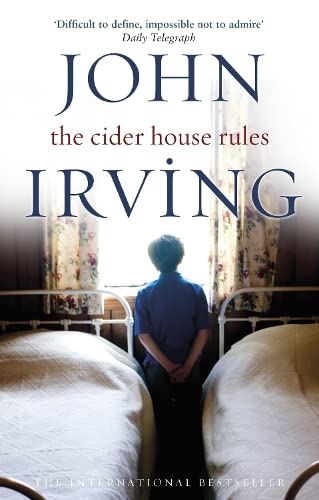
The Cider House Rules is a novel by John Irving, published in 1985. It explores abortion, orphans and the rules people live by. Below you will find a part-by-part summary, five key takeaways, ideas worth remembering and a note on who will enjoy it.
Content note: Includes abortion, incest, drug addiction and death.
Main Characters
- Homer Wells: An orphan who becomes Dr. Larch's apprentice.
- Dr. Wilbur Larch: The orphanage's devoted, unconventional doctor.
- Wally Worthington: Heir to an apple orchard.
- Candy Kendall: Wally's girlfriend.
- Melony: A tough orphan who loves Homer.
What Happens, Part by Part (Contains Spoilers)
St. Cloud's
Dr. Larch runs an orphanage, delivering babies and, illegally, performing abortions for women who want them. He uses ether to sleep. Homer Wells is adopted several times but always returns, so Larch makes him his apprentice.
Homer's choice
Homer learns obstetrics but believes abortion is wrong and refuses to perform them. Larch respects his choice but hopes he will change his mind.
Ocean View
A young couple, Wally and Candy, come for an abortion. Homer leaves with them to work at Wally's family's apple orchard, Ocean View. He lives in the cider house with migrant workers, where a list of rules is posted that no one follows.
Love and war
Wally goes to fight in the Second World War and is shot down and paralyzed. Homer and Candy fall in love and have a son, Angel, whom they pretend is adopted. When Wally returns, Candy marries him, and the three live together in a complicated arrangement.
Return
Years later, Rose Rose, the daughter of a migrant worker, Mr. Rose, becomes pregnant by her own father. Homer performs his first abortion for her. When Larch dies of an ether overdose, Homer returns to St. Cloud's, under a false identity Larch created, to take his place.
5 Key Takeaways
- Moral choices are often complex.
- Rules made by outsiders may not fit people's real lives.
- Belonging can be found in unexpected places.
- Love can take unconventional shapes.
- People can change their beliefs through experience.
Ideas Worth Remembering
These are paraphrased, not direct quotes:
- Be of use.
- The real rules are the ones people live by.
- Doing what is needed can conflict with what we believe.
Who Should Read The Cider House Rules?
Read The Cider House Rules if you enjoy big, character-driven novels about difficult moral questions. It suits adults.
About John Irving
John Irving is an American novelist born in 1942, known for long, character-rich novels that mix comedy and tragedy. His books include The World According to Garp, The Hotel New Hampshire and Last Night in Twisted River. He adapted The Cider House Rules for the 1999 film himself and won the Academy Award for Best Adapted Screenplay.
Questions to Think About After Reading
These prompts work for solo reading, a book club or a classroom discussion of The Cider House Rules:
- Why does Homer finally change his mind?
- What do the cider house rules represent?
- Is Larch a hero?
How to Use This Summary
Use this page as a quick reference before a book club meeting, an exam, or a decision about whether The Cider House Rules is worth your time. The takeaways are written to stand on their own. If a point interests you, go back to the book for the author's full story, characters and style, which no short summary can replace.
A Note on Accuracy and Spoilers
This summary is based on the published text of The Cider House Rules, not on any film, series or stage adaptation, which often change the story. Details are kept at the level of the main events so that nothing is invented. Editions differ slightly in length and wording, so page numbers and small details may vary between copies.
Should You Read the Book?
Yes. It is long but deeply moving, with memorable characters, though its themes are mature.
Check price of The Cider House Rules on Amazon
What to Read Next
- The World According to Garp by John Irving: Irving's breakthrough novel
- Oliver Twist by Charles Dickens: an orphan's life
- East of Eden by John Steinbeck: family and moral choice
Related: The World According to Garp by John Irving: Summary and Key Takeaways
Frequently Asked Questions
What is The Cider House Rules about?
An orphan trained by a doctor who performs abortions must decide what is right.
Who wrote it?
John Irving, in 1985.
What are the cider house rules?
A list of rules posted for migrant workers that no one follows.
Who is Dr. Larch?
The doctor who runs the orphanage.
Does Homer become a doctor?
Yes, he takes over Larch's role.
Is there a film?
Yes, the 1999 film, which won two Oscars.
What age is it for?
Adults.
How long is it?
About 560 pages.
Where is it set?
In Maine, from the 1920s to the 1950s.
What does “be of use” mean?
Larch's guiding principle to live a useful life.
Who are the main characters in The Cider House Rules?
The main characters are Homer Wells, Dr. Wilbur Larch, Wally Worthington, Candy Kendall and Melony. Homer Wells: An orphan who becomes Dr. Larch's apprentice. Dr. Wilbur Larch: The orphanage's devoted, unconventional doctor. Wally Worthington: Heir to an apple orchard.
Is The Cider House Rules worth reading?
It depends on what you want. The book is best for readers who want a big, moving novel about choice and belonging. If that describes you, it is likely a good fit. If not, the titles under What to Read Next may suit you better.