
Disclosure: As an Amazon Associate, Bookish Wisdom earns from qualifying purchases. This doesn't change our picks or your price.
TL;DR: Inspector Alan Grant of Scotland Yard is stuck in a hospital bed with a broken leg and badly bored. A friend brings him portraits to study, and he is struck by the face of King Richard III, who is said to have murdered his two young nephews in the Tower of London. With the help of a young American researcher, Grant reinvestigates the case from his bed.
Table of Contents
The Daughter of Time at a Glance
| Author | Josephine Tey |
| First published | 1951 |
| Type | Mystery novel |
| Best for | readers who want a clever mystery that makes history feel like a detective case |
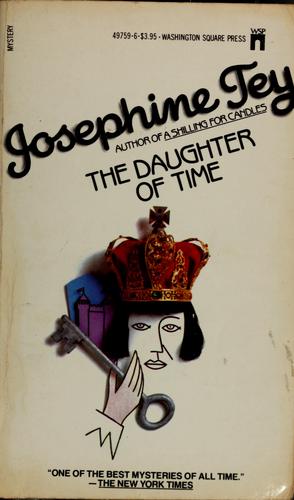
The Daughter of Time is a mystery novel by Josephine Tey, published in 1951. It was voted the greatest crime novel of all time by the British Crime Writers' Association in 1990. Below you will find a part-by-part summary, five key takeaways, ideas worth remembering and a note on who will enjoy it.
Content note: Discusses the historical deaths of two children and political violence.
Main Characters
- Alan Grant: A Scotland Yard inspector recovering in hospital.
- Brent Carradine: A young American researcher who helps Grant.
- Marta Hallard: An actress friend who brings Grant the portraits.
- Richard III: The English king accused of killing his nephews.
- Henry VII: The king who defeated Richard and took the throne.
What Happens, Part by Part (Contains Spoilers)
A bored detective
Grant lies in hospital, frustrated, after falling through a trapdoor while chasing a suspect. He hates the novels his visitors bring. His friend Marta Hallard knows he loves studying faces, so she brings him a set of historical portraits linked to mysteries. One face fascinates him: it looks like a judge or a worried ruler, not a criminal. It turns out to be Richard III.
The legend
Grant knows the famous story: Richard, Duke of Gloucester, seized the throne and had his young nephews, the Princes in the Tower, murdered. Shakespeare's play made him a hunchbacked villain. But Grant wonders whether the story is true. He begins reading history books brought by friends and nurses.
Research
Brent Carradine, a young American working at the British Museum, agrees to help. He digs through primary sources, such as records and letters of the time. Grant notices that many standard accounts were written under the Tudors, Richard's enemies, and by people who were not there. Like a police officer, he asks who benefited, who had the opportunity and what the evidence really shows.
New evidence
They find that the boys were not publicly accused as missing during Richard's reign, and that his enemies did not charge him with their murder when he died. Richard had no strong reason to kill them, since he had already declared them illegitimate. Henry VII, on the other hand, had strong reasons to get rid of them once he became king.
Conclusions
Grant concludes that Richard was probably innocent, and that Henry VII was the more likely culprit. He coins the term “Tonypandy” for false stories that everyone repeats as fact. Carradine plans to write a book, but learns that others have argued the same before him. Grant leaves the hospital with a new love for questioning accepted history.
5 Key Takeaways
- Accepted history is not always true.
- Ask who wrote the record and why.
- Detective methods can apply to the past.
- Motive and opportunity matter in any case.
- Repeated stories can become “facts.”
Ideas Worth Remembering
These are paraphrased, not direct quotes:
- Truth is the daughter of time, as the old saying goes.
- Faces can prompt questions, but evidence decides.
- Curiosity is the best cure for boredom.
Who Should Read The Daughter of Time?
Read The Daughter of Time if you enjoy history, unusual mysteries and stories about questioning what everyone believes. It suits teens and adults.
About Josephine Tey
Josephine Tey was the pen name of Elizabeth MacKintosh (1896–1952), a Scottish writer. She also wrote plays as Gordon Daviot, including the hit Richard of Bordeaux. Her mysteries include The Franchise Affair, Brat Farrar and Miss Pym Disposes. Alan Grant appears in several of her novels. She died the year after The Daughter of Time was published.
Questions to Think About After Reading
These prompts work for solo reading, a book club or a classroom discussion of The Daughter of Time:
- Do you agree with Grant that Richard was innocent?
- What is “Tonypandy,” and can you think of modern examples?
- How does Grant's police training help him study history?
How to Use This Summary
Use this page as a quick reference before a book club meeting, an exam, or a decision about whether The Daughter of Time is worth your time. The takeaways are written to stand on their own. If a point interests you, go back to the book for the author's full story, characters and style, which no short summary can replace.
A Note on Accuracy and Spoilers
This summary is based on the published text of The Daughter of Time, not on any film, series or stage adaptation, which often change the story. Details are kept at the level of the main events so that nothing is invented. Editions differ slightly in length and wording, so page numbers and small details may vary between copies.
Should You Read the Book?
Yes. It is short and clever, though it is more a history argument than a classic whodunit.
Check price of The Daughter of Time on Amazon
What to Read Next
- The Franchise Affair by Josephine Tey: a classic mystery about a false accusation
- Gaudy Night by Dorothy L. Sayers: a thoughtful golden-age mystery
- Richard III by William Shakespeare: the play that shaped Richard's reputation
Frequently Asked Questions
What is The Daughter of Time about?
A detective in hospital investigates whether Richard III really killed his nephews.
Who wrote it?
Josephine Tey, in 1951.
What does Grant conclude?
That Richard was probably innocent and Henry VII had more reason to kill the boys.
What is the title from?
The proverb “Truth is the daughter of time.”
Who helps Grant?
Brent Carradine, an American researcher.
Is it based on real history?
Yes. It discusses real events and historical sources.
Is the theory proven?
No. Historians still debate what happened to the princes.
What is Tonypandy?
Grant's word for a false story that becomes accepted history.
What age is it for?
Teens and adults.
How long is it?
About 200 pages.
Was it voted the best crime novel?
Yes, by the UK Crime Writers' Association in 1990.
Do I need to read other Grant books?
No, it stands alone.
Do I need to know English history to enjoy it?
No. Grant learns the history as he goes, so the reader learns it with him.
Is The Daughter of Time worth reading?
It depends on what you want. The book is best for readers who want a clever mystery that makes history feel like a detective case. If that describes you, it is likely a good fit. If not, the titles under What to Read Next may suit you better.