
Disclosure: As an Amazon Associate, Bookish Wisdom earns from qualifying purchases. This doesn't change our picks or your price.
TL;DR: When Duncan opens his box of crayons, he finds a stack of letters instead. Each crayon has a complaint: Red is overworked, Beige is ignored, Black only draws outlines, and Yellow and Orange are arguing about the color of the sun. Duncan comes up with a creative solution that makes them all happy.
Table of Contents
The Day the Crayons Quit at a Glance
| Author | Drew Daywalt |
| First published | 2013 |
| Type | Picture book |
| Best for | young readers who want a funny, creative story about seeing things differently |
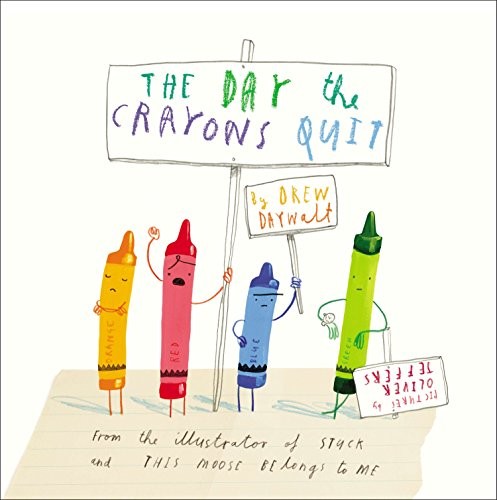
The Day the Crayons Quit is a picture book by Drew Daywalt, illustrated by Oliver Jeffers, published in 2013. It was a number one New York Times bestseller and led to several sequels. Below you will find a part-by-part summary, five key takeaways, ideas worth remembering and a note on who will enjoy it.
Main Characters
- Duncan: A boy who loves to color.
- Red Crayon: Who is overworked.
- Beige Crayon: Who feels ignored.
- Yellow and Orange: Who argue about who colors the sun.
- Peach Crayon: Who lost his paper wrapper.
What Happens, Part by Part (Contains Spoilers)
The letters
At school, Duncan opens his crayon box and finds letters from his crayons. They have quit.
Complaints
Red is exhausted from coloring fire engines, apples, strawberries and holiday pictures. Purple wants Duncan to stay in the lines. Beige is tired of being called “light brown.” Gray is worn out from coloring huge animals like elephants and whales.
Feelings
White feels empty because it is only used for snow. Black wants to color something other than outlines. Blue is worn down to a stub from coloring water. Pink wants to be used, even though Duncan thinks it is a girl's color. Peach is embarrassed because Duncan peeled off his wrapper.
The argument
Yellow and Orange are no longer speaking because each believes it is the true color of the sun. Green is the only happy crayon and writes to thank Duncan.
The ending
Duncan creates a new picture that uses every crayon in a fresh way: a black beach ball, a pink dinosaur, a gray baby whale, a white cat and a sun colored yellow and orange. His teacher gives him an A for coloring and an extra A for creativity.
5 Key Takeaways
- Everyone wants to be appreciated.
- Creativity means seeing things differently.
- Listening to others solves problems.
- There is no single right way to color.
- Fairness matters.
Ideas Worth Remembering
These are paraphrased, not direct quotes:
- Color outside the lines.
- Every color has a place.
- Listening to complaints can lead to creativity.
Who Should Read The Day the Crayons Quit?
Read The Day the Crayons Quit if you want a funny, creative picture book. It suits ages 3 to 8.
Questions to Think About After Reading
These prompts work for solo reading, a book club or a classroom discussion of The Day the Crayons Quit:
- Which crayon do you feel sorry for?
- How does Duncan solve the problem?
- What would your crayons write?
How to Use This Summary
Use this page as a quick reference before a book club meeting, an exam, or a decision about whether The Day the Crayons Quit is worth your time. The takeaways are written to stand on their own. If a point interests you, go back to the book for the author's full story, characters and style, which no short summary can replace.
A Note on Accuracy and Spoilers
This summary is based on the published text of The Day the Crayons Quit, not on any film, series or stage adaptation, which often change the story. Details are kept at the level of the main events so that nothing is invented. Editions differ slightly in length and wording, so page numbers and small details may vary between copies.
Should You Read the Book?
Yes. The letter format is clever and funny, and Oliver Jeffers's childlike drawings fit perfectly. Children love imagining what their own crayons would say, and the book encourages creativity and empathy.
Check price of The Day the Crayons Quit on Amazon
What to Read Next
- The Day the Crayons Came Home by Drew Daywalt: the sequel
- Harold and the Purple Crayon by Crockett Johnson: a creative drawing adventure
- The Dot by Peter H. Reynolds: creativity and confidence
Related: 15 Books Like The Day the Crayons Quit You’ll Love
Frequently Asked Questions
What is The Day the Crayons Quit about?
A boy's crayons write letters complaining about how they are used.
Who wrote it?
Drew Daywalt.
Who illustrated it?
Oliver Jeffers.
Why are Yellow and Orange fighting?
Over who is the true color of the sun.
What does Duncan do?
He makes a new picture using each crayon creatively.
Is there a sequel?
Yes, The Day the Crayons Came Home.
What age is it for?
About 3 to 8.
How long is it?
About 40 pages.
How can I use it with kids?
Ask children to write a letter from their favorite crayon about how it wants to be used.
Is there a film?
An animated adaptation has been in development.
Is it good for teaching letter writing?
Yes, many teachers use it to introduce letters.
Why is Peach Crayon embarrassed?
Duncan peeled off his paper wrapper, so Peach feels naked and hides in the box.
Why is Green happy?
Green is used for crocodiles, trees, dinosaurs and frogs, and has no complaints.
Who are the main characters in The Day the Crayons Quit?
The main characters are Duncan, Red Crayon, Beige Crayon, Yellow and Orange and Peach Crayon. Duncan: A boy who loves to color. Red Crayon: Who is overworked. Beige Crayon: Who feels ignored.
Is The Day the Crayons Quit worth reading?
It depends on what you want. The book is best for young readers who want a funny, creative story about seeing things differently. If that describes you, it is likely a good fit. If not, the titles under What to Read Next may suit you better.