
Disclosure: As an Amazon Associate, Bookish Wisdom earns from qualifying purchases. This doesn’t change our picks or your price.
Quick answer: Good discussion questions for The Four Winds by Kristin Hannah focus on the Dust Bowl, the Great Depression, a mother’s sacrifice, migrant workers in California and the fight for fair treatment. Below are 19 questions grouped by theme, plus a spoiler-free summary.
Quick facts
Author: Kristin Hannah
Published: 2021
Setting: the Texas Panhandle and California, 1921–1936
Main character: Elsa Martinelli
Content note: poverty, illness, death and violence against striking workers
The Four Winds brings the Dust Bowl and the Great Depression to life through one woman’s fight to keep her children alive. Kristin Hannah’s novel is often compared with The Grapes of Wrath, and it gives book clubs plenty to talk about: courage, motherhood, poverty and how a country treats people who have lost everything. This guide includes a spoiler-free summary, characters and themes, and 18 discussion questions grouped by theme. The questions contain spoilers, so save them for meeting night.
Table of Contents
Spoiler-Free Summary
In 1921, Elsa Wolcott is 25 and considered too tall, too plain and too sickly to marry. One night of rebellion leads to an affair with a young Italian man, Rafe Martinelli, and an unexpected pregnancy. Her family disowns her, and she marries into the Martinellis’ Texas farming family.
Over the next decade, Elsa finds a home on the land and with Rafe’s parents, Tony and Rose. But by 1934, drought and dust storms have destroyed the Great Plains. Crops fail, livestock die and the dust makes people sick.
Elsa must decide whether to stay and fight for the land she loves or take her children, Loreda and Ant, west to California in search of a better life. California turns out to be far from the promised land.
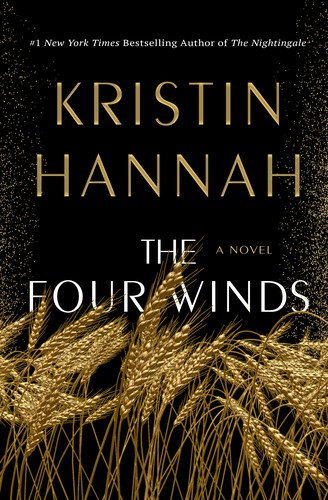
Check price of The Four Winds on Amazon
Main Characters and Themes
| Character or Theme | What to Know |
|---|---|
| Elsa Martinelli | A woman who finds her strength when everything is taken from her |
| Loreda | Elsa’s headstrong teenage daughter |
| Anthony (Ant) | Elsa’s young son |
| Rafe Martinelli | Elsa’s husband, who dreams of leaving the farm |
| Tony and Rose Martinelli | Rafe’s parents, who become Elsa’s true family |
| Jack Valen | A labor organizer working for migrant workers in California |
| The Dust Bowl | Environmental disaster on the Great Plains |
| Motherhood | Love, sacrifice and protecting children |
| Migration and prejudice | How “Okies” were treated in California |
| Courage | How ordinary people find bravery |
Discussion Questions (Contains Spoilers)
Elsa’s Transformation
- How does Elsa’s childhood shape the way she sees herself?
- When do you see Elsa first begin to believe in her own strength?
- Elsa says she isn’t brave. Do you agree?
- How does Elsa’s relationship with Rose change over the book?
The Dust Bowl
- Which descriptions of the dust storms stayed with you most?
- Why do Tony and Rose refuse to leave the land, even as it dies?
- How does the book show the link between farming practices and the Dust Bowl?
Mothers and Children
- Loreda and Elsa clash constantly. Who did you side with?
- How does Loreda change once they reach California?
- What sacrifices does Elsa make for her children, and which affected you most?
California and Justice
- What did you expect California to be like, and how did the reality compare?
- How were migrant workers treated by growers and locals? Did anything surprise you?
- What did you think of Jack Valen and the push to organize workers?
- How did you react to the novel’s ending?
Big Picture
- The Four Winds is often compared with The Grapes of Wrath. If you’ve read both, how do they compare?
- What parallels do you see between the 1930s and today, from climate to migration?
- How does Elsa’s courage live on in Loreda and Ant?
- What does the title mean to you?
- Elsa learns to stand up for herself late in life. Is there a moment in your own life when you found courage you didn’t know you had?
Book Club Ideas for The Four Winds
- Serve Depression-era recipes like cornbread, beans, Rose’s homemade bread or a simple apple pie.
- Look at Dorothea Lange’s photographs, like Migrant Mother, and talk about what they show.
- Play songs by Woody Guthrie, who wrote about the Dust Bowl and migrant life.
- Share a family story from the Great Depression if anyone has one.
Books Like The Four Winds
If your group loved it, try The Grapes of Wrath by John Steinbeck for the classic Dust Bowl novel, The Worst Hard Time by Timothy Egan for the true history, or The Nightingale by Kristin Hannah for another story of women’s courage.
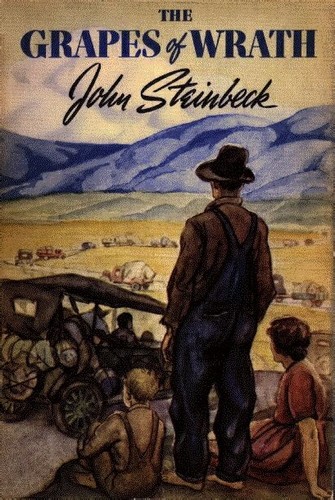
Check price of The Grapes of Wrath on Amazon
How to Structure Your Meeting
Begin by asking everyone whether they would have stayed on the land or headed west. Then work through two or three questions from each theme above, saving the “big picture” questions for the end. If your group is large, split into pairs for one theme and report back.
A simple 90-minute plan:
- 0–15 minutes: food, catch-up and the opening question.
- 15–60 minutes: the discussion questions, theme by theme.
- 60–75 minutes: one of the book club ideas above, or a quick comparison with the adaptation if there is one.
- 75–90 minutes: everyone rates the book out of five in one sentence, then you pick next month’s read.
Related: The Nightingale book club discussion questions and the best historical fiction books for book clubs.
Frequently Asked Questions
What is The Four Winds about?
It follows Elsa Martinelli, a Texas farm wife who flees the Dust Bowl with her two children for California during the Great Depression, only to face poverty and exploitation there.
Is The Four Winds good for book clubs?
Yes. It’s emotional and historical, with strong themes of motherhood, courage and social justice to discuss.
Is The Four Winds appropriate for all book clubs?
It includes extreme poverty, illness, death and violence against workers, so share a content note before reading.
Is The Four Winds based on a true story?
The characters are fictional, but the Dust Bowl, the migration to California and the treatment of migrant workers are real history.