

Disclosure: As an Amazon Associate, Bookish Wisdom earns from qualifying purchases. This doesn't change our picks or your price.
TL;DR: In 1867, gentleman scientist Charles Smithson, engaged to the wealthy Ernestina, becomes fascinated with Sarah Woodruff, a mysterious outcast in Lyme Regis known as “the French Lieutenant's Woman.” His obsession leads him to break his engagement and ruin his reputation, while the narrator playfully steps in to offer the reader multiple endings.
Table of Contents
The French Lieutenant's Woman at a Glance
| Author | John Fowles |
| First published | 1969 |
| Type | Novel |
| Best for | readers who enjoy clever, experimental historical fiction |
The French Lieutenant's Woman is a novel by John Fowles, published in 1969. It imitates a Victorian novel while commenting on it from a modern point of view. Below you will find a part-by-part summary, five key takeaways, ideas worth remembering and a note on who will enjoy it.
Content note: Includes a sexual encounter and themes of social disgrace.
Main Characters
- Charles Smithson: A wealthy amateur paleontologist.
- Sarah Woodruff: A mysterious governess with a scandalous reputation.
- Ernestina Freeman: Charles's wealthy fiancée.
- Sam Farrow: Charles's ambitious servant.
- Dr. Grogan: A kind, rational local doctor.
What Happens, Part by Part (Contains Spoilers)
Lyme Regis
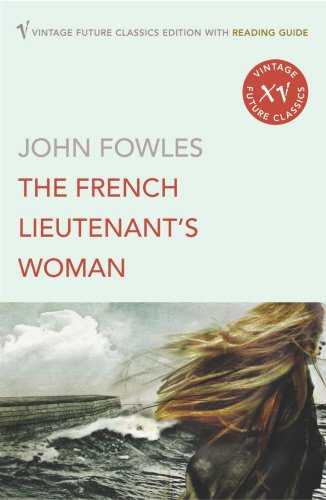
Charles visits Lyme Regis with his fiancée, Ernestina, the daughter of a rich merchant. On the Cobb, a stone pier, he sees a woman in black staring out to sea. She is Sarah Woodruff, said to have been abandoned by a French lieutenant.
Obsession
Charles meets Sarah while hunting fossils on the Undercliff. She tells him her story and claims she gave herself to the French lieutenant to become an outcast. Charles is fascinated and troubled, as his feelings grow stronger.
The narrator steps in
Fowles's narrator interrupts to discuss Victorian society, Darwin and the freedom of characters. He offers an early, conventional ending in which Charles marries Ernestina, then rejects it.
Exeter
Charles visits Sarah in a hotel in Exeter. They sleep together, and he discovers she was a virgin, so her story was a lie. He breaks his engagement, suffers public disgrace and loses his inheritance prospects. Sarah disappears.
Two endings
Two years later, Charles finds Sarah living with the artist Dante Gabriel Rossetti in London. In one ending, she shows him their daughter, and they reconcile. In the other, she refuses him, and he walks away alone but free. The narrator leaves the choice to the reader.
5 Key Takeaways
- Society's rules can trap people.
- Freedom is both exciting and frightening.
- Authors and readers shape a story's meaning.
- Obsession can lead to self-discovery.
- Mystery can be a form of power.
Ideas Worth Remembering
These are paraphrased, not direct quotes:
- People choose roles to escape the ones forced on them.
- Endings depend on what we believe about freedom.
- The past is understood through the present.
Who Should Read The French Lieutenant's Woman?
Read The French Lieutenant's Woman if you enjoy literary experiments, Victorian settings and complex romance. It suits adults.
Questions to Think About After Reading
These prompts work for solo reading, a book club or a classroom discussion of The French Lieutenant's Woman:
- Why does Sarah lie about her past?
- Which ending do you prefer, and why?
- How does the narrator change the story?
How to Use This Summary
Use this page as a quick reference before a book club meeting, an exam, or a decision about whether The French Lieutenant's Woman is worth your time. The takeaways are written to stand on their own. If a point interests you, go back to the book for the author's full story, characters and style, which no short summary can replace.
A Note on Accuracy and Spoilers
This summary is based on the published text of The French Lieutenant's Woman, not on any film, series or stage adaptation, which often change the story. Details are kept at the level of the main events so that nothing is invented. Editions differ slightly in length and wording, so page numbers and small details may vary between copies.
Should You Read the Book?
Yes. It is clever and absorbing, though the narrator's interruptions are not for everyone. Its multiple endings make it memorable.
Check price of The French Lieutenant's Woman on Amazon
What to Read Next
- Possession by A.S. Byatt: Victorian and modern love stories
- The Collector by John Fowles: Fowles's chilling first novel
- Middlemarch by George Eliot: a real Victorian novel of society
Frequently Asked Questions
What is The French Lieutenant's Woman about?
A Victorian gentleman's obsession with a mysterious outcast woman.
Who wrote it?
John Fowles, in 1969.
Who is Sarah Woodruff?
A governess rumored to have been abandoned by a French officer.
Why are there multiple endings?
Fowles wanted to show that characters and readers have freedom.
Where is it set?
Mainly in Lyme Regis, England, in 1867.
Is there a film?
Yes, the 1981 film with Meryl Streep and Jeremy Irons.
What age is it for?
Adults.
How long is it?
About 470 pages.
Is it a Victorian novel?
No. It is a 1960s novel written in Victorian style.
What is the Cobb?
A famous stone harbor wall in Lyme Regis, where Charles first sees Sarah.
Who is Sam Farrow?
Charles's servant, who has his own ambitions and plays a part in the plot.
Does Charles find Sarah again?
Yes, two years later in London.
Who are the main characters in The French Lieutenant's Woman?
The main characters are Charles Smithson, Sarah Woodruff, Ernestina Freeman, Sam Farrow and Dr. Grogan. Charles Smithson: A wealthy amateur paleontologist. Sarah Woodruff: A mysterious governess with a scandalous reputation. Ernestina Freeman: Charles's wealthy fiancée.
Is The French Lieutenant's Woman worth reading?
It depends on what you want. The book is best for readers who enjoy clever, experimental historical fiction. If that describes you, it is likely a good fit. If not, the titles under What to Read Next may suit you better.