
Disclosure: As an Amazon Associate, Bookish Wisdom earns from qualifying purchases. This doesn't change our picks or your price.
TL;DR: Journalist Herbert Asbury describes the violent street gangs that ruled parts of New York City in the 1800s and early 1900s. From the Five Points slums to the Bowery, he tells of gangs like the Dead Rabbits and Bowery Boys, corrupt politicians, river pirates and the deadly Draft Riots of 1863, painting a vivid picture of the city's underworld.
Table of Contents
The Gangs of New York at a Glance
| Author | Herbert Asbury |
| First published | 1928 |
| Type | History |
| Best for | readers interested in New York history and true crime |
The Gangs of New York: An Informal History of the Underworld is a book by Herbert Asbury, published in 1928. It inspired Martin Scorsese's 2002 film. Below you will find a part-by-part summary of the main ideas, five key takeaways, ideas worth remembering and a note on who will enjoy it. It mixes history with colorful legend.
Content note: Includes violence, poverty and riots.
Key Concepts
- Five Points: A notorious slum neighborhood in lower Manhattan.
- Street gangs: Groups like the Dead Rabbits, Plug Uglies and Bowery Boys.
- Tammany Hall: The political machine that used gangs.
- The Draft Riots: Deadly riots in 1863 against the Civil War draft.
- Later gangs: Groups like the Eastmans and Five Pointers of the 1900s.
The Main Ideas, Part by Part
Five Points
Asbury describes Five Points, a crowded, dangerous slum where poor immigrants lived. Gangs formed in saloons and tenements, fighting over territory.
Rival gangs
The book tells of battles between gangs like the Dead Rabbits and the Bowery Boys, armed with clubs, bricks and knives. Some gang leaders became local legends.
Politics
Asbury shows how politicians, especially Tammany Hall, used gangs to win elections by intimidating voters. In return, gangsters were protected from the law.
The Draft Riots
In 1863, mobs angry at the Civil War draft rioted for days, attacking Black residents, police and wealthy citizens. Hundreds died. Asbury describes the riots in vivid detail.
The twentieth century
The book ends with gangs of the early 1900s, like Monk Eastman's gang and Paul Kelly's Five Pointers, which fought over gambling and vice before organized crime evolved.
5 Key Takeaways
- Poverty and crowding fueled crime.
- Politics and crime were deeply linked.
- Violence shaped New York's history.
- Immigrant communities faced great hardship.
- History can be both fact and legend.
Ideas Worth Remembering
These are paraphrased, not direct quotes:
- Cities grow through struggle and conflict.
- Corruption can protect criminals.
- Every city has a hidden history.
Who Should Read The Gangs of New York?
Read The Gangs of New York if you enjoy true crime and city history. It suits adults.
About Herbert Asbury
Herbert Asbury (1889–1963) was an American journalist and writer known for popular histories of crime and vice. His books include The Barbary Coast, about San Francisco, and The French Quarter, about New Orleans. He wrote in a lively, dramatic style that mixed history with folklore.
Questions to Think About After Reading
These prompts work for solo reading, a book club or a classroom discussion of The Gangs of New York:
- Why did gangs thrive in Five Points?
- How did politicians use gangs?
- What caused the Draft Riots?
How to Use This Summary
Use this page as a quick reference before a book club meeting, an exam, or a decision about whether The Gangs of New York is worth your time. The takeaways are written to stand on their own. If a point interests you, go back to the book for the author's full argument, examples and evidence, which no short summary can replace.
A Note on Accuracy and Spoilers
This summary is based on the published text of The Gangs of New York, not on any film, series or stage adaptation, which often change the story. Details are kept at the level of the main arguments so that nothing is invented. Editions differ slightly in length and wording, so page numbers and small details may vary between copies.
Should You Read the Book?
Yes, as a colorful historical read, though some stories are exaggerated or legendary.
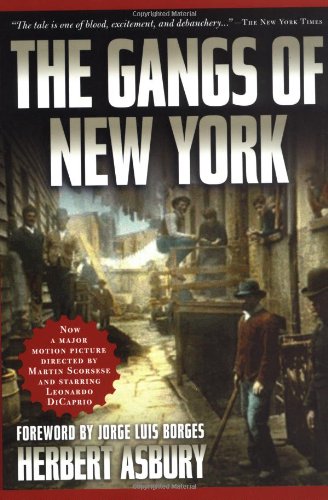
Check price of The Gangs of New York on Amazon
What to Read Next
- The Devil in the White City by Erik Larson: crime in Chicago history
- Killers of the Flower Moon by David Grann: true crime and history
- Billy Bathgate by E.L. Doctorow: a fictional New York gangster story
Frequently Asked Questions
What is The Gangs of New York about?
The history of New York City's violent street gangs in the 1800s and early 1900s.
Who wrote it?
Herbert Asbury, in 1928.
Is there a film?
Yes, Martin Scorsese's 2002 film.
What was Five Points?
A notorious slum in lower Manhattan.
Who were the Dead Rabbits?
A famous Irish gang.
What were the Draft Riots?
Violent riots in 1863 against the Civil War draft.
What age is it for?
Adults.
How long is it?
About 380 pages.
Is it fully accurate?
It mixes history with legend and exaggeration.
What was Tammany Hall?
A powerful political machine in New York.
Who was Monk Eastman?
A famous gang leader of the early 1900s who controlled much of the Lower East Side.
Who were the Bowery Boys?
A gang of native-born New Yorkers who fought the Irish gangs of Five Points.
Who are the main ideas in The Gangs of New York?
The key concepts are Five Points, Street gangs, Tammany Hall, the Draft Riots and Later gangs. Five Points: A notorious slum neighborhood in lower Manhattan. Street gangs: Groups like the Dead Rabbits, Plug Uglies and Bowery Boys. Tammany Hall: The political machine that used gangs.
Is The Gangs of New York worth reading?
It depends on what you want. The book is best for readers interested in New York history and true crime. If that describes you, it is likely a good fit. If not, the titles under What to Read Next may suit you better.