
Disclosure: As an Amazon Associate, Bookish Wisdom earns from qualifying purchases. This doesn't change our picks or your price.
TL;DR: Jeannette Walls recounts growing up with brilliant but irresponsible parents who moved the family from place to place, dodging bills and living in poverty. Her father, Rex, was an alcoholic dreamer, and her mother, Rose Mary, was an artist who refused responsibility. Jeannette and her siblings fended for themselves and eventually escaped to New York.
Table of Contents
The Glass Castle at a Glance
| Author | Jeannette Walls |
| First published | 2005 |
| Type | Memoir |
| Best for | readers who want a gripping memoir about a chaotic childhood |
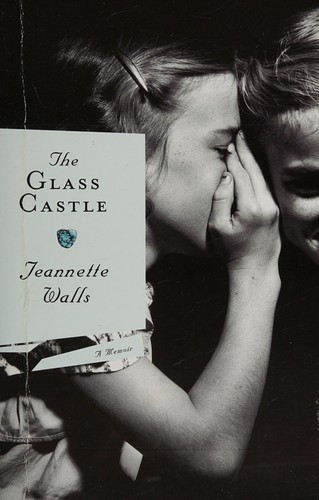
The Glass Castle is a memoir by Jeannette Walls, first published in 2005. The memoir was a long-running bestseller and was adapted into a 2017 film. The glass castle is a house her father promised to build. Below you will find a part-by-part summary, five key takeaways, a few ideas worth remembering and a note on who will enjoy it most. The summary paraphrases the author's ideas rather than quoting them at length, so it works as a refresher or a preview, not a replacement for the book.
Content note: Contains neglect, abuse, poverty and alcoholism.
The Story, Part by Part
Early memories
Jeannette recalls a burn accident and her father's response.
Moving
The family moves often, living in the desert and then in a small town.
Welch, West Virginia
They move to the home of her father's family. Poverty deepens.
Taking care
Jeannette and her siblings cope with hunger and danger.
Escape
The children save money and leave for New York.
Later years
Jeannette builds a career. Her parents follow and live as squatters.
The Summary at a Glance
| Part | In one line |
|---|---|
| Early memories | Jeannette recalls a burn accident and her father's response. |
| Moving | The family moves often, living in the desert and then in a small town. |
| Welch, West Virginia | They move to the home of her father's family. |
| Taking care | Jeannette and her siblings cope with hunger and danger. |
| Escape | The children save money and leave for New York. |
| Later years | Jeannette builds a career. |
5 Key Takeaways
- Parents can be both loving and harmful.
- Resilience can be learned.
- Poverty is more than lack of money.
- Dreams can be a coping tool.
- Forgiveness is complicated.
Ideas Worth Remembering
These are paraphrased, not direct quotes:
- The tone is non-judgmental.
- Jeannette is honest about her mixed feelings.
- The memoir is both hard and hopeful.
Who Should Read The Glass Castle?
Read it if you like memoirs about family. It is engrossing.
Questions to Think About After Reading
These prompts work for solo reading, a book club or a classroom discussion of The Glass Castle:
- Which moment in the author's life stayed with you longest?
- How does the author's voice shape the way you judge the people in the story?
- What would you want to ask the author if you could?
Quick Facts to Remember
- Book: The Glass Castle by Jeannette Walls (2005)
- Type: Memoir
- Best for: readers who want a gripping memoir about a chaotic childhood
- Main idea in one line: Parents can be both loving and harmful.
Reading Time and Format
A memoir is often best in one or two long sittings so the voice stays consistent. An audiobook read by the author, where one exists, can add a lot. Whichever format you choose, a library copy is a low-cost way to try the book before you buy, and used or digital editions are often cheaper than new print copies.
How to Use This Summary
Use this page as a quick reference before a book club meeting, an exam, or a decision about whether The Glass Castle is worth your time. The takeaways are written to stand on their own. If a point interests you, go back to the book for the author's full argument, examples and style, which no short summary can carry.
A simple way to get the most from it: first read the TL;DR and the takeaways to decide if the book fits your interests, then read the part-by-part section for the structure, and finally write down one idea you want to remember or one question you want answered by the full text.
A Note on Accuracy and Spoilers
This summary is based on the published text of The Glass Castle, not on any film, series or stage adaptation, which often change the story. Details are kept at the level of the main events so that nothing is invented. Editions differ slightly in length and wording, so page numbers and small details may vary from your copy.
Should You Read the Book?
If you decide to read it, give the first chapters time. A memoir depends on voice, and the details of a life land harder in the author's own telling than in any summary. If you are still unsure, read a free sample or the first chapter, because the opening pages usually show whether the voice and subject suit you. Reviews from readers with tastes like yours can help too, but your own reaction to a few pages is the best test.
Check price of The Glass Castle on Amazon
What to Read Next
- Half Broke Horses by Jeannette Walls: Walls's novel about her grandmother
- Educated by Tara Westover: a memoir about education
- Hillbilly Elegy by J. D. Vance: a memoir of Appalachian family
Related: 15 Books Like The Glass Castle You’ll Love
Frequently Asked Questions
Is The Glass Castle a true story?
Yes, it is a memoir.
Is there a movie?
Yes, a 2017 film.
What age is it for?
Roughly 14 and up.
Is The Glass Castle worth reading?
It depends on what you want. The book is best for readers who want a gripping memoir about a chaotic childhood. If that describes you, it is likely a good fit. If not, the titles under What to Read Next may suit you better.
Can this summary replace reading The Glass Castle?
No. A summary covers the main events and ideas, but it cannot carry the author's voice, detail or pacing. Use it to decide whether to read the book, to refresh your memory or to prepare for a discussion.