
Disclosure: As an Amazon Associate, Bookish Wisdom earns from qualifying purchases. This doesn't change our picks or your price.
TL;DR: For his ninth birthday, Omri receives an old wooden cupboard and a small plastic figure of a Native American man. When he locks the figure inside the cupboard with a special key, it comes to life as Little Bear, a real person from the past. Omri must learn to care for a tiny living person, keep his secret and face the responsibility of his magic.
Table of Contents
The Indian in the Cupboard at a Glance
| Author | Lynne Reid Banks |
| First published | 1980 |
| Type | Children's fantasy |
| Best for | young readers who want a classic fantasy about friendship, magic and responsibility |
The Indian in the Cupboard is a children's novel by Lynne Reid Banks, published in 1980. It was the first of five books about Omri and was filmed in 1995. Below you will find a part-by-part summary, five key takeaways, ideas worth remembering and a note on who will enjoy it.
Content note: Includes mild violence, injury and dated cultural stereotypes that many readers now criticize.
Main Characters
- Omri: A nine-year-old boy who brings toys to life.
- Little Bear: An Iroquois man brought to life from a plastic figure.
- Patrick: Omri's best friend.
- Boone: A cowboy figure brought to life by Patrick.
- Tommy: A First World War medic brought to life to help.
What Happens, Part by Part (Contains Spoilers)
A strange gift
Omri's best friend Patrick gives him a used plastic figure for his birthday. His brother Gillon gives him an old bathroom cabinet, and his mother finds a key that fits it. Omri puts the figure inside and turns the key. In the morning, he hears scratching, and the figure has become a living man, only a few inches tall, named Little Bear.
A real person
Little Bear is not a toy. He is a real man from the 18th century, with his own life, opinions and needs. He demands food, a longhouse and respect. Omri realizes he is responsible for him. He learns that the cupboard works both ways: it can also turn people back into plastic, sending them home.
Patrick's cowboy
Omri tells Patrick the secret. Patrick wants his own living figure and brings a cowboy to life, named Boone. Boone and Little Bear are enemies at first, and their quarrels lead to danger. In one fight, Little Bear shoots Boone with an arrow. Omri brings a medic named Tommy to life to treat the wound.
Trouble
Omri and Patrick take the figures to school, where they are nearly caught. The headmaster sees Boone and is shocked. The boys get into trouble. Little Bear asks Omri to bring him a wife, and Omri brings a woman named Bright Stars to life. Rats, a lost key and Omri's brothers create more problems.
Letting go
Omri realizes that Little Bear and Boone belong in their own worlds and that keeping them is unfair. Boone and Little Bear become friends before they leave. Omri decides to send them back to their own times. He gives the key to his mother to keep safe, and he promises not to use the magic carelessly.
5 Key Takeaways
- Living beings are not toys.
- Responsibility comes with power.
- Friendship can grow between enemies.
- Letting go can be an act of love.
- Respecting others' lives and choices matters.
Ideas Worth Remembering
These are paraphrased, not direct quotes:
- Imagination can teach real lessons.
- Small actions can have big consequences.
- Caring for someone means thinking about their needs.
Who Should Read The Indian in the Cupboard?
Read The Indian in the Cupboard if you are a young reader who enjoys magical adventures and stories about friendship. It suits ages 8 to 12, ideally with a discussion about its portrayal of Native Americans.
About Lynne Reid Banks
Lynne Reid Banks (1929–2024) was a British writer who first became known for her adult novel The L-Shaped Room. She wrote more than 40 books, including many for children. The Indian in the Cupboard was followed by The Return of the Indian, The Secret of the Indian, The Mystery of the Cupboard and The Key to the Indian. She also worked as an actress and journalist.
Questions to Think About After Reading
These prompts work for solo reading, a book club or a classroom discussion of The Indian in the Cupboard:
- Why does Omri decide to send Little Bear home?
- How do Little Bear and Boone become friends?
- What does the book get wrong about Native Americans?
How to Use This Summary
Use this page as a quick reference before a book club meeting, an exam, or a decision about whether The Indian in the Cupboard is worth your time. The takeaways are written to stand on their own. If a point interests you, go back to the book for the author's full story, characters and style, which no short summary can replace.
A Note on Accuracy and Spoilers
This summary is based on the published text of The Indian in the Cupboard, not on any film, series or stage adaptation, which often change the story. Details are kept at the level of the main events so that nothing is invented. Editions differ slightly in length and wording, so page numbers and small details may vary between copies.
Should You Read the Book?
Yes, with care. It is gripping and imaginative, but its stereotypes are worth discussing.
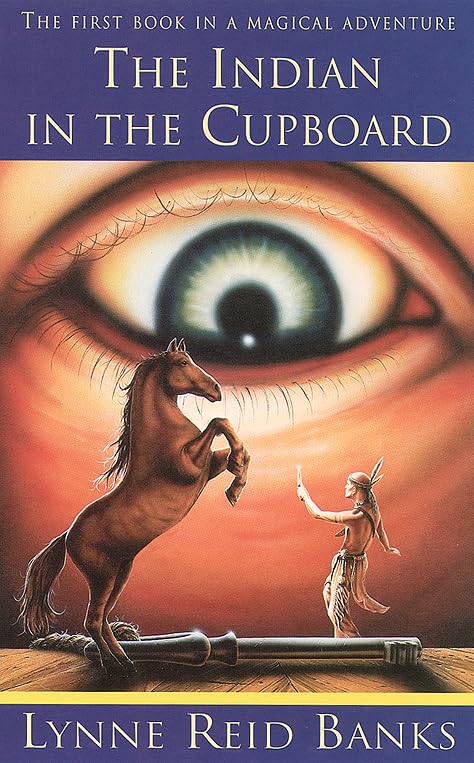
Check price of The Indian in the Cupboard on Amazon
What to Read Next
- The Return of the Indian by Lynne Reid Banks: the sequel to Omri's adventure
- The Borrowers by Mary Norton: tiny people living in a big world
- Stuart Little by E.B. White: a small hero's big adventures
Related: 15 Books Like The Indian in the Cupboard You’ll Love
Frequently Asked Questions
What is The Indian in the Cupboard about?
A boy discovers that his cupboard brings plastic figures to life.
Who wrote it?
Lynne Reid Banks, in 1980.
Who is Little Bear?
An Iroquois man brought to life from a figure.
How does the magic work?
Locking a figure in the cupboard with the key brings it to life or returns it.
Who is Boone?
A cowboy figure brought to life by Patrick.
Is it a series?
Yes, there are five books.
Is there a film?
Yes, the 1995 film directed by Frank Oz.
What age is it for?
About 8 to 12.
How long is it?
About 180 pages.
Is it controversial?
Yes, for stereotyped portrayals of Native Americans.
What lesson does Omri learn?
That living beings deserve respect and freedom.
Is it a good classroom book?
Yes, especially with discussion about its cultural portrayals.
Is it good for reading aloud?
Yes. The short chapters and exciting scenes keep young listeners interested.
Is The Indian in the Cupboard worth reading?
It depends on what you want. The book is best for young readers who want a classic fantasy about friendship, magic and responsibility. If that describes you, it is likely a good fit. If not, the titles under What to Read Next may suit you better.