
Disclosure: As an Amazon Associate, Bookish Wisdom earns from qualifying purchases. This doesn't change our picks or your price.
TL;DR: A mysterious stranger wrapped in bandages arrives at an inn in the English village of Iping. He is Griffin, a scientist who has made himself invisible but cannot reverse the process. Desperate, isolated and increasingly cruel, he plans a reign of terror, until the townspeople of Port Burdock turn on him and he is beaten to death, becoming visible again as he dies.
Table of Contents
The Invisible Man at a Glance
| Author | H.G. Wells |
| First published | 1897 |
| Type | Novel |
| Best for | readers who want a short, gripping classic about science and power |
The Invisible Man is a science fiction novel by H.G. Wells, published in 1897. It explores what happens when a brilliant but selfish man gains a power no one else has. Below you will find a part-by-part summary, five key takeaways, ideas worth remembering and a note on who will enjoy it.
Content note: Includes violence, a murder and a violent death.
Main Characters
- Griffin: The Invisible Man, a gifted, bitter scientist.
- Mrs. Hall: The landlady of the Coach and Horses inn in Iping.
- Thomas Marvel: A tramp Griffin forces to help him.
- Dr. Kemp: A scientist and former classmate who betrays Griffin to the police.
- Colonel Adye: The police chief at Burnstow, shot by Griffin.
What Happens, Part by Part (Contains Spoilers)
The stranger at the inn
In winter, a man covered in bandages, goggles and gloves takes a room at the Coach and Horses in Iping. He is rude, secretive and works with chemicals. The villagers gossip. When burglaries happen and his money runs short, the landlady confronts him. He removes his bandages, revealing nothing underneath, and escapes after a struggle.
Thomas Marvel
The Invisible Man forces a tramp, Thomas Marvel, to carry his books and money. Marvel tries to escape and runs to the town of Port Stowe and then Burdock, where he hides in an inn. The Invisible Man follows, wounded by a gunshot, and seeks shelter in the house of Dr. Kemp, whom he knew at university.
Griffin's story
Griffin tells Kemp how he discovered a way to change a body's refractive index so it neither absorbs nor reflects light. He stole money from his father, who then killed himself, and tested the process on a cat. After making himself invisible, he found that life was miserable: he was cold, hungry and visible in rain, snow or after eating. He set fire to his lodgings to hide his work.
The reign of terror
Griffin tells Kemp he plans to rule through fear, killing anyone who disobeys. Horrified, Kemp secretly calls the police. Griffin escapes and declares war on Kemp. He kills a man named Wicksteed with an iron rod and shoots Colonel Adye. Kemp is hunted as the target.
The end of Griffin
Griffin chases Kemp into Port Burdock. A crowd of townspeople gathers, and a navvy knocks Griffin down. The crowd beats him, and as he dies his body slowly becomes visible: a young albino man. His notebooks end up with Marvel, who keeps them secretly, unable to understand them.
5 Key Takeaways
- Power without responsibility leads to destruction.
- Isolation can turn ambition into cruelty.
- Science needs an ethical compass.
- Invisibility brings as many problems as advantages.
- Communities can unite against a threat.
Ideas Worth Remembering
These are paraphrased, not direct quotes:
- The freedom to act unseen tempts people to act badly.
- Genius is no protection against moral failure.
- Brilliant ideas need careful thought about consequences.
Who Should Read The Invisible Man?
Read The Invisible Man if you enjoy classic science fiction, moral tales and short, suspenseful books. It suits teens and adults.
Questions to Think About After Reading
These prompts work for solo reading, a book club or a classroom discussion of The Invisible Man:
- Is Griffin a monster from the start, or does invisibility change him?
- Was Kemp right to betray him?
- What would you do if you were invisible?
How to Use This Summary
Use this page as a quick reference before a book club meeting, an exam, or a decision about whether The Invisible Man is worth your time. The takeaways are written to stand on their own. If a point interests you, go back to the book for the author's full story, characters and style, which no short summary can replace.
A Note on Accuracy and Spoilers
This summary is based on the published text of The Invisible Man, not on any film, series or stage adaptation, which often change the story. Details are kept at the level of the main events so that nothing is invented. Editions differ slightly in length and wording, so page numbers and small details may vary between copies.
Should You Read the Book?
Yes. It is short, darkly funny at times and surprisingly thoughtful about power and loneliness. Griffin's practical problems with invisibility make the idea feel real.
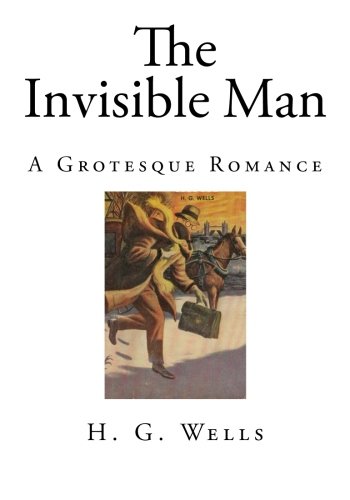
Check price of The Invisible Man on Amazon
What to Read Next
- The War of the Worlds by H.G. Wells: Martians invade England
- Strange Case of Dr Jekyll and Mr Hyde by Robert Louis Stevenson: science unleashes a darker self
- Frankenstein by Mary Shelley: a scientist creates something he cannot control
Related: 15 Books Like Invisible Man You’ll Love · The Time Machine by H.G. Wells: Summary and Key Takeaways
Frequently Asked Questions
What is The Invisible Man about?
A scientist makes himself invisible, cannot reverse it and turns to violence.
Who wrote The Invisible Man?
H.G. Wells, in 1897.
What is the Invisible Man's name?
Griffin.
How did he become invisible?
By changing his body's refractive index so it no longer reflects or absorbs light.
How does it end?
A crowd beats Griffin to death, and he becomes visible as he dies.
Is it different from Ralph Ellison's Invisible Man?
Yes. Ellison's 1952 novel is about racial identity in America and is not science fiction.
What age is it for?
Most readers from about 12 up.
Who is Dr. Kemp?
Griffin's former classmate, who refuses to join his plans and alerts the police.
Are there films?
Yes, including the 1933 classic and a 2020 modern version.
How long is it?
About 150 pages.
Is The Invisible Man worth reading?
It depends on what you want. The book is best for readers who want a short, gripping classic about science and power. If that describes you, it is likely a good fit. If not, the titles under What to Read Next may suit you better.