
Disclosure: As an Amazon Associate, Bookish Wisdom earns from qualifying purchases. This doesn’t change our picks or your price.
Quick answer: Good discussion questions for The Kite Runner by Khaled Hosseini focus on friendship and betrayal, guilt and redemption, fathers and sons, class and ethnic prejudice in Afghanistan and the line “there is a way to be good again”. Below are 19 questions grouped by theme, plus a spoiler-free summary.
Quick facts
Author: Khaled Hosseini
Published: 2003
Setting: Kabul, Afghanistan, and Fremont, California, 1970s–2000s
Adaptation: 2007 film
Content note: sexual assault of a child, violence and a suicide attempt
The Kite Runner was Khaled Hosseini’s first novel, and it became one of the most widely read and discussed books of the 2000s. It’s a story about a boy who betrays his best friend and spends the rest of his life trying to make up for it, set against Afghanistan’s history from the last days of the monarchy to the Taliban. It’s emotional and sometimes very hard to read, and it gives book clubs a lot to talk about. This guide includes a spoiler-free summary, characters and themes, and 19 discussion questions grouped by theme. The questions contain spoilers.
Table of Contents
Spoiler-Free Summary
Amir is the son of a wealthy, respected businessman in 1970s Kabul. His closest companion is Hassan, the son of his father’s servant. Amir is a Pashtun and Hassan a Hazara, a persecuted minority, and that difference shapes everything about their friendship. Hassan is fiercely loyal; Amir is jealous of the attention his father gives Hassan and desperate for his father’s approval.
In the winter of 1975, Amir wins Kabul’s kite-fighting tournament, and Hassan runs to bring back the last kite he cut down. What happens to Hassan that day, and what Amir chooses not to do, haunts Amir for decades.
After the Soviet invasion, Amir and his father flee to California. Years later, a phone call from an old family friend draws Amir back to a Taliban-ruled Afghanistan, with a chance to make amends.
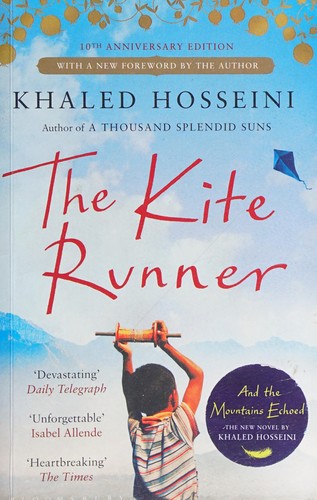
Check price of The Kite Runner on Amazon
Main Characters and Themes
| Character or Theme | What to Know |
|---|---|
| Amir | The narrator, haunted by guilt over betraying his friend |
| Hassan | Amir’s loyal friend, a Hazara boy and the best kite runner in Kabul |
| Baba | Amir’s larger-than-life father |
| Ali | Hassan’s father and Baba’s servant |
| Rahim Khan | Baba’s friend, who believes in Amir |
| Assef | A violent bully who later joins the Taliban |
| Soraya | Amir’s wife, who carries her own past |
| Sohrab | Hassan’s son |
| Guilt and redemption | Whether it’s ever too late to make things right |
| Fathers and sons | Love, expectation and secrets between generations |
Discussion Questions (Contains Spoilers)
Amir and Hassan
- Hassan says “For you, a thousand times over.” What does that line reveal about him and about Amir?
- Why doesn’t Amir step in to help Hassan in the alley? Did you understand his choice at all?
- After that day, Amir pushes Hassan away and frames him for theft. Why?
- Was Amir and Hassan’s relationship ever truly a friendship?
Fathers and Sons
- What does Amir want most from Baba, and does he ever get it?
- How did learning the truth about Baba and Hassan change your view of Baba?
- How is Baba different in America than in Kabul?
- How does Amir’s relationship with his father shape the father he tries to be for Sohrab?
Afghanistan and Prejudice
- How does the book show the treatment of Hazaras by Pashtuns?
- What did you learn about Afghanistan’s history from the novel?
- How has Kabul changed when Amir returns under the Taliban?
Redemption
- Rahim Khan tells Amir, “There is a way to be good again.” Does Amir find it?
- Amir’s fight with Assef leaves him physically injured. Why does he feel relieved?
- How did you feel about the way Sohrab’s story unfolds after Amir brings him to America?
- The book ends with Amir running a kite for Sohrab. Is it a hopeful ending?
Big Picture
- Is Amir a sympathetic narrator? Do you need to like him to love the book?
- Some readers find parts of the plot too coincidental. Did that affect your reading?
- If you’ve seen the 2007 film, how did it compare?
- What will you remember most about this book?
If you or someone in your group is struggling, you can call or text 988 to reach the 988 Suicide & Crisis Lifeline (US).
Book Club Ideas for The Kite Runner
- Serve Afghan food like kabuli pulao, bolani or naan with chutney.
- Bring or make a paper kite and talk about what kite fighting means in the story.
- Look up the history of the Hazara people and share one thing you learned.
- Share a time you wished you’d acted differently if anyone is comfortable doing so.
Books Like The Kite Runner
If your group loved it, try A Thousand Splendid Suns by Khaled Hosseini for two Afghan women’s story, And the Mountains Echoed by Hosseini for another family saga, or Pachinko by Min Jin Lee for a multigenerational story of displacement.
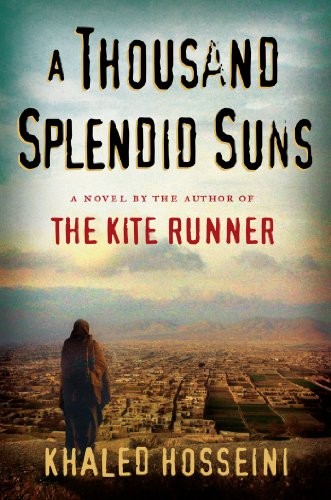
Check price of A Thousand Splendid Suns on Amazon
How to Structure Your Meeting
Start by asking each person to name the moment that made them angriest at Amir. Then work through two or three questions from each theme above, saving the “big picture” questions for the end. If your group is large, split into pairs for one theme and report back.
A simple 90-minute plan:
- 0–15 minutes: food, catch-up and the opening question.
- 15–60 minutes: the discussion questions, theme by theme.
- 60–75 minutes: one of the book club ideas above, or a quick comparison with the adaptation if there is one.
- 75–90 minutes: everyone rates the book out of five in one sentence, then you pick next month’s read.
Related: the best book club books for men and the best literary fiction books for book clubs.
Frequently Asked Questions
What is The Kite Runner about?
Amir, a wealthy boy in Kabul, betrays his loyal friend Hassan, then returns to Taliban-ruled Afghanistan as an adult to make amends.
Is The Kite Runner good for book clubs?
Yes. It’s emotional and raises big questions about guilt, loyalty, redemption and Afghan history.
Is The Kite Runner appropriate for all book clubs?
It includes the sexual assault of a child, violence and a suicide attempt, so share a content note before reading.
Is The Kite Runner a true story?
No. It’s a novel, though Khaled Hosseini was born in Kabul and drew on the history of Afghanistan he knew.