
Disclosure: As an Amazon Associate, Bookish Wisdom earns from qualifying purchases. This doesn’t change our picks or your price.
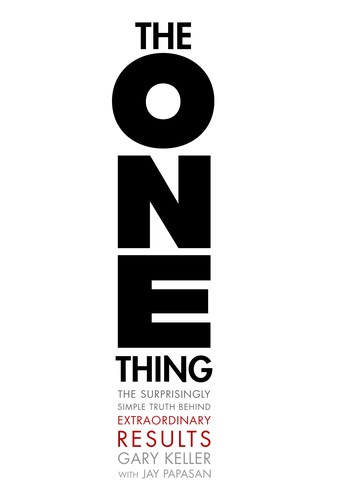
TL;DR: The One Thing: The Surprisingly Simple Truth Behind Extraordinary Results by Gary Keller with Jay Papasan argues that extraordinary results come from narrowing your focus to the one task that makes everything else easier or unnecessary. The authors expose six common lies about success, teach a focusing question and show how to protect time for your most important work.
Do you start each day with a long to-do list and end it feeling that nothing important got done? Gary Keller, founder of the real estate company Keller Williams, and writer Jay Papasan wrote The One Thing in 2012 to address that problem. The book’s message is easy to remember: focus on one thing at a time, and choose it by asking a single question. It mixes stories, productivity research and practical tips, and it has become a popular guide for people who want to cut through busyness. Here’s a summary of its main ideas.
Table of Contents
The One Thing at a Glance
| Detail | Info |
|---|---|
| Authors | Gary Keller with Jay Papasan |
| Published | 2012 |
| Genre | Productivity, self-help |
| Core idea | Focus on the one thing that makes everything else easier or unnecessary |
| Structure | Three parts: the lies, the truth and extraordinary results |
| Best for | Busy professionals, entrepreneurs, students and anyone who feels scattered |
What Is The One Thing About?
The authors use the image of falling dominoes. A domino can topple one about one and a half times its size, so a small domino can eventually knock over a huge one if the sequence is lined up. In life and business, they say, you should look for the first domino, the action that sets other results in motion.
To find it, they offer the focusing question: What’s the ONE Thing I can do such that by doing it everything else will be easier or unnecessary? The question can be asked about your whole life, a year, a week or an hour, and it narrows your attention to what matters now.
Key Ideas, Part by Part
The Six Lies Between You and Success
Keller and Papasan begin by challenging six beliefs. The first is that everything matters equally; in fact, a few things matter much more, and the 80/20 principle shows that a small share of actions create most results. The second is multitasking, which they argue is really switching between tasks and lowers performance. The third is a disciplined life, which they replace with the idea of building a few key habits instead of trying to be disciplined about everything.
The fourth lie is that willpower is always on call. They explain that willpower is limited and tends to run low as the day goes on, so you should do your most important work early. The fifth is that a balanced life is the ideal. The authors say that there is no perfect balance, and that you should counterbalance by making deliberate choices and accepting that some areas will get more time at certain moments. The sixth lie is that big is bad, whereas thinking big can inspire action and help you decide what to pursue.
The Truth: Habits, Purpose and Priority
The second part introduces the truth behind extraordinary results. The authors suggest that success is sequential, not simultaneous: you focus on one thing, get it moving, then add the next. They recommend building a habit in about sixty-six days, a figure from research that suggests the time to form a habit varies, and focusing on one habit at a time.
They describe a success pyramid in which purpose sits at the top, priority sits in the middle and productivity lies at the bottom. Purpose gives direction, priority tells you what to do first, and productivity is the time and effort you put in. They explain how to set goals by working backward from a big goal to a someday goal, then to five-year, one-year, monthly, weekly and daily goals, with the right-now action as the one thing.
Time Blocking and the Four Thieves
The third part focuses on using the approach. The most important instruction is to block time for your one thing. The authors recommend keeping four hours each day free for your top priority, ideally early in the day, and guarding that time like an appointment. They also suggest planning blocks for planning itself and for rest.
They name four thieves of productivity. The first is the inability to say no, which causes you to take on too many tasks. The second is fear of chaos, because focusing on one thing means letting other tasks slide. The third is poor health habits, since energy matters, and the fourth is an environment that doesn’t support your goals. Handling these thieves is part of staying on track.
6 Key Takeaways From The One Thing
- Ask the focusing question. Find the task that makes others easier or unnecessary.
- Not everything matters equally. A few actions drive most results.
- Don’t multitask. Switching tasks costs time and quality.
- Protect your time. Block hours for your most important work.
- Do first things first. Use your best energy early.
- Build one habit at a time. Sequence beats simultaneous effort.
Ideas Worth Remembering
- Success is sequential, not simultaneous. (paraphrased)
- Willpower is a limited resource, so use it wisely. (paraphrased)
- Big goals give direction; small actions give progress. (paraphrased)
- What you say no to defines what you can achieve. (paraphrased)
How to Apply The One Thing in Real Life
- Ask the question daily. Start each morning with the focusing question.
- Block four hours. Schedule a protected time block for deep work.
- Set a someday goal. Work backward to today’s one action.
- Say no more often. Decline tasks that do not serve your priority.
- Check your environment. Remove distractions from your workspace.
Criticisms and Limits
Critics say that the book’s ideas are simple and sometimes repetitive, and that the one thing approach does not fit every job, especially roles that require juggling many responsibilities. Some of the research behind claims, such as the number of days needed to form a habit, is presented more firmly than studies justify. The book also draws on real estate success stories that may not apply to everyone.
Used flexibly, though, the focusing question is a practical tool. Treat it as a way to start your day, not a rule that every task must be reduced to one.
The One Thing in One Minute
Ask what single action would make everything else easier or unnecessary, and do it first. Reject the six lies, including multitasking and perfect balance. Use time blocking to protect about four hours a day for your top priority, build one habit at a time and guard against the four thieves: not saying no, fear of chaos, poor health and an unsupportive environment.
A Sample Day Using the Method
Imagine a marketing manager who wants to launch a new campaign. In the morning, she asks the focusing question and decides that finalizing the strategy is the one thing. From eight to noon, she blocks her calendar, closes email and works on it. In the afternoon, she handles meetings and routine tasks. At the end of the day she plans tomorrow’s one thing. Over a few weeks, the major project advances while smaller tasks are handled in leftover time.
Multitasking and the Research
The authors cite studies suggesting that people who switch between tasks make more errors and take longer to finish. Many productivity writers agree, though the details vary. The practical lesson is to batch similar tasks, silence notifications during focus blocks and finish one task before starting another. Even short stretches of focus can help, and you can build up from there.
How It Compares With Other Productivity Books
The One Thing shares ground with Essentialism and Deep Work. Essentialism helps you decide what to eliminate, Deep Work explains how to concentrate and The One Thing gives you a daily question and a time block. Atomic Habits adds tools for making the behavior stick. If you read only one, choose the one that matches your main problem: too many commitments, too many distractions or too little follow-through.
Who Should Read The One Thing?
Read it if you feel scattered, struggle to prioritize or lead a team that needs focus. It’s quick and motivating. If you want more on eliminating commitments, read Essentialism, and for habits, try Atomic Habits.
What to Read Next
- Essentialism by Greg McKeown the disciplined pursuit of less
- Deep Work by Cal Newport rules for focused success
- Atomic Habits by James Clear a system for building good habits
Related: Essentialism summary and key takeaways and Deep Work summary and key takeaways.
Frequently Asked Questions
What is the main idea of The One Thing?
That focusing on the single most important task, chosen with a focusing question, leads to extraordinary results.
What is the focusing question?
What’s the ONE Thing I can do such that by doing it everything else will be easier or unnecessary?
What are the six lies?
Everything matters equally, multitasking, a disciplined life, willpower is always on call, a balanced life and big is bad.
How long should I block time for my one thing?
The authors suggest up to four hours a day, ideally early in the day.
Is it only for business?
No, it also works for studying, creative work, health goals and family life.