
Disclosure: As an Amazon Associate, Bookish Wisdom earns from qualifying purchases. This doesn't change our picks or your price.
TL;DR: When Raynor Winn and her husband Moth lose their home and learn he has a terminal illness, they decide to walk the 630-mile South West Coast Path in England with little money and a tent. The walk becomes a way to heal and rethink their lives.
Table of Contents
The Salt Path at a Glance
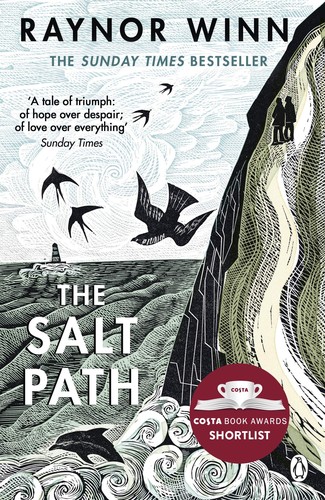
| Author | Raynor Winn |
| First published | 2018 |
| Type | Travel memoir |
| Best for | readers who like walking memoirs about resilience |
The Salt Path is a memoir by Raynor Winn, first published in 2018. The book was a bestseller and was adapted into a 2025 film. Some details of the author's account have been questioned in later press coverage, so it is best read as her own telling. Below you will find a part-by-part summary, five key takeaways, a few ideas worth remembering and a note on who will enjoy it most. The summary paraphrases the author's ideas rather than quoting them at length, so it works as a refresher or a preview, not a replacement for the book.
Content note: Mentions serious illness and homelessness.
The Story, Part by Part
Losing everything
A legal dispute over a business debt leaves Raynor and Moth without their home. At the same time, Moth is diagnosed with a rare, degenerative brain condition.
A plan
With almost nothing, they choose to walk the coastal path from Somerset to Dorset, camping along the way.
Hunger and weather
They live on very little money, often eating cheap food and getting soaked by storms.
People on the path
Strangers show kindness and others avoid them because they look homeless. They learn what it feels like to be invisible.
Healing
As they walk, Moth's symptoms ease, and they find strength in the sea air and the landscape.
Next steps
By the end, they have found a new way of seeing their situation, but the future remains uncertain.
5 Key Takeaways
- Nature can heal body and mind.
- Poverty and homelessness can be hidden from view.
- Simple living reveals what matters.
- Companionship makes hardship bearable.
- Hope can start with one step.
Ideas Worth Remembering
These are paraphrased, not direct quotes:
- The writing is plain and descriptive.
- Some of the claims in the memoir have been debated.
- The path is a character in the story.
Who Should Read The Salt Path?
Read it if you like nature writing, memoirs of hardship and hiking stories. Keep in mind the debates about the facts.
Questions to Think About After Reading
These prompts work for solo reading, a book club or a classroom discussion of The Salt Path:
- Which moment in the author's life stayed with you longest?
- How does the author's voice shape the way you judge the people in the story?
- What would you want to ask the author if you could?
Quick Facts to Remember
- Book: The Salt Path by Raynor Winn (2018)
- Type: Travel memoir
- Best for: readers who like walking memoirs about resilience
- Main idea in one line: Nature can heal body and mind.
Reading Time and Format
A memoir is often best in one or two long sittings so the voice stays consistent. An audiobook read by the author, where one exists, can add a lot. Whichever format you choose, a library copy is a low-cost way to try the book before you buy, and used or digital editions are often cheaper than new print copies.
How to Use This Summary
Use this page as a quick reference before a book club meeting, an exam, or a decision about whether The Salt Path is worth your time. The takeaways are written to stand on their own. If a point interests you, go back to the book for the author's full argument, examples and style, which no short summary can carry.
A simple way to get the most from it: first read the TL;DR and the takeaways to decide if the book fits your interests, then read the part-by-part section for the structure, and finally write down one idea you want to remember or one question you want answered by the full text.
A Note on Accuracy and Spoilers
This summary is based on the published text of The Salt Path, not on any film, series or stage adaptation, which often change the story. Details are kept at the level of the main events so that nothing is invented. Editions differ slightly in length and wording, so page numbers and small details may vary from your copy.
Should You Read the Book?
If you decide to read it, give the first chapters time. A memoir depends on voice, and the details of a life land harder in the author's own telling than in any summary. If you are still unsure, read a free sample or the first chapter, because the opening pages usually show whether the voice and subject suit you. Reviews from readers with tastes like yours can help too, but your own reaction to a few pages is the best test.
Check price of The Salt Path on Amazon
What to Read Next
- Wild by Cheryl Strayed: a woman hikes the Pacific Crest Trail
- A Walk in the Woods by Bill Bryson: a funny book about the Appalachian Trail
- The Wild Silence by Raynor Winn: the follow-up to The Salt Path
Frequently Asked Questions
Is The Salt Path a true story?
It is presented as a memoir, though some details have been questioned.
Is there a film?
Yes, released in 2025.
How long is the South West Coast Path?
About 630 miles.
Is The Salt Path worth reading?
It depends on what you want. The book is best for readers who like walking memoirs about resilience. If that describes you, it is likely a good fit. If not, the titles under What to Read Next may suit you better.
Can this summary replace reading The Salt Path?
No. A summary covers the main events and ideas, but it cannot carry the author's voice, detail or pacing. Use it to decide whether to read the book, to refresh your memory or to prepare for a discussion.