
Disclosure: As an Amazon Associate, Bookish Wisdom earns from qualifying purchases. This doesn't change our picks or your price.
TL;DR: During the French Revolution, a mysterious Englishman called the Scarlet Pimpernel rescues aristocrats from the guillotine. French agent Chauvelin forces Marguerite Blakeney, a famous beauty, to help unmask him by threatening her brother. She then discovers the hero is her own seemingly foolish husband, Sir Percy, and races to France to warn and save him.
Table of Contents
The Scarlet Pimpernel at a Glance
| Author | Baroness Orczy |
| First published | 1905 |
| Type | Novel |
| Best for | readers who love swashbuckling romance and secret identities |
The Scarlet Pimpernel is a historical adventure novel by Baroness Emma Orczy, published in 1905. It created the idea of the hero with a secret identity, which inspired Zorro and many superheroes. Below you will find a part-by-part summary, five key takeaways, ideas worth remembering and a note on who will enjoy it.
Content note: Includes the threat of execution and some violence.
Main Characters
- Sir Percy Blakeney: A wealthy English baronet who pretends to be a fool.
- Marguerite Blakeney: Percy's clever French wife, once an actress.
- Chauvelin: A ruthless agent of the French Republic.
- Armand St. Just: Marguerite's brother, secretly a member of the League.
- Sir Andrew Ffoulkes: A loyal member of the League of the Scarlet Pimpernel.
What Happens, Part by Part (Contains Spoilers)
A hero in disguise
In 1792, the French Revolution is sending aristocrats to the guillotine. A band of Englishmen, the League of the Scarlet Pimpernel, rescues them in clever disguises. Their leader signs his notes with a small red flower. No one knows who he is. Marguerite, a celebrated French-born wife of Sir Percy Blakeney, finds her husband dull and foppish, and their marriage is cold.
A cruel bargain
Chauvelin, a French envoy, has captured a letter proving Marguerite's brother Armand is helping the League. He tells Marguerite that Armand will be executed unless she helps identify the Pimpernel. At a ball, she reluctantly passes on information that leads Chauvelin to a midnight meeting place.
The truth about Percy
Marguerite enters Percy's private study and sees a ring with the scarlet pimpernel flower. She realizes her husband is the Pimpernel, and that she has just betrayed him. She also learns that he hid his love for her because of an old misunderstanding: she had once, unknowingly, caused a French family's arrest.
The race to France
Marguerite follows Percy to France with Sir Andrew to warn him. Chauvelin is already on the trail, heading to Calais and then to a lonely hut on the coast where Percy plans to rescue Armand and an old count. Marguerite reaches the area but is captured.
The final trick
Percy, disguised as an old Jewish peddler, has been under Chauvelin's nose all along. He tricks the French soldiers, rescues Armand and the count, and escapes to an English ship with Marguerite. The couple reconcile, deeply in love, and Chauvelin is left humiliated.
5 Key Takeaways
- Appearances can hide great courage.
- Love requires trust and honesty.
- Ordinary people can resist tyranny.
- Cleverness can defeat brute force.
- Mistakes can be forgiven when people speak openly.
Ideas Worth Remembering
These are paraphrased, not direct quotes:
- A hero does not need to be recognized to do good.
- Pride and silence can damage a marriage.
- Bravery can wear a disguise.
Who Should Read The Scarlet Pimpernel?
Read The Scarlet Pimpernel if you enjoy romance, adventure and clever secret identities. It suits teens and adults.
Questions to Think About After Reading
These prompts work for solo reading, a book club or a classroom discussion of The Scarlet Pimpernel:
- Why does Percy pretend to be a fool?
- Was Marguerite right to help Chauvelin at first?
- How does the novel portray the French Revolution?
How to Use This Summary
Use this page as a quick reference before a book club meeting, an exam, or a decision about whether The Scarlet Pimpernel is worth your time. The takeaways are written to stand on their own. If a point interests you, go back to the book for the author's full story, characters and style, which no short summary can replace.
A Note on Accuracy and Spoilers
This summary is based on the published text of The Scarlet Pimpernel, not on any film, series or stage adaptation, which often change the story. Details are kept at the level of the main events so that nothing is invented. Editions differ slightly in length and wording, so page numbers and small details may vary between copies.
Should You Read the Book?
Yes. It is witty, romantic and fast, and its secret-identity plot still delights. Some of its politics and portrayals are dated.
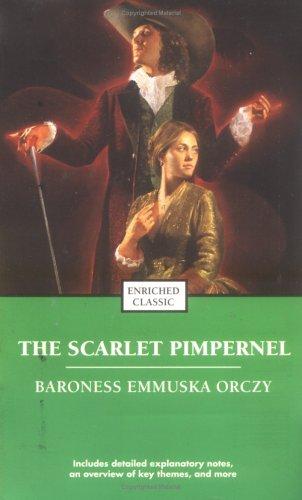
Check price of The Scarlet Pimpernel on Amazon
What to Read Next
- A Tale of Two Cities by Charles Dickens: love and sacrifice during the Revolution
- The Count of Monte Cristo by Alexandre Dumas: disguise and revenge
- The Prisoner of Zenda by Anthony Hope: a swashbuckling impersonation
Frequently Asked Questions
What is The Scarlet Pimpernel about?
A secret English hero rescues French aristocrats, and his wife discovers his identity.
Who wrote it?
Baroness Emma Orczy, in 1905.
Who is the Scarlet Pimpernel?
Sir Percy Blakeney.
What is a pimpernel?
A small red wildflower, used as the hero's symbol.
Who is the villain?
Chauvelin, an agent of the French Republic.
Is there a sequel?
Yes, several, beginning with I Will Repay and El Dorado.
What age is it for?
About 12 and up.
Are there films?
Yes, including a famous 1934 film with Leslie Howard.
Who are the main characters in The Scarlet Pimpernel?
The main characters are Sir Percy Blakeney, Marguerite Blakeney, Chauvelin, Armand St. Just and Sir Andrew Ffoulkes. Sir Percy Blakeney: A wealthy English baronet who pretends to be a fool. Marguerite Blakeney: Percy's clever French wife, once an actress. Chauvelin: A ruthless agent of the French Republic.
Is The Scarlet Pimpernel worth reading?
It depends on what you want. The book is best for readers who love swashbuckling romance and secret identities. If that describes you, it is likely a good fit. If not, the titles under What to Read Next may suit you better.