
Disclosure: As an Amazon Associate, Bookish Wisdom earns from qualifying purchases. This doesn't change our picks or your price.
TL;DR: Percy Jackson's quiet school year ends when giant cannibals attack a dodgeball game. Back at Camp Half-Blood, the magical tree that protects the camp has been poisoned, and the camp is in danger. Percy learns that his friend Grover is trapped by a Cyclops. With Annabeth and a surprising new half-brother, Tyson, Percy sails into the Sea of Monsters to save Grover and find the Golden Fleece.
Table of Contents
The Sea of Monsters at a Glance
| Author | Rick Riordan |
| First published | 2006 |
| Type | Fantasy |
| Best for | young readers who want a funny, fast adventure full of Greek mythology |
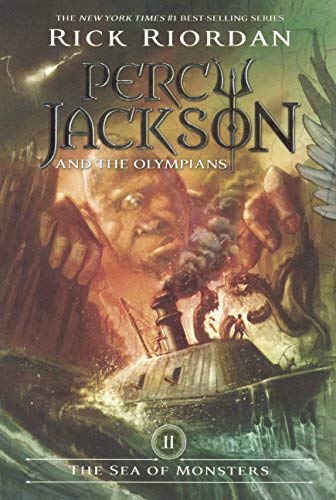
The Sea of Monsters is the second book in Rick Riordan's Percy Jackson and the Olympians series, published in 2006. It was filmed in 2013. Below you will find a part-by-part summary, five key takeaways, ideas worth remembering and a note on who will enjoy it.
Content note: Includes fantasy violence and monsters.
Main Characters
- Percy Jackson: A young demigod, son of the sea's ruler in Greek myth.
- Annabeth Chase: A clever demigod and Percy's friend.
- Tyson: A young Cyclops and Percy's half-brother.
- Grover Underwood: A satyr and Percy's best friend.
- Clarisse La Rue: A tough, competitive camper.
What Happens, Part by Part (Contains Spoilers)
A dangerous start
At school, Percy befriends Tyson, a big, gentle homeless kid. When monsters attack during dodgeball, Tyson protects him, and Percy learns that Tyson is a Cyclops and his half-brother. Annabeth arrives to take Percy to Camp Half-Blood. They find that Thalia's tree, which guards the camp, has been poisoned, and monsters are getting in.
The quest
Percy has dreams that Grover is trapped on an island by a Cyclops named Polyphemus, who wants to marry him. Grover is near the Golden Fleece, an object that can heal anything, including the tree. The camp gives the quest to Clarisse, but Percy, Annabeth and Tyson sneak away to help.
The sea
They travel through the Sea of Monsters, known to humans as the Bermuda Triangle. They meet the villain Luke on a cruise ship full of monsters. They escape and face the monsters Scylla and Charybdis. They visit Circe's island, where Percy is turned into a guinea pig, and Annabeth saves him. They sail past the Sirens, and Annabeth hears their song.
The island
They reach Polyphemus's island and rescue Grover. Tyson shows great courage, and Clarisse joins the fight. They trick the Cyclops and take the Golden Fleece. Percy and his friends escape, but Luke and his allies try to steal the Fleece. Percy fights Luke and keeps the Fleece safe.
The Fleece
They return to camp and place the Fleece on the tree. It heals the tree and also brings back Thalia, the daughter of the sky's ruler in Greek myth, who had been turned into the tree years ago. Percy realizes the prophecy about a powerful demigod might not be about him alone. Tyson goes to work in the undersea forges.
5 Key Takeaways
- Family can come in surprising forms.
- Courage includes protecting friends.
- Prejudice can blind people.
- Teamwork beats lone heroics.
- Monsters are not always what they seem.
Ideas Worth Remembering
These are paraphrased, not direct quotes:
- Kindness can turn strangers into family.
- Every hero needs friends.
- Being different does not make someone less valuable.
Who Should Read The Sea of Monsters?
Read The Sea of Monsters if you enjoyed The Lightning Thief and love funny, mythic adventures. It suits ages 9 to 14.
About Rick Riordan
Rick Riordan (born 1964) is an American author and former teacher. He created Percy Jackson as a bedtime story for his son. The Percy Jackson series led to many spin-offs based on myths from different cultures. The books have sold tens of millions of copies, and a Disney+ series began in 2023.
Questions to Think About After Reading
These prompts work for solo reading, a book club or a classroom discussion of The Sea of Monsters:
- How does Percy's view of Tyson change?
- Why is the Golden Fleece important?
- How does the book retell the Odyssey?
How to Use This Summary
Use this page as a quick reference before a book club meeting, an exam, or a decision about whether The Sea of Monsters is worth your time. The takeaways are written to stand on their own. If a point interests you, go back to the book for the author's full story, characters and style, which no short summary can replace.
A Note on Accuracy and Spoilers
This summary is based on the published text of The Sea of Monsters, not on any film, series or stage adaptation, which often change the story. Details are kept at the level of the main events so that nothing is invented. Editions differ slightly in length and wording, so page numbers and small details may vary between copies.
Should You Read the Book?
Yes. It is a fun, exciting sequel with great new characters.
Check price of The Sea of Monsters on Amazon
What to Read Next
- The Titan's Curse by Rick Riordan: the third Percy Jackson book
- The Lightning Thief by Rick Riordan: the first Percy Jackson book
- The Odyssey by Homer: the ancient epic the book draws on
Related: Rick Riordan Books in Order Printable List · The Red Pyramid by Rick Riordan: Summary and Key Takeaways
Frequently Asked Questions
What is The Sea of Monsters about?
Percy sails into the Sea of Monsters to rescue Grover and find the Golden Fleece.
Who wrote it?
Rick Riordan, in 2006.
Who is Tyson?
A Cyclops and Percy's half-brother.
What is the Sea of Monsters?
The Bermuda Triangle, in the story's world.
What is the Golden Fleece?
A magical object that can heal anything.
Who is Polyphemus?
A Cyclops who holds Grover captive.
What happens to Thalia?
She is brought back to human form by the Fleece.
Is there a film?
Yes, the 2013 film.
What age is it for?
About 9 to 14.
How long is it?
About 280 pages.
Is it based on myths?
Yes, especially Homer's Odyssey.
What comes next?
The Titan's Curse.
Do I need to read The Lightning Thief first?
Yes. The story continues directly from the first book.
Is The Sea of Monsters worth reading?
It depends on what you want. The book is best for young readers who want a funny, fast adventure full of Greek mythology. If that describes you, it is likely a good fit. If not, the titles under What to Read Next may suit you better.