
Disclosure: As an Amazon Associate, Bookish Wisdom earns from qualifying purchases. This doesn't change our picks or your price.
TL;DR: The once-proud Compson family of Mississippi is falling apart. Their story is told in four sections: through the confused mind of Benjy, a man with an intellectual disability; through his brother Quentin on the day he dies at Harvard; through the bitter Jason; and through an outside narrator focused on Dilsey, the family's Black servant. At the center is their lost sister, Caddy.
Table of Contents
The Sound and the Fury at a Glance
| Author | William Faulkner |
| First published | 1929 |
| Type | Novel |
| Best for | readers who want a challenging, groundbreaking literary classic |
The Sound and the Fury is a novel by William Faulkner, published in 1929. It is famous for its stream-of-consciousness style and is considered one of the greatest American novels. Below you will find a part-by-part summary, five key takeaways, ideas worth remembering and a note on who will enjoy it.
Content note: Includes suicide, racism, cruelty and family breakdown.
Main Characters
- Benjy Compson: The youngest son, who has an intellectual disability.
- Quentin Compson: The oldest son, a Harvard student obsessed with family honor.
- Jason Compson IV: The bitter, cruel third son.
- Caddy Compson: The only daughter, loved by her brothers.
- Dilsey Gibson: The family's steady, loyal servant.
What Happens, Part by Part (Contains Spoilers)
Benjy, April 7, 1928
Benjy, thirty-three, cannot speak and experiences time as a jumble of memories. His thoughts jump between the present and the past, especially his memories of Caddy, who cared for him and smelled “like trees.” He moans when he remembers losing her.
Quentin, June 2, 1910
Quentin, at Harvard, spends his last day wandering Cambridge. He is obsessed with Caddy's lost virginity and the family's honor, and with the idea of time. He breaks his grandfather's watch, and at the end of the day he drowns himself in the Charles River.
Jason, April 6, 1928
Jason, bitter and greedy, supports the household. He resents Caddy, who was cast out after a pregnancy and a failed marriage, and he steals the money she sends for her daughter, Miss Quentin, who lives with the family.
Dilsey, April 8, 1928
Told in the third person, the final section follows Dilsey, who holds the household together. Miss Quentin runs away with Jason's hidden money, and Jason chases her furiously but fails.
The ending
The novel closes as Benjy is taken in a carriage around the town square. When the carriage turns the wrong way, he howls until it is turned the familiar way. Order is restored briefly, but the family is clearly doomed.
5 Key Takeaways
- The past can haunt and destroy a family.
- Different perspectives reveal different truths.
- Obsession with honor can be deadly.
- Endurance, like Dilsey's, outlasts pride.
- The decline of the Old South reflected deeper moral rot.
Ideas Worth Remembering
These are paraphrased, not direct quotes:
- Time can feel like a trap.
- The people who serve others often hold everything together.
- Loss can define a family's entire life.
Who Should Read The Sound and the Fury?
Read The Sound and the Fury if you want a challenging literary classic and enjoy experimental writing. It suits adults and ambitious older teens.
Questions to Think About After Reading
These prompts work for solo reading, a book club or a classroom discussion of The Sound and the Fury:
- Why is Caddy at the center even though she never narrates?
- What does Dilsey's section add?
- How does Faulkner show time?
How to Use This Summary
Use this page as a quick reference before a book club meeting, an exam, or a decision about whether The Sound and the Fury is worth your time. The takeaways are written to stand on their own. If a point interests you, go back to the book for the author's full story, characters and style, which no short summary can replace.
A Note on Accuracy and Spoilers
This summary is based on the published text of The Sound and the Fury, not on any film, series or stage adaptation, which often change the story. Details are kept at the level of the main events so that nothing is invented. Editions differ slightly in length and wording, so page numbers and small details may vary between copies.
Should You Read the Book?
Yes, if you are patient. The first two sections are difficult, but the novel becomes clearer and very powerful. Many readers use a guide or reread it.
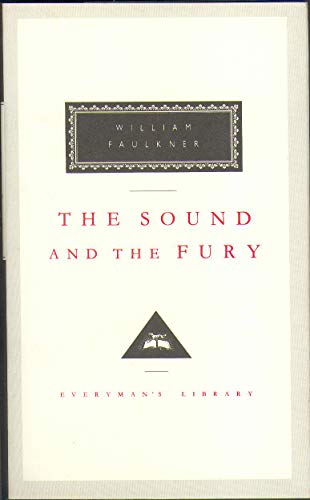
Check price of The Sound and the Fury on Amazon
What to Read Next
- As I Lay Dying by William Faulkner: another family story told by many voices
- Absalom, Absalom! by William Faulkner: Quentin Compson returns
- Mrs Dalloway by Virginia Woolf: stream of consciousness
Frequently Asked Questions
What is The Sound and the Fury about?
The decline of a Southern family told through four sections.
Who wrote it?
William Faulkner, in 1929.
Why is it hard to read?
The first sections use stream of consciousness and jump in time without warning.
Who is Caddy?
The Compson sister, central to her brothers' memories.
What happens to Quentin?
He takes his own life in 1910.
Where does the title come from?
From Macbeth: life is “a tale told by an idiot, full of sound and fury.”
What age is it for?
Adults and ambitious older teens.
How long is it?
About 330 pages.
Who is Dilsey?
The family's servant, who endures and holds the family together.
Did Faulkner win the Nobel Prize?
Yes, in 1949.
Where is it set?
In the fictional town of Jefferson, Mississippi.
Is The Sound and the Fury worth reading?
It depends on what you want. The book is best for readers who want a challenging, groundbreaking literary classic. If that describes you, it is likely a good fit. If not, the titles under What to Read Next may suit you better.