
Disclosure: As an Amazon Associate, Bookish Wisdom earns from qualifying purchases. This doesn't change our picks or your price.
TL;DR: In Padua, wealthy Baptista Minola will not let anyone marry his younger daughter, Bianca, until his sharp-tongued elder daughter, Katherina, is married. Petruchio arrives and woos Katherina for her money, then sets out to “tame” her. The play is a farce with a controversial theme.
Table of Contents
The Taming of the Shrew at a Glance
| Author | William Shakespeare |
| First published | 1593 |
| Type | Comedic play |
| Best for | students and readers who want a classic Shakespeare comedy |
The Taming of the Shrew is a play by William Shakespeare, first published in 1593. The play is often debated today for its treatment of women. It has a framing story of a drunk man named Christopher Sly. Below you will find a part-by-part summary, five key takeaways, a few ideas worth remembering and a note on who will enjoy it most. The part-by-part section gives away the plot, including the ending, so skip it if you have not read the book yet.
The Play, Act by Act (Contains Spoilers)
Induction
A drunk man named Christopher Sly is tricked into thinking he is a lord. A troupe performs the play for him.
Baptista's rule
Baptista says Bianca cannot marry until Katherina does. Suitors circle Bianca.
Petruchio
Petruchio decides to marry Katherina. He is bold.
The wedding
Petruchio arrives late and dressed oddly. He takes Katherina home.
Taming
Petruchio treats Katherina harshly to change her behavior.
The wager
The final scene features a wager on the wives' obedience. Katherina gives a long speech.
The Summary at a Glance
| Part | In one line |
|---|---|
| Induction | A drunk man named Christopher Sly is tricked into thinking he is a lord. |
| Baptista's rule | Baptista says Bianca cannot marry until Katherina does. |
| Petruchio | Petruchio decides to marry Katherina. |
| The wedding | Petruchio arrives late and dressed oddly. |
| Taming | Petruchio treats Katherina harshly to change her behavior. |
| The wager | The final scene features a wager on the wives' obedience. |
5 Key Takeaways
- Marriage was transactional in Shakespeare's day.
- Power dynamics in marriage are central.
- Disguise and trickery drive comedy.
- Modern readers debate the ending.
- Language is a weapon.
Ideas Worth Remembering
These are paraphrased, not direct quotes:
- The play within a play adds a layer.
- Directors interpret the ending differently.
- Katherina's speech is controversial.
Who Should Read The Taming of the Shrew?
Read it if you are studying Shakespeare. Be ready to discuss the themes.
Questions to Think About After Reading
These prompts work for solo reading, a book club or a classroom discussion of The Taming of the Shrew:
- Which speech would you most like to hear performed?
- Which character is the most sympathetic, and does that change by the end?
- What would a modern staging need to change?
Quick Facts to Remember
- Book: The Taming of the Shrew by William Shakespeare (1593)
- Type: Comedic play
- Best for: students and readers who want a classic Shakespeare comedy
- Main idea in one line: Marriage was transactional in Shakespeare's day.
Reading Time and Format
A play is short enough to read in an evening, but it is meant for the stage. Look for an edition with notes, or watch a recorded performance after you read. Whichever format you choose, a library copy is a low-cost way to try the book before you buy, and used or digital editions are often cheaper than new print copies.
How to Use This Summary
Use this page as a quick reference before a book club meeting, an exam, or a decision about whether The Taming of the Shrew is worth your time. The takeaways are written to stand on their own. If a point interests you, go back to the book for the author's full argument, examples and style, which no short summary can carry.
A simple way to get the most from it: first read the TL;DR and the takeaways to decide if the book fits your interests, then read the part-by-part section for the structure, and finally write down one idea you want to remember or one question you want answered by the full text.
A Note on Accuracy and Spoilers
This summary is based on the published text of The Taming of the Shrew, not on any film, series or stage adaptation, which often change the story. Details are kept at the level of the main events so that nothing is invented. Editions differ slightly in length and wording, so page numbers and small details may vary from your copy.
Should You Read the Book?
A play is written to be performed, so try reading the speeches aloud or watching a staged version. Then use this summary to follow the structure. If you are still unsure, read a free sample or the first chapter, because the opening pages usually show whether the voice and subject suit you. Reviews from readers with tastes like yours can help too, but your own reaction to a few pages is the best test.
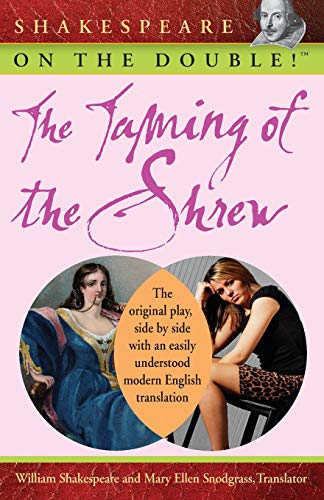
Check price of The Taming of the Shrew on Amazon
What to Read Next
- Much Ado About Nothing by William Shakespeare: a battle of wits
- Twelfth Night by William Shakespeare: a comedy of disguise
- As You Like It by William Shakespeare: a comedy of love in the forest
Frequently Asked Questions
Is The Taming of the Shrew sexist?
Many modern readers think it is, and productions often try to rethink it.
Who is Katherina?
The sharp-tongued older sister.
What is the frame story?
Christopher Sly watches the play.
Is The Taming of the Shrew worth reading?
It depends on what you want. The book is best for students and readers who want a classic Shakespeare comedy. If that describes you, it is likely a good fit. If not, the titles under What to Read Next may suit you better.
Can this summary replace reading The Taming of the Shrew?
No. A summary covers the main events and ideas, but it cannot carry the author's voice, detail or pacing. Use it to decide whether to read the book, to refresh your memory or to prepare for a discussion.