
Disclosure: As an Amazon Associate, Bookish Wisdom earns from qualifying purchases. This doesn't change our picks or your price.
TL;DR: A tiny caterpillar hatches from an egg on a Sunday and eats through increasingly large amounts of food during the week. He gets a stomach ache but then eats a leaf, becomes big and fat, builds a cocoon and emerges as a beautiful butterfly.
Table of Contents
The Very Hungry Caterpillar at a Glance
| Author | Eric Carle |
| First published | 1969 |
| Type | Picture book |
| Best for | toddlers and preschoolers learning counting and days of the week |
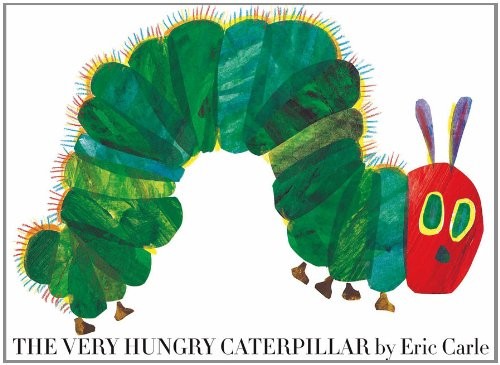
The Very Hungry Caterpillar is a picture book by Eric Carle, first published in 1969. The book is illustrated with Eric Carle's collage art and has holes in the pages. It has sold many millions of copies. Below you will find a part-by-part summary, five key takeaways, a few ideas worth remembering and a note on who will enjoy it most. The part-by-part section gives away the plot, including the ending, so skip it if you have not read the book yet.
What Happens, Page by Page (Contains Spoilers)
The egg
A small egg is on a leaf.
Monday to Friday
The caterpillar eats one apple on Monday, two pears on Tuesday and so on.
Saturday
He eats many treats.
Stomach ache
He feels sick.
Sunday
He eats a leaf and feels better.
The butterfly
He builds a cocoon and emerges.
The Summary at a Glance
| Part | In one line |
|---|---|
| The egg | A small egg is on a leaf. |
| Monday to Friday | The caterpillar eats one apple on Monday, two pears on Tuesday and so on. |
| Saturday | He eats many treats. |
| Stomach ache | He feels sick. |
| Sunday | He eats a leaf and feels better. |
| The butterfly | He builds a cocoon and emerges. |
5 Key Takeaways
- Everyone changes and grows.
- Counting is fun.
- Days of the week form a pattern.
- Eating too much can cause trouble.
- Transformation can be beautiful.
Ideas Worth Remembering
These are paraphrased, not direct quotes:
- The holes invite touch.
- The art is bold.
- The book teaches life cycles.
Who Should Read The Very Hungry Caterpillar?
Read it with toddlers and preschoolers. It is a classic.
Questions to Think About After Reading
These prompts work for solo reading, a book club or a classroom discussion of The Very Hungry Caterpillar:
- What do you notice in the pictures that the words do not say?
- How would you change the ending, and why?
- Which line would a child most like to repeat?
Quick Facts to Remember
- Book: The Very Hungry Caterpillar by Eric Carle (1969)
- Type: Picture book
- Best for: toddlers and preschoolers learning counting and days of the week
- Main idea in one line: Everyone changes and grows.
Reading Time and Format
A picture book takes only a few minutes, so it suits bedtime or a classroom circle. Look for a sturdy board or hardcover edition if small hands will handle it. Whichever format you choose, a library copy is a low-cost way to try the book before you buy, and used or digital editions are often cheaper than new print copies.
How to Use This Summary
Use this page as a quick reference before a book club meeting, an exam, or a decision about whether The Very Hungry Caterpillar is worth your time. The takeaways are written to stand on their own. If a point interests you, go back to the book for the author's full argument, examples and style, which no short summary can carry.
A simple way to get the most from it: first read the TL;DR and the takeaways to decide if the book fits your interests, then read the part-by-part section for the structure, and finally write down one idea you want to remember or one question you want answered by the full text.
A Note on Accuracy and Spoilers
This summary is based on the published text of The Very Hungry Caterpillar, not on any film, series or stage adaptation, which often change the story. Details are kept at the level of the main events so that nothing is invented. Editions differ slightly in length and wording, so page numbers and small details may vary from your copy.
Should You Read the Book?
This is a short book, so it takes only a few minutes to read aloud. Read it once for the story, then again slowly so children can spot details in the pictures and join in on repeated lines. If you are still unsure, read a free sample or the first chapter, because the opening pages usually show whether the voice and subject suit you. Reviews from readers with tastes like yours can help too, but your own reaction to a few pages is the best test.
Check price of The Very Hungry Caterpillar on Amazon
What to Read Next
- The Grouchy Ladybug by Eric Carle: another Carle book
- Brown Bear, Brown Bear, What Do You See? by Bill Martin Jr.: a repeating book
- The Tiny Seed by Eric Carle: a seed's journey
Related: 15 Books Like The Very Hungry Caterpillar You’ll Love
Frequently Asked Questions
Who wrote The Very Hungry Caterpillar?
Eric Carle.
What does it teach?
Counting and life cycles.
What age is it for?
Roughly 1 to 4.
Is The Very Hungry Caterpillar worth reading?
It depends on what you want. The book is best for toddlers and preschoolers learning counting and days of the week. If that describes you, it is likely a good fit. If not, the titles under What to Read Next may suit you better.
Can this summary replace reading The Very Hungry Caterpillar?
No. A summary covers the main events and ideas, but it cannot carry the author's voice, detail or pacing. Use it to decide whether to read the book, to refresh your memory or to prepare for a discussion.
What are the main themes of The Very Hungry Caterpillar?
The Very Hungry Caterpillar returns again and again to a few big ideas. Everyone changes and grows. Counting is fun. Days of the week form a pattern. Eating too much can cause trouble. Transformation can be beautiful. The part-by-part summary above shows where each of these ideas appears in the story.