
Disclosure: As an Amazon Associate, Bookish Wisdom earns from qualifying purchases. This doesn't change our picks or your price.
TL;DR: Balram Halwai, the son of a rickshaw puller from a poor village in India, tells his life story in letters to the visiting Chinese premier. He becomes a driver for a rich family and slowly realizes he is trapped in a “Rooster Coop” of servitude. To escape, he murders his master and becomes a successful entrepreneur in Bangalore.
Table of Contents
The White Tiger at a Glance
| Author | Aravind Adiga |
| First published | 2008 |
| Type | Novel |
| Best for | readers who want a darkly funny, sharp novel about class and ambition |
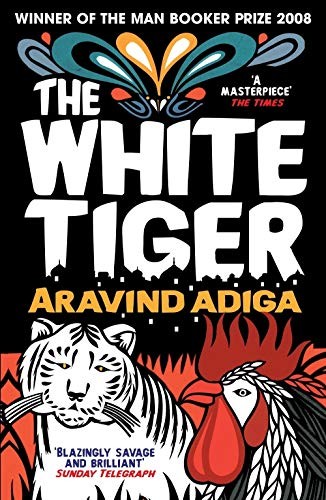
The White Tiger is the debut novel of Aravind Adiga, published in 2008. It won the Man Booker Prize and is a scathing satire of inequality in modern India. Below you will find a part-by-part summary, five key takeaways, ideas worth remembering and a note on who will enjoy it.
Content note: Includes murder, corruption and a fatal car accident.
Main Characters
- Balram Halwai: The narrator, a poor village boy who becomes a driver.
- Ashok: Balram's master, the American-educated son of a rich landlord.
- Pinky Madam: Ashok's wife, who causes a deadly accident.
- The Stork: Ashok's father, a powerful landlord.
- Kusum: Balram's domineering grandmother.
What Happens, Part by Part (Contains Spoilers)
The letters
Balram writes to Wen Jiabao, the Chinese premier, who is visiting India, offering to explain how entrepreneurs are made. He describes himself as a murderer and a success. He grew up in the village of Laxmangarh, in what he calls “the Darkness.”
Becoming a driver
Balram's teacher calls him a “white tiger,” a rare creature, because he is clever. Poverty forces him out of school. He learns to drive and gets a job with a wealthy family, eventually working for Ashok and his wife, Pinky Madam, in Delhi.
The accident
One night, a drunk Pinky Madam drives the car and hits a child, killing them. The family forces Balram to sign a confession taking the blame. Although it is not needed in the end, Balram realizes his life means nothing to his masters.
The Rooster Coop
Balram describes India's servants as chickens in a coop, watching each other be slaughtered but never escaping, because their families would be punished. He grows bitter as he watches Ashok bribe politicians. He decides to break free.
Murder and success
Balram kills Ashok with a broken bottle and steals a bag of bribe money. He flees to Bangalore with his young nephew and starts a successful taxi company, bribing police himself. He knows his family has probably been killed in revenge, but he says he does not regret becoming a free man.
5 Key Takeaways
- Extreme inequality traps people in servitude.
- Corruption runs through every level of society.
- Ambition can lead to terrible choices.
- Escape from poverty can come at a moral cost.
- The powerful rarely see the humanity of those who serve them.
Ideas Worth Remembering
These are paraphrased, not direct quotes:
- Freedom can be bought with someone else's suffering.
- Systems, not just individuals, create injustice.
- The rare white tiger refuses the cage.
Who Should Read The White Tiger?
Read The White Tiger if you enjoy dark satire, morally complex narrators and stories about class. It suits adults and older teens.
Questions to Think About After Reading
These prompts work for solo reading, a book club or a classroom discussion of The White Tiger:
- Is Balram a hero, a villain or both?
- What is the Rooster Coop?
- Why does Balram write to the Chinese premier?
How to Use This Summary
Use this page as a quick reference before a book club meeting, an exam, or a decision about whether The White Tiger is worth your time. The takeaways are written to stand on their own. If a point interests you, go back to the book for the author's full story, characters and style, which no short summary can replace.
A Note on Accuracy and Spoilers
This summary is based on the published text of The White Tiger, not on any film, series or stage adaptation, which often change the story. Details are kept at the level of the main events so that nothing is invented. Editions differ slightly in length and wording, so page numbers and small details may vary between copies.
Should You Read the Book?
Yes. Balram's voice is witty and chilling, and the novel is a fast, provocative read about inequality.
Check price of The White Tiger on Amazon
What to Read Next
- A Fine Balance by Rohinton Mistry: poverty and survival in India
- Slumdog Millionaire (Q & A) by Vikas Swarup: a poor boy's rise
- Native Son by Richard Wright: a desperate man's crime and its causes
Frequently Asked Questions
What is The White Tiger about?
A poor driver murders his rich master to escape servitude and becomes an entrepreneur.
Who wrote The White Tiger?
Aravind Adiga, in 2008.
Did it win the Booker Prize?
Yes, the 2008 Man Booker Prize.
What is the Rooster Coop?
Balram's image for how India's poor are trapped in servitude.
Why is Balram called the white tiger?
Because he is rare and clever, like the rare white tiger.
Is there a film?
Yes, a 2021 Netflix film.
Who does Balram write to?
The Chinese premier, Wen Jiabao.
What age is it for?
Adults and older teens.
How long is it?
About 280 pages.
Does Balram regret the murder?
He says he does not, which makes him a disturbing narrator.
Who are the main characters in The White Tiger?
The main characters are Balram Halwai, Ashok, Pinky Madam, the Stork and Kusum. Balram Halwai: The narrator, a poor village boy who becomes a driver. Ashok: Balram's master, the American-educated son of a rich landlord. Pinky Madam: Ashok's wife, who causes a deadly accident.
Is The White Tiger worth reading?
It depends on what you want. The book is best for readers who want a darkly funny, sharp novel about class and ambition. If that describes you, it is likely a good fit. If not, the titles under What to Read Next may suit you better.