
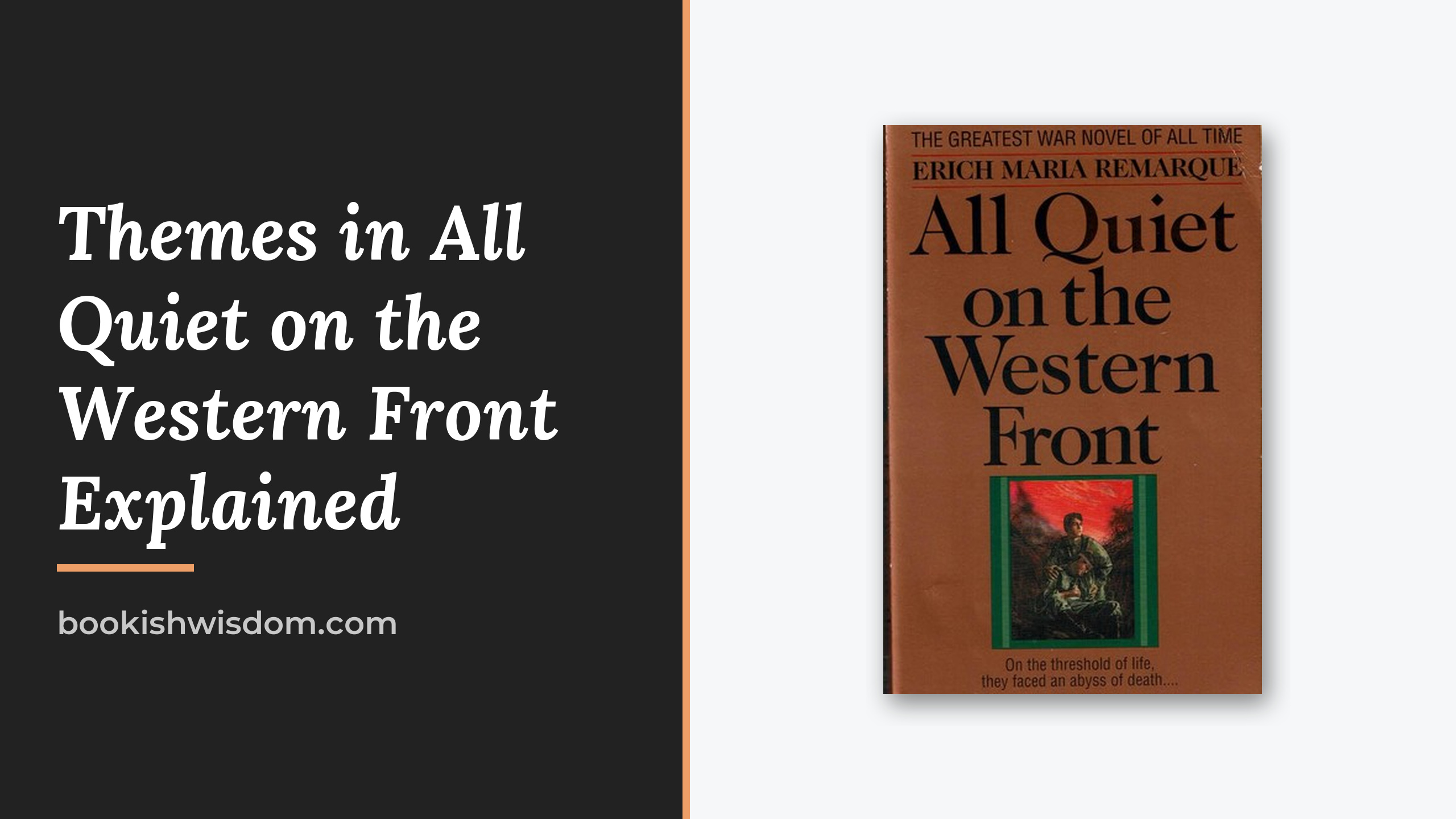
Disclosure: As an Amazon Associate, Bookish Wisdom earns from qualifying purchases. This doesn't change our picks or your price.
Spoiler warning: this analysis discusses the whole book, including the ending of All Quiet on the Western Front.
Quick answer: The main themes in All Quiet on the Western Front by Erich Maria Remarque are the horror of war, lost generation, comradeship, nationalism and propaganda and humanity of the enemy. Each is explained below with what it means, how it develops in the story and questions you can use for study or discussion.
Quick facts
- Book: All Quiet on the Western Front by Erich Maria Remarque
- First published: 1928
- Main themes: the horror of war, lost generation, comradeship, nationalism and propaganda and humanity of the enemy
Table of Contents
About All Quiet on the Western Front
Paul Baumer and his classmates enlist in the German army during World War I, encouraged by their patriotic teacher. At the Western Front, they face the horrors of trench warfare: shelling, gas attacks, hunger and death. One by one, Paul's friends are killed. On leave at home, he feels he no longer belongs. The novel shows the war through the eyes of an ordinary soldier, and Paul is killed on a day so quiet the report reads “All quiet on the Western Front.”
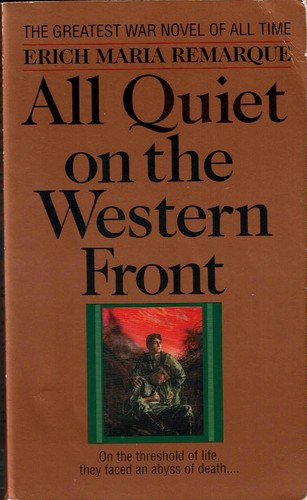
Check price of All Quiet on the Western Front on Amazon
The Main Themes in All Quiet on the Western Front
1. The horror of war
Remarque shows war without glory. The novel exposes the physical and mental destruction of soldiers.
Question to consider: Where in All Quiet on the Western Front does the horror of war matter most to the characters, and what does Erich Maria Remarque want readers to think about it?
2. Lost generation
Paul's generation is destroyed by the war. Even survivors cannot return to normal life.
Question to consider: Where in All Quiet on the Western Front does lost generation matter most to the characters, and what does Erich Maria Remarque want readers to think about it?
3. Comradeship
The soldiers form deep bonds. Friendship is their only comfort.
Question to consider: Where in All Quiet on the Western Front does comradeship matter most to the characters, and what does Erich Maria Remarque want readers to think about it?
4. Nationalism and propaganda
Teachers and leaders urged young men to fight. The book criticises patriotic propaganda.
Question to consider: Where in All Quiet on the Western Front does nationalism and propaganda matter most to the characters, and what does Erich Maria Remarque want readers to think about it?
5. Humanity of the enemy
Paul realises the French soldier he kills is just like him.
Question to consider: Where in All Quiet on the Western Front does humanity of the enemy matter most to the characters, and what does Erich Maria Remarque want readers to think about it?
Symbols and Motifs
- The boots. Kemmerich's boots pass from soldier to soldier, representing death.
- The butterflies. They symbolise innocence and beauty.
- The trenches. They stand for the horror of war.
- Paul's leave. It represents alienation.
How the Themes Connect
The horror of war is the novel's main subject, and the lost generation is its result. Comradeship gives the soldiers something to hold on to, while propaganda explains how they ended up there. Paul's recognition of the enemy's humanity makes the book a powerful anti-war statement still read worldwide.
How to Write About the Themes of All Quiet on the Western Front
If you are writing an essay or preparing for class, these steps help:
- Pick one theme. A focused argument is stronger than a list of everything.
- Find evidence in the text. Point to specific scenes, characters and choices rather than general impressions.
- Explain, don't just describe. After each example, say what it shows about the theme.
- Connect to the ending. Ask how the final chapters resolve or complicate the theme.
- Consider other readings. A fair essay acknowledges that readers can disagree.
Discussion Questions
- Which of the themes above feels most relevant to your own life, and why?
- Do the characters in All Quiet on the Western Front handle the horror of war well or badly?
- How does the title relate to the themes of the book?
- Would the story change if it were set in a different time or place?
- What does Erich Maria Remarque leave unresolved, and why might that be?
Books With Similar Themes
- Slaughterhouse-Five by Kurt Vonnegut
- The Things They Carried by Tim O'Brien
Related: All Quiet on the Western Front by Erich Maria Remarque: Summary and Key Takeaways · All Quiet on the Western Front Ending Explained
Frequently Asked Questions
What is the main theme of All Quiet on the Western Front?
The central theme is the horror of war, supported by lost generation and comradeship.
How many themes does All Quiet on the Western Front have?
This guide covers 5 main themes, but readers may find others.
Who wrote All Quiet on the Western Front?
All Quiet on the Western Front was written by Erich Maria Remarque and first published in 1928.
Is All Quiet on the Western Front a good book for studying themes?
Yes. Its themes are clear enough to follow and rich enough to support essays and group discussion.
What should I read after All Quiet on the Western Front?
Try Slaughterhouse-Five by Kurt Vonnegut or The Things They Carried by Tim O'Brien.