
Disclosure: As an Amazon Associate, Bookish Wisdom earns from qualifying purchases. This doesn't change our picks or your price.
Spoiler warning: this analysis discusses the whole book, including the ending of As I Lay Dying.
Quick answer: The main themes in As I Lay Dying by William Faulkner are death and grief, family and isolation, language and meaning, selfishness and duty and sanity and perception. Each is explained below with what it means, how it develops in the story and questions you can use for study or discussion.
Quick facts
- Book: As I Lay Dying by William Faulkner
- First published: 1930
- Main themes: death and grief, family and isolation, language and meaning, selfishness and duty and sanity and perception
Table of Contents
About As I Lay Dying
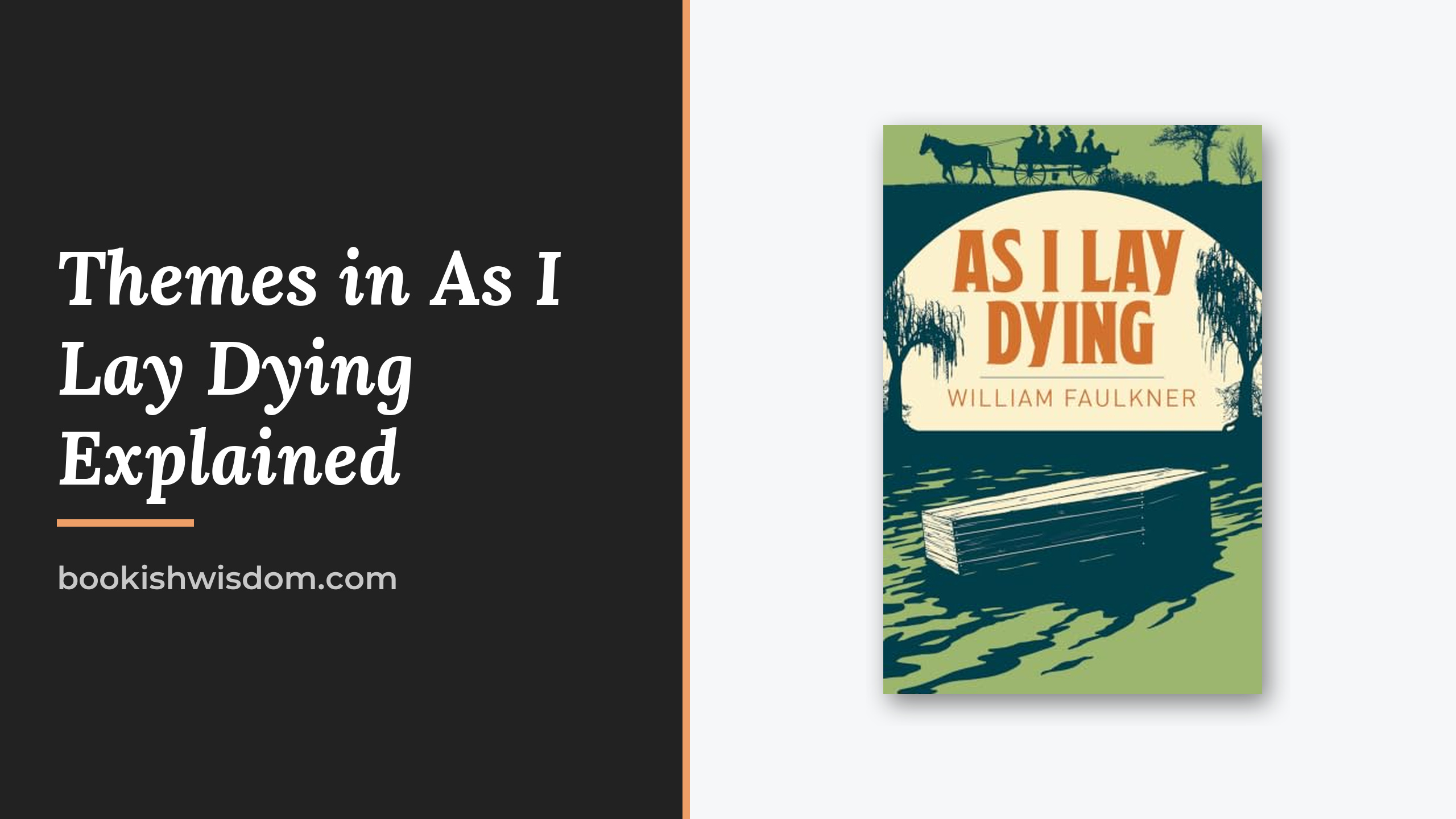
Addie Bundren is dying in rural Mississippi, and her family promises to bury her in her hometown of Jefferson, forty miles away. After her death, her husband Anse and their five children set off with her coffin in a mule-drawn wagon. Floods, fire, injury and stubbornness make the journey a disaster. Told through fifteen narrators in fifty-nine short chapters, the novel reveals each family member's private motives and secrets.
Check price of As I Lay Dying on Amazon
The Main Themes in As I Lay Dying
1. Death and grief
Addie's death drives every chapter. Each family member grieves differently, from Vardaman's confusion to Cash's careful carpentry, and Faulkner shows how loss exposes who people truly are.
Question to consider: Where in As I Lay Dying does death and grief matter most to the characters, and what does William Faulkner want readers to think about it?
2. Family and isolation
The Bundrens travel together, yet each one is deeply alone. The many narrators show a family united by duty but separated by secrets, selfishness and misunderstanding.
Question to consider: Where in As I Lay Dying does family and isolation matter most to the characters, and what does William Faulkner want readers to think about it?
3. Language and meaning
Addie believes words are empty shapes that fail to capture real experience. Faulkner's experimental style tests that idea by giving each character a different voice and way of seeing.
Question to consider: Where in As I Lay Dying does language and meaning matter most to the characters, and what does William Faulkner want readers to think about it?
4. Selfishness and duty
The trip is a promise to Addie, but many family members have their own reasons for going to Jefferson. The novel asks whether duty can survive when everyone has hidden goals.
Question to consider: Where in As I Lay Dying does selfishness and duty matter most to the characters, and what does William Faulkner want readers to think about it?
5. Sanity and perception
Darl sees more clearly than anyone, yet he is sent away as insane. Faulkner questions who decides what madness is, and why seeing the truth can be dangerous.
Question to consider: Where in As I Lay Dying does sanity and perception matter most to the characters, and what does William Faulkner want readers to think about it?
Symbols and Motifs
- The coffin. Built by Cash, it represents duty, love and burden.
- The river. The flooded river stands for chaos and danger in the journey.
- Vardaman's fish. His mixing of his mother and the fish symbolises a child's confused grief.
- Anse's new teeth. They represent selfish motives behind the family duty.
How the Themes Connect
Death sets the journey in motion, and grief reveals each person's isolation within the family. The conflict between selfishness and duty drives the plot, while the theme of language explains why the Bundrens never truly understand one another. Darl's fate shows how perception and sanity can be judged unfairly.
How to Write About the Themes of As I Lay Dying
If you are writing an essay or preparing for class, these steps help:
- Pick one theme. A focused argument is stronger than a list of everything.
- Find evidence in the text. Point to specific scenes, characters and choices rather than general impressions.
- Explain, don't just describe. After each example, say what it shows about the theme.
- Connect to the ending. Ask how the final chapters resolve or complicate the theme.
- Consider other readings. A fair essay acknowledges that readers can disagree.
Discussion Questions
- Which of the themes above feels most relevant to your own life, and why?
- Do the characters in As I Lay Dying handle death and grief well or badly?
- How does the title relate to the themes of the book?
- Would the story change if it were set in a different time or place?
- What does William Faulkner leave unresolved, and why might that be?
Books With Similar Themes
- The Sound and the Fury by William Faulkner
- The Grapes of Wrath by John Steinbeck
Related: As I Lay Dying by William Faulkner: Summary and Key Takeaways · 15 Books Like As I Lay Dying You’ll Love
Frequently Asked Questions
What is the main theme of As I Lay Dying?
The central theme is death and grief, supported by family and isolation and language and meaning.
How many themes does As I Lay Dying have?
This guide covers 5 main themes, but readers may find others.
Who wrote As I Lay Dying?
As I Lay Dying was written by William Faulkner and first published in 1930.
Is As I Lay Dying a good book for studying themes?
Yes. Its themes are clear enough to follow and rich enough to support essays and group discussion.
What should I read after As I Lay Dying?
Try The Sound and the Fury by William Faulkner or The Grapes of Wrath by John Steinbeck.