
Disclosure: As an Amazon Associate, Bookish Wisdom earns from qualifying purchases. This doesn't change our picks or your price.
Spoiler warning: this analysis discusses the whole book, including the ending of Black Boy.
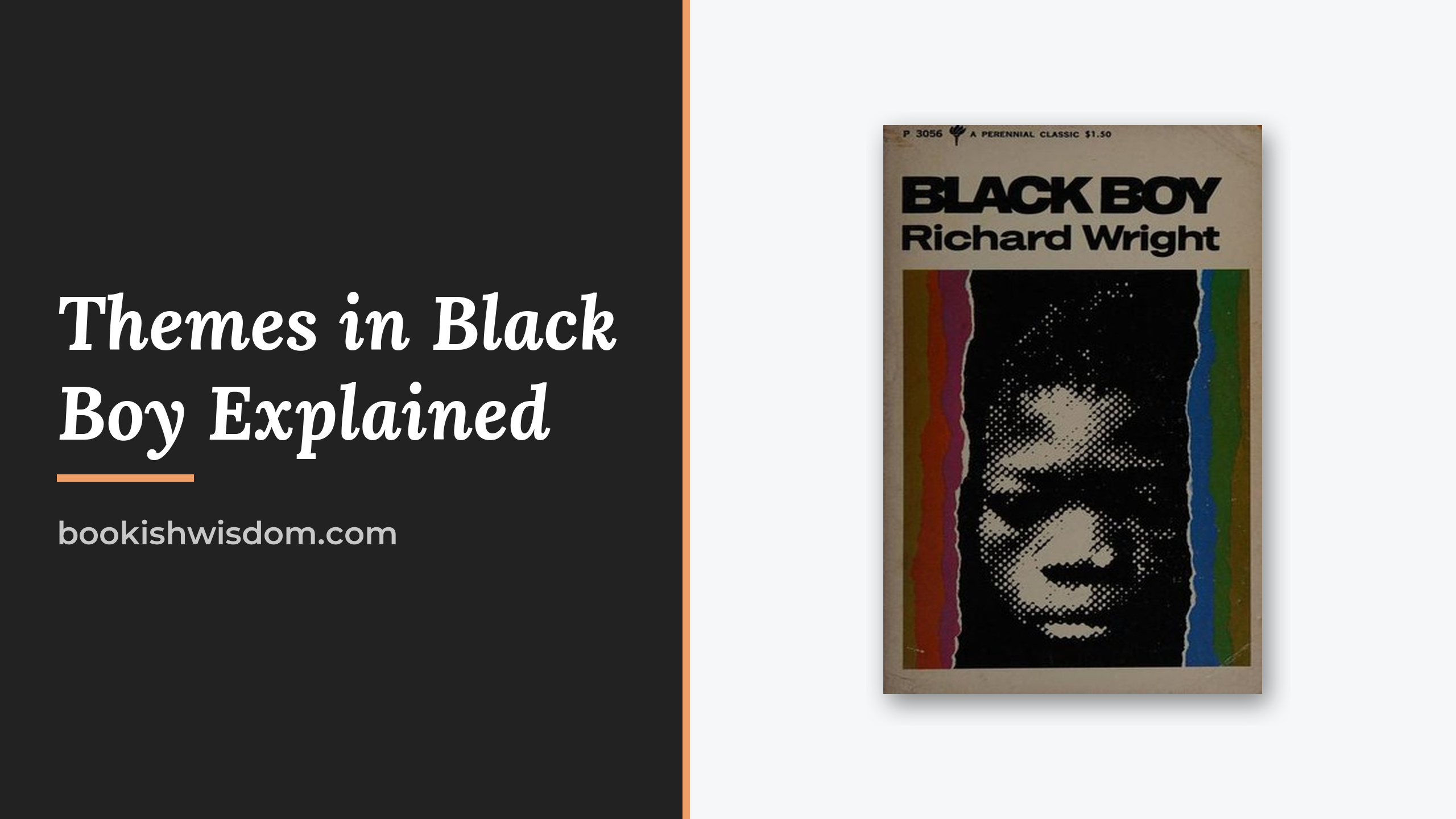
Quick answer: The main themes in Black Boy by Richard Wright are racism and oppression, hunger, the power of reading and writing, family and conflict and individuality and rebellion. Each is explained below with what it means, how it develops in the story and questions you can use for study or discussion.
Quick facts
- Book: Black Boy by Richard Wright
- First published: 1945
- Main themes: racism and oppression, hunger, the power of reading and writing, family and conflict and individuality and rebellion
Table of Contents
About Black Boy
In this memoir, Richard Wright describes growing up Black in the Jim Crow South in the early 1900s. After his father abandons the family, Richard grows up in poverty, constantly hungry, moving between Mississippi, Arkansas and Tennessee with his ill mother and strict relatives. He learns early that white society expects Black people to be silent and submissive, and he refuses. Through reading and writing he finds a sense of self, and at nineteen he leaves for Chicago, determined to become a writer.
Check price of Black Boy on Amazon
The Main Themes in Black Boy
1. Racism and oppression
Wright shows the daily violence, fear and humiliation of life under Jim Crow. White society punishes any sign of independence, and Black people must perform submission just to survive.
Question to consider: Where in Black Boy does racism and oppression matter most to the characters, and what does Richard Wright want readers to think about it?
2. Hunger
Physical hunger runs through Richard's childhood, but he also hungers for knowledge, respect and freedom. The memoir links bodily hunger to a deeper longing for a full life.
Question to consider: Where in Black Boy does hunger matter most to the characters, and what does Richard Wright want readers to think about it?
3. The power of reading and writing
Books open Richard's mind and show him that another life is possible. Writing becomes his way to resist and to understand himself.
Question to consider: Where in Black Boy does the power of reading and writing matter most to the characters, and what does Richard Wright want readers to think about it?
4. Family and conflict
Richard's relatives are harsh and controlling, often beating him to make him obey. He clashes with them as he refuses to conform.
Question to consider: Where in Black Boy does family and conflict matter most to the characters, and what does Richard Wright want readers to think about it?
5. Individuality and rebellion
Richard refuses to accept the role society demands. His rebellion is risky but necessary.
Question to consider: Where in Black Boy does individuality and rebellion matter most to the characters, and what does Richard Wright want readers to think about it?
Symbols and Motifs
- Hunger. It represents physical need and the longing for a fuller life.
- Books. They symbolise freedom and escape.
- The library card. Richard's borrowed card stands for forbidden knowledge.
- The North. Chicago represents hope and possibility.
How the Themes Connect
Racism and oppression are the memoir's foundation, while hunger shows both the physical and emotional cost of poverty and injustice. The power of reading and writing becomes Richard's escape, while family conflict and rebellion show his struggle to stay true to himself. The book ends with Richard heading north, carrying a hope shaped by everything he survived.
How to Write About the Themes of Black Boy
If you are writing an essay or preparing for class, these steps help:
- Pick one theme. A focused argument is stronger than a list of everything.
- Find evidence in the text. Point to specific scenes, characters and choices rather than general impressions.
- Explain, don't just describe. After each example, say what it shows about the theme.
- Connect to the ending. Ask how the final chapters resolve or complicate the theme.
- Consider other readings. A fair essay acknowledges that readers can disagree.
Discussion Questions
- Which of the themes above feels most relevant to your own life, and why?
- Do the characters in Black Boy handle racism and oppression well or badly?
- How does the title relate to the themes of the book?
- Would the story change if it were set in a different time or place?
- What does Richard Wright leave unresolved, and why might that be?
Books With Similar Themes
- Native Son by Richard Wright
- I Know Why the Caged Bird Sings by Maya Angelou
Related: Black Boy by Richard Wright: Summary and Key Takeaways · Native Son by Richard Wright: Summary and Key Takeaways
Frequently Asked Questions
What is the main theme of Black Boy?
The central theme is racism and oppression, supported by hunger and the power of reading and writing.
How many themes does Black Boy have?
This guide covers 5 main themes, but readers may find others.
Who wrote Black Boy?
Black Boy was written by Richard Wright and first published in 1945.
Is Black Boy a good book for studying themes?
Yes. Its themes are clear enough to follow and rich enough to support essays and group discussion.
What should I read after Black Boy?
Try Native Son by Richard Wright or I Know Why the Caged Bird Sings by Maya Angelou.