
Disclosure: As an Amazon Associate, Bookish Wisdom earns from qualifying purchases. This doesn't change our picks or your price.
Spoiler warning: this analysis discusses the whole book, including the ending of Bud, Not Buddy.
Quick answer: The main themes in Bud, Not Buddy by Christopher Paul Curtis are home and belonging, hope and determination, the Great Depression, survival and resourcefulness and racism. Each is explained below with what it means, how it develops in the story and questions you can use for study or discussion.
Quick facts
- Book: Bud, Not Buddy by Christopher Paul Curtis
- First published: 1999
- Main themes: home and belonging, hope and determination, the Great Depression, survival and resourcefulness and racism
Table of Contents
About Bud, Not Buddy
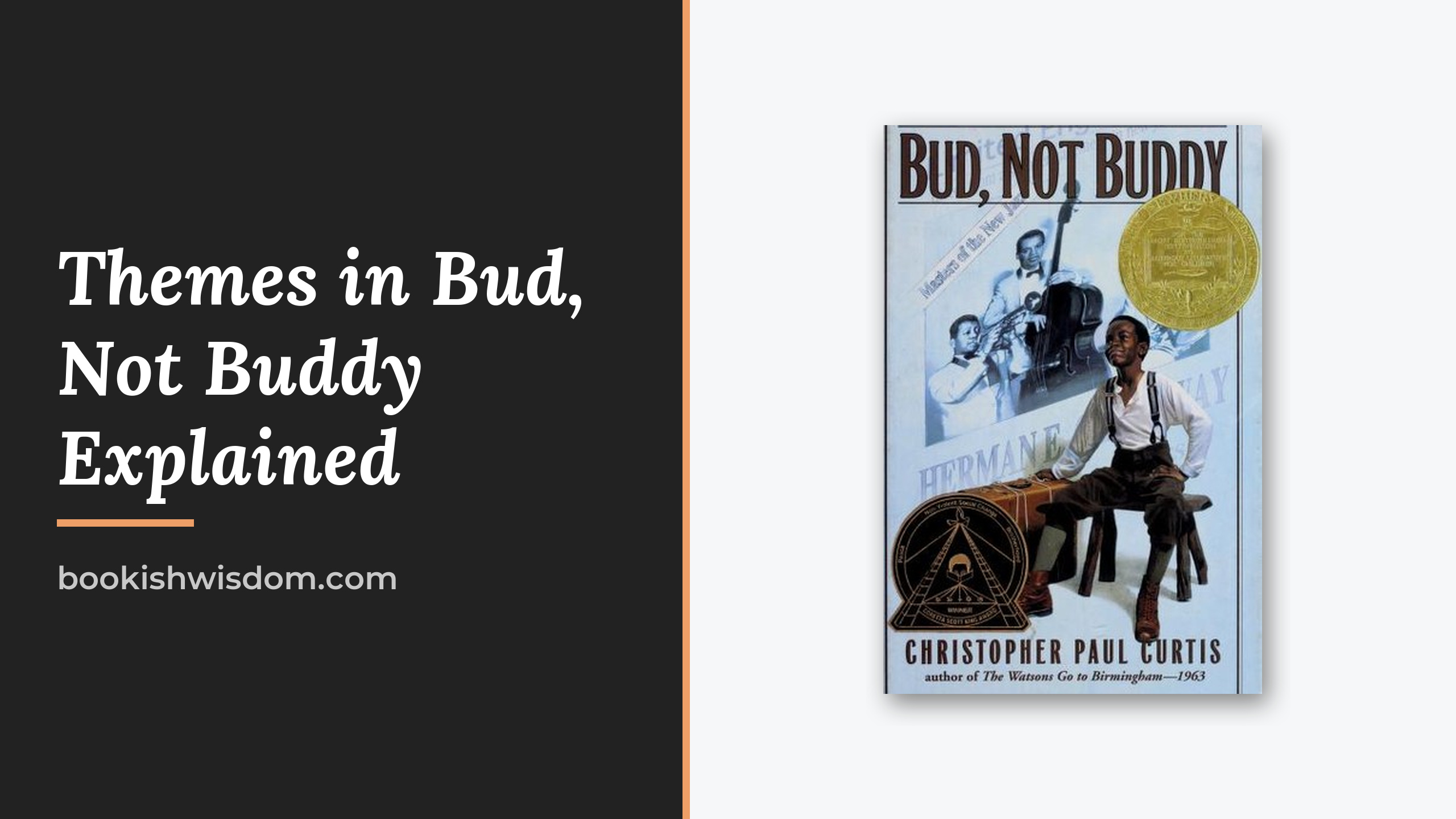
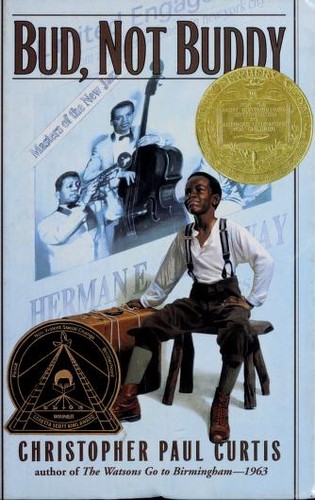
In 1936 Flint, Michigan, during the Great Depression, ten-year-old Bud Caldwell has lived in an orphanage and a series of foster homes since his mother died. He carries a battered suitcase holding his treasures, including flyers for a jazz musician named Herman E. Calloway, whom Bud believes is his father. After escaping a cruel foster family, Bud sets off on his own, walking toward Grand Rapids to find him, guided by his own list of “Rules and Things for Having a Funner Life and Making a Better Liar Out of Yourself.”
Check price of Bud, Not Buddy on Amazon
The Main Themes in Bud, Not Buddy
1. Home and belonging
Bud has no real home, and he longs for a family who will want him. Curtis shows how deeply children need belonging, and the book ends with Bud finding a place among musicians who welcome him.
Question to consider: Where in Bud, Not Buddy does home and belonging matter most to the characters, and what does Christopher Paul Curtis want readers to think about it?
2. Hope and determination
Bud never gives up, even when he is hungry, alone and rejected. His determination to find his father carries him through danger and disappointment.
Question to consider: Where in Bud, Not Buddy does hope and determination matter most to the characters, and what does Christopher Paul Curtis want readers to think about it?
3. The Great Depression
Bud meets hungry families in breadlines and shantytowns. The novel shows how the Depression affected children and Black Americans especially hard.
Question to consider: Where in Bud, Not Buddy does the Great Depression matter most to the characters, and what does Christopher Paul Curtis want readers to think about it?
4. Survival and resourcefulness
Bud's rules help him survive in a hard world. They are funny, but they also show how a child learns to protect himself.
Question to consider: Where in Bud, Not Buddy does survival and resourcefulness matter most to the characters, and what does Christopher Paul Curtis want readers to think about it?
5. Racism
Bud encounters racism on his journey, from danger on the roads to segregated spaces. Curtis shows its effects without overwhelming the hopeful story.
Question to consider: Where in Bud, Not Buddy does racism matter most to the characters, and what does Christopher Paul Curtis want readers to think about it?
Symbols and Motifs
- The suitcase. It holds Bud's memories and his hope of family.
- The rules. They represent survival and Bud's growing wisdom.
- The flyers. They symbolise the hope of finding his father.
- The rocks. Labelled stones in his suitcase stand for the past and family history.
How the Themes Connect
Home and belonging are what Bud is searching for, and hope and determination keep him moving forward. The Great Depression and racism make the journey dangerous, while his resourcefulness and rules help him survive. By the end, Bud finds not just a grandfather but a whole community, showing readers that family can be found as well as born.
How to Write About the Themes of Bud, Not Buddy
If you are writing an essay or preparing for class, these steps help:
- Pick one theme. A focused argument is stronger than a list of everything.
- Find evidence in the text. Point to specific scenes, characters and choices rather than general impressions.
- Explain, don't just describe. After each example, say what it shows about the theme.
- Connect to the ending. Ask how the final chapters resolve or complicate the theme.
- Consider other readings. A fair essay acknowledges that readers can disagree.
Discussion Questions
- Which of the themes above feels most relevant to your own life, and why?
- Do the characters in Bud, Not Buddy handle home and belonging well or badly?
- How does the title relate to the themes of the book?
- Would the story change if it were set in a different time or place?
- What does Christopher Paul Curtis leave unresolved, and why might that be?
Books With Similar Themes
- The Watsons Go to Birmingham by Christopher Paul Curtis
- Esperanza Rising by Pam Munoz Ryan
Related: Bud, Not Buddy by Christopher Paul Curtis: Summary and Key Takeaways · Bud, Not Buddy Ending Explained
Frequently Asked Questions
What is the main theme of Bud, Not Buddy?
The central theme is home and belonging, supported by hope and determination and the Great Depression.
How many themes does Bud, Not Buddy have?
This guide covers 5 main themes, but readers may find others.
Who wrote Bud, Not Buddy?
Bud, Not Buddy was written by Christopher Paul Curtis and first published in 1999.
Is Bud, Not Buddy a good book for studying themes?
Yes. Its themes are clear enough to follow and rich enough to support essays and group discussion.
What should I read after Bud, Not Buddy?
Try The Watsons Go to Birmingham by Christopher Paul Curtis or Esperanza Rising by Pam Munoz Ryan.