
Disclosure: As an Amazon Associate, Bookish Wisdom earns from qualifying purchases. This doesn't change our picks or your price.
Spoiler warning: this analysis discusses the whole book, including the ending of Flowers for Algernon.
Quick answer: The main themes in Flowers for Algernon by Daniel Keyes are intelligence and happiness, dignity and humanity, loneliness, science and ethics and memory and identity. Each is explained below with what it means, how it develops in the story and questions you can use for study or discussion.
Quick facts
- Book: Flowers for Algernon by Daniel Keyes
- First published: 1966
- Main themes: intelligence and happiness, dignity and humanity, loneliness, science and ethics and memory and identity
Table of Contents
About Flowers for Algernon
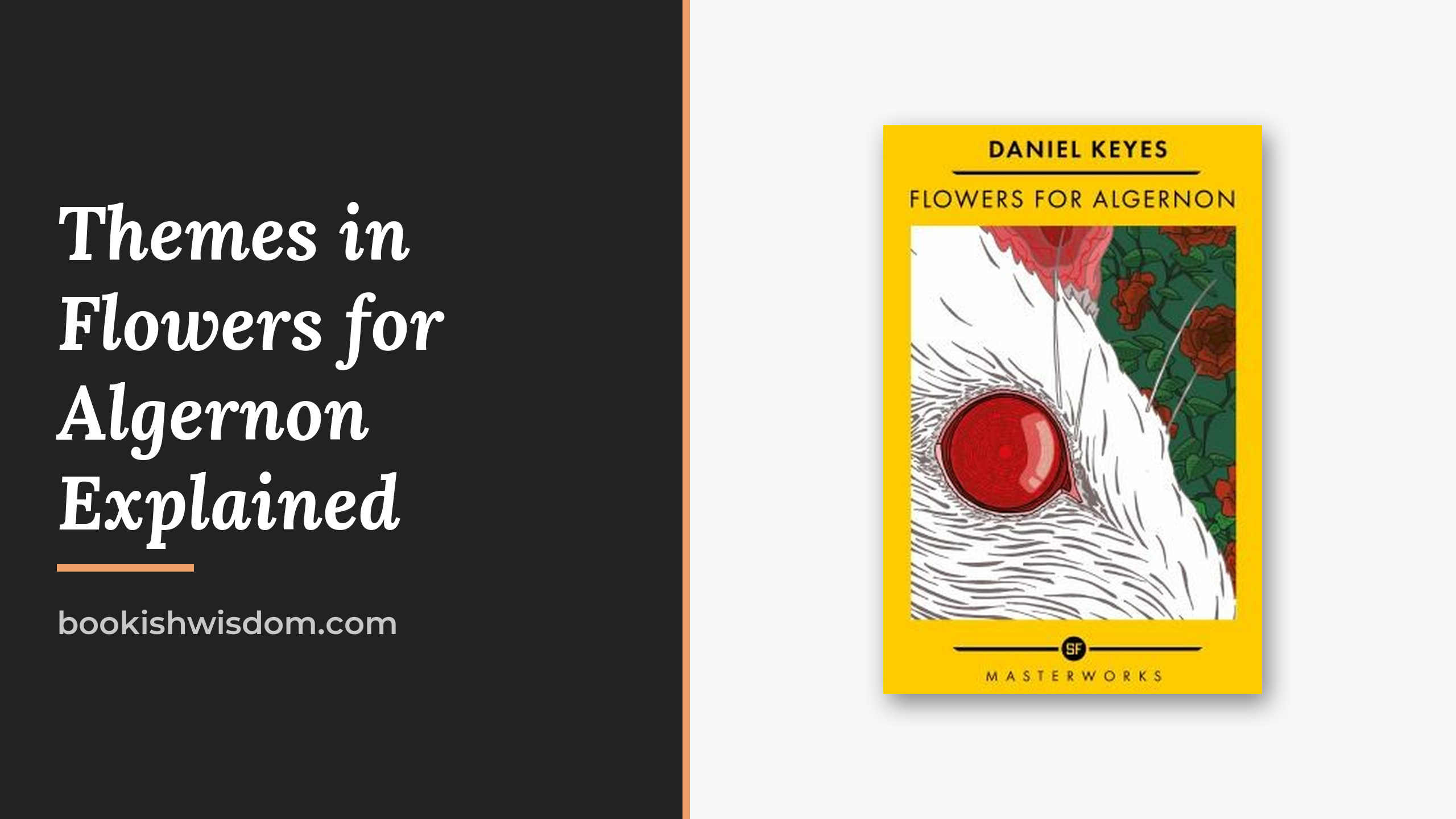
Charlie Gordon, a thirty-two-year-old man with an intellectual disability, works at a bakery and wants to be smart. He is chosen for an experimental surgery that has already tripled the intelligence of a laboratory mouse named Algernon. Through Charlie's “progress reports,” written with spelling mistakes at first, readers watch his intelligence soar beyond that of the scientists. But as he grows smarter, he realises his co-workers mocked him, struggles with love and discovers that Algernon is declining.

Check price of Flowers for Algernon on Amazon
The Main Themes in Flowers for Algernon
1. Intelligence and happiness
Charlie becomes a genius but is no happier. Keyes asks whether intelligence brings happiness or only reveals painful truths.
Question to consider: Where in Flowers for Algernon does intelligence and happiness matter most to the characters, and what does Daniel Keyes want readers to think about it?
2. Dignity and humanity
Charlie is treated as less than human before and as an experiment after. The novel insists he was always a full person.
Question to consider: Where in Flowers for Algernon does dignity and humanity matter most to the characters, and what does Daniel Keyes want readers to think about it?
3. Loneliness
As Charlie's intelligence grows, he becomes isolated from everyone.
Question to consider: Where in Flowers for Algernon does loneliness matter most to the characters, and what does Daniel Keyes want readers to think about it?
4. Science and ethics
The experiment raises questions about using people for research.
Question to consider: Where in Flowers for Algernon does science and ethics matter most to the characters, and what does Daniel Keyes want readers to think about it?
5. Memory and identity
Charlie remembers his painful childhood.
Question to consider: Where in Flowers for Algernon does memory and identity matter most to the characters, and what does Daniel Keyes want readers to think about it?
Symbols and Motifs
- Algernon. The mouse represents Charlie's fate.
- The progress reports. They symbolise his changing mind.
- The bakery. It stands for his old life.
- The flowers. Charlie's request for flowers on Algernon's grave represents compassion.
How the Themes Connect
Intelligence and happiness are the novel's central questions, while dignity and humanity show how Charlie is treated. Loneliness, science and ethics, and memory and identity complete it, and the final progress report is one of the most moving endings in American fiction.
How to Write About the Themes of Flowers for Algernon
If you are writing an essay or preparing for class, these steps help:
- Pick one theme. A focused argument is stronger than a list of everything.
- Find evidence in the text. Point to specific scenes, characters and choices rather than general impressions.
- Explain, don't just describe. After each example, say what it shows about the theme.
- Connect to the ending. Ask how the final chapters resolve or complicate the theme.
- Consider other readings. A fair essay acknowledges that readers can disagree.
Discussion Questions
- Which of the themes above feels most relevant to your own life, and why?
- Do the characters in Flowers for Algernon handle intelligence and happiness well or badly?
- How does the title relate to the themes of the book?
- Would the story change if it were set in a different time or place?
- What does Daniel Keyes leave unresolved, and why might that be?
Books With Similar Themes
- Of Mice and Men by John Steinbeck
- The Curious Incident of the Dog in the Night-Time by Mark Haddon
Related: Flowers for Algernon by Daniel Keyes: Summary and Key Takeaways · Flowers for Algernon Ending Explained
Frequently Asked Questions
What is the main theme of Flowers for Algernon?
The central theme is intelligence and happiness, supported by dignity and humanity and loneliness.
How many themes does Flowers for Algernon have?
This guide covers 5 main themes, but readers may find others.
Who wrote Flowers for Algernon?
Flowers for Algernon was written by Daniel Keyes and first published in 1966.
Is Flowers for Algernon a good book for studying themes?
Yes. Its themes are clear enough to follow and rich enough to support essays and group discussion.
What should I read after Flowers for Algernon?
Try Of Mice and Men by John Steinbeck or The Curious Incident of the Dog in the Night-Time by Mark Haddon.