
Disclosure: As an Amazon Associate, Bookish Wisdom earns from qualifying purchases. This doesn't change our picks or your price.
Spoiler warning: this analysis discusses the whole book, including the ending of Little Fires Everywhere.
Quick answer: The main themes in Little Fires Everywhere by Celeste Ng are motherhood, rules and order, class and privilege, race and identity and secrets and truth. Each is explained below with what it means, how it develops in the story and questions you can use for study or discussion.
Quick facts
- Book: Little Fires Everywhere by Celeste Ng
- First published: 2017
- Main themes: motherhood, rules and order, class and privilege, race and identity and secrets and truth
Table of Contents
About Little Fires Everywhere
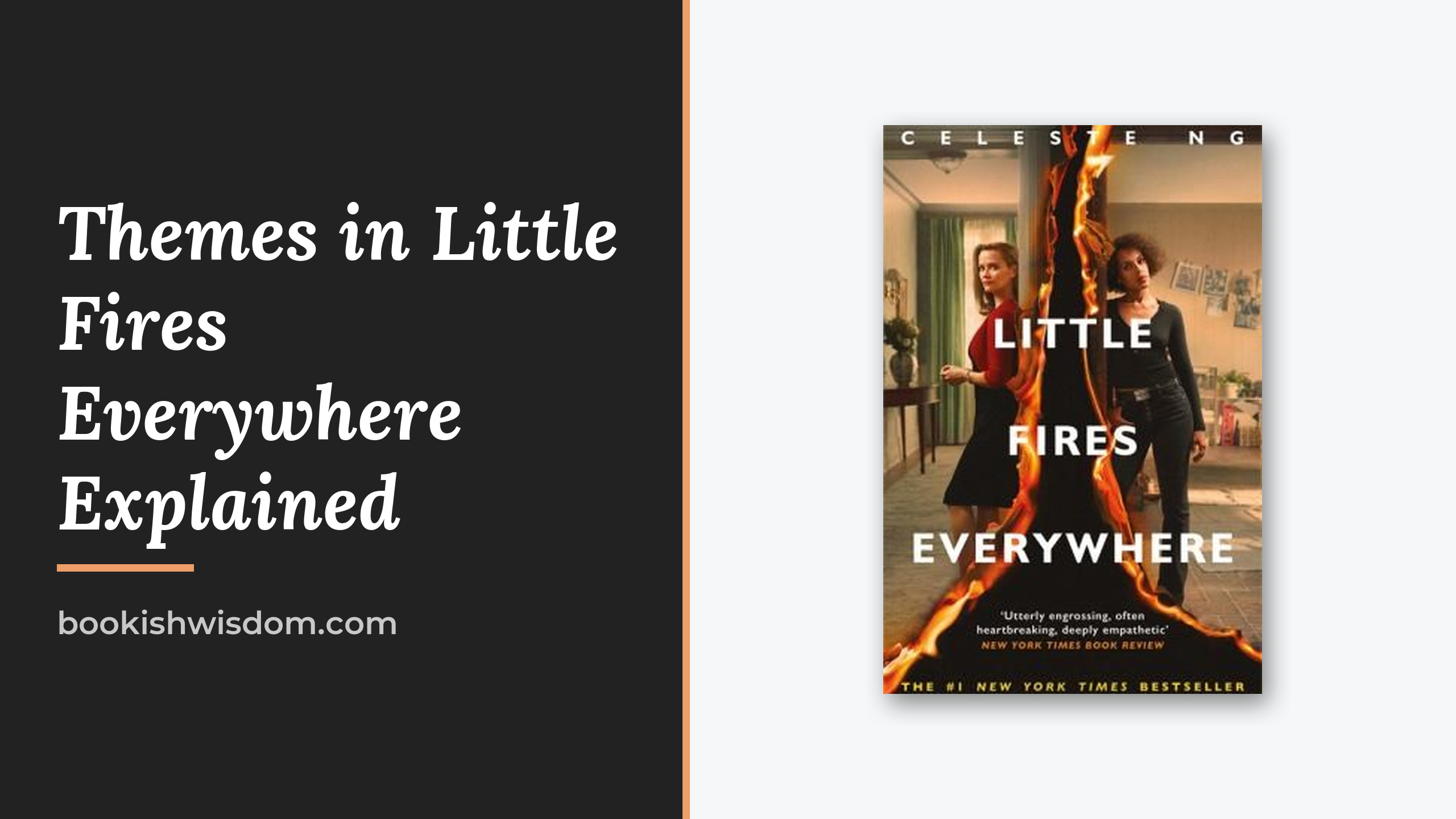
In the planned, orderly suburb of Shaker Heights, Ohio, Elena Richardson lives by the rules and raises four teenage children. When the artist Mia Warren and her daughter Pearl rent a house from the Richardsons, the two families become tangled together. A custody battle over a Chinese American baby divides the town, and Elena's determination to uncover Mia's past leads to secrets, betrayals and, finally, a fire that burns the Richardson home to the ground.
Check price of Little Fires Everywhere on Amazon
The Main Themes in Little Fires Everywhere
1. Motherhood
The novel presents many kinds of mothers, from rule-bound Elena to free-spirited Mia to a desperate birth mother. Ng asks what makes a good mother and shows that love can take very different forms.
Question to consider: Where in Little Fires Everywhere does motherhood matter most to the characters, and what does Celeste Ng want readers to think about it?
2. Rules and order
Shaker Heights prides itself on planning and control. Elena believes that following the rules protects her family, but the novel suggests that too much order can hide unfairness and stifle growth.
Question to consider: Where in Little Fires Everywhere does rules and order matter most to the characters, and what does Celeste Ng want readers to think about it?
3. Class and privilege
The Richardsons are wealthy, while Mia and Pearl live simply. Ng shows how money and status shape who is believed, who is protected and who gets second chances.
Question to consider: Where in Little Fires Everywhere does class and privilege matter most to the characters, and what does Celeste Ng want readers to think about it?
4. Race and identity
The custody case raises questions about whether a Chinese baby should be raised by white parents. The novel explores identity, culture and the limits of good intentions.
Question to consider: Where in Little Fires Everywhere does race and identity matter most to the characters, and what does Celeste Ng want readers to think about it?
5. Secrets and truth
Mia hides her past, and Elena digs it up. The story shows how secrets can protect and harm, and how truth can arrive like a fire.
Question to consider: Where in Little Fires Everywhere does secrets and truth matter most to the characters, and what does Celeste Ng want readers to think about it?
Symbols and Motifs
- The fire. It represents destruction and a fresh start.
- Mia's photographs. They symbolise art, truth and hidden lives.
- Shaker Heights. The planned town stands for order and control.
- The bird nest. Images of nests show home and protection.
How the Themes Connect
Motherhood connects every storyline, while rules, class and race decide who has power. Secrets drive the plot, as Elena's search for truth exposes others. In the end, the fire suggests that sometimes the only way to grow is to start again, like the prairie after a burn.
How to Write About the Themes of Little Fires Everywhere
If you are writing an essay or preparing for class, these steps help:
- Pick one theme. A focused argument is stronger than a list of everything.
- Find evidence in the text. Point to specific scenes, characters and choices rather than general impressions.
- Explain, don't just describe. After each example, say what it shows about the theme.
- Connect to the ending. Ask how the final chapters resolve or complicate the theme.
- Consider other readings. A fair essay acknowledges that readers can disagree.
Discussion Questions
- Which of the themes above feels most relevant to your own life, and why?
- Do the characters in Little Fires Everywhere handle motherhood well or badly?
- How does the title relate to the themes of the book?
- Would the story change if it were set in a different time or place?
- What does Celeste Ng leave unresolved, and why might that be?
Books With Similar Themes
- Big Little Lies by Liane Moriarty
- Everything I Never Told You by Celeste Ng
Related: Little Fires Everywhere by Celeste Ng: Summary and Key Takeaways · Little Fires Everywhere Ending Explained
Frequently Asked Questions
What is the main theme of Little Fires Everywhere?
The central theme is motherhood, supported by rules and order and class and privilege.
How many themes does Little Fires Everywhere have?
This guide covers 5 main themes, but readers may find others.
Who wrote Little Fires Everywhere?
Little Fires Everywhere was written by Celeste Ng and first published in 2017.
Is Little Fires Everywhere a good book for studying themes?
Yes. Its themes are clear enough to follow and rich enough to support essays and group discussion.
What should I read after Little Fires Everywhere?
Try Big Little Lies by Liane Moriarty or Everything I Never Told You by Celeste Ng.