
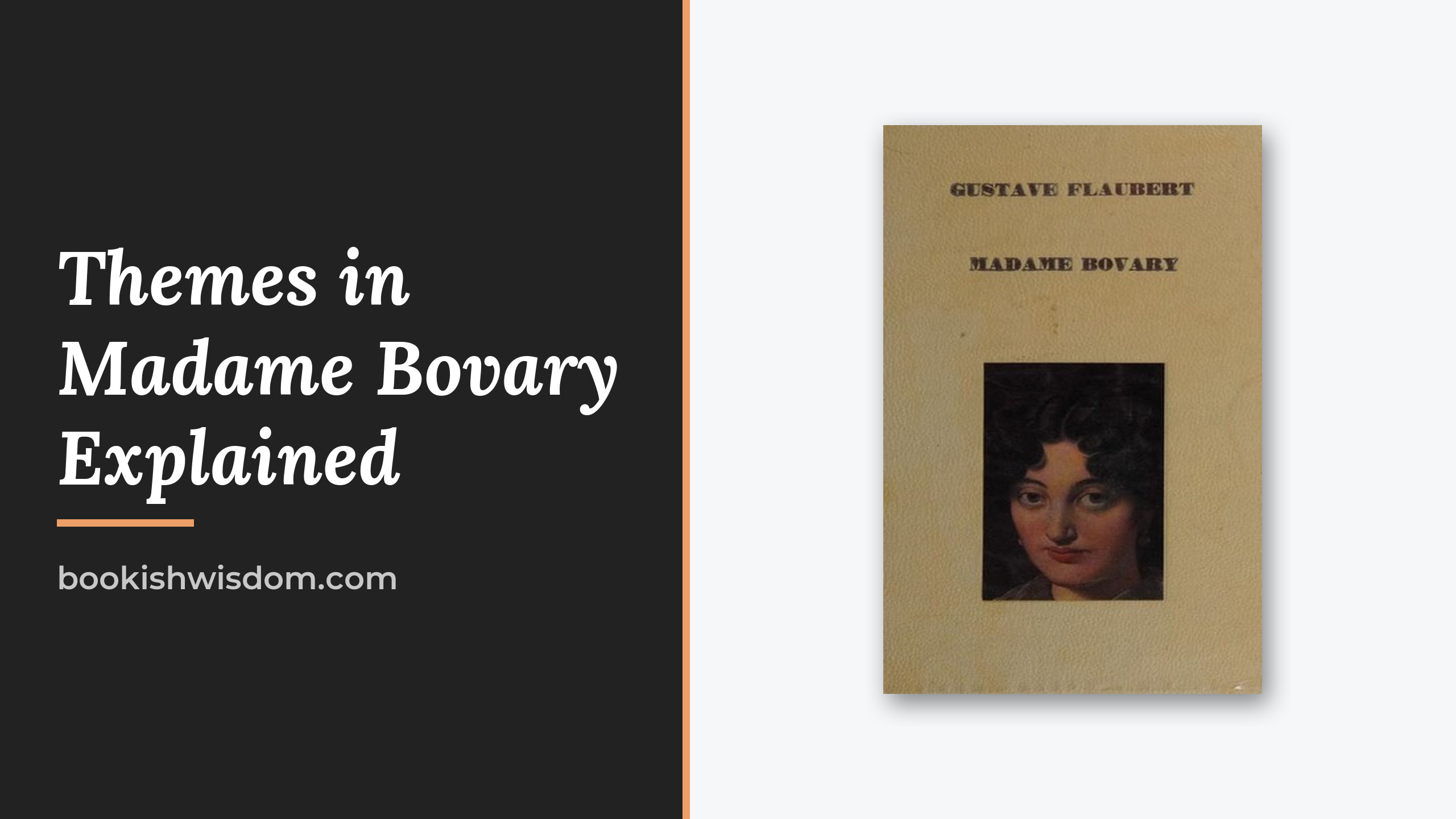
Disclosure: As an Amazon Associate, Bookish Wisdom earns from qualifying purchases. This doesn't change our picks or your price.
Spoiler warning: this analysis discusses the whole book, including the ending of Madame Bovary.
Quick answer: The main themes in Madame Bovary by Gustave Flaubert are romantic illusion and reality, boredom and desire, consumerism and debt, women's limited choices and bourgeois society. Each is explained below with what it means, how it develops in the story and questions you can use for study or discussion.
Quick facts
- Book: Madame Bovary by Gustave Flaubert
- First published: 1856
- Main themes: romantic illusion and reality, boredom and desire, consumerism and debt, women's limited choices and bourgeois society
Table of Contents
About Madame Bovary
Emma Rouault, a farmer's daughter in provincial France who has grown up reading romantic novels, marries Charles Bovary, a dull, kind country doctor. Bored by her marriage and small-town life, Emma longs for passion and luxury. She has affairs with Rodolphe, a wealthy landowner who abandons her, and Léon, a young clerk. She spends recklessly on clothes and gifts, falling deeply into debt to the merchant Lheureux. When her debts are exposed, Emma takes arsenic.
Check price of Madame Bovary on Amazon
The Main Themes in Madame Bovary
1. Romantic illusion and reality
Emma's novels shaped her expectations. Flaubert shows the danger of romantic fantasies that real life cannot match. Her real life never matches her dreams.
Question to consider: Where in Madame Bovary does romantic illusion and reality matter most to the characters, and what does Gustave Flaubert want readers to think about it?
2. Boredom and desire
Emma's boredom drives her affairs. She tries to fill emptiness with passion.
Question to consider: Where in Madame Bovary does boredom and desire matter most to the characters, and what does Gustave Flaubert want readers to think about it?
3. Consumerism and debt
Emma spends to escape. Her debts grow until she cannot pay.
Question to consider: Where in Madame Bovary does consumerism and debt matter most to the characters, and what does Gustave Flaubert want readers to think about it?
4. Women's limited choices
Emma has few options. She cannot work, travel or divorce.
Question to consider: Where in Madame Bovary does women's limited choices matter most to the characters, and what does Gustave Flaubert want readers to think about it?
5. Bourgeois society
Flaubert mocks provincial middle-class life. Homais the pharmacist shows small-town pride.
Question to consider: Where in Madame Bovary does bourgeois society matter most to the characters, and what does Gustave Flaubert want readers to think about it?
Symbols and Motifs
- The novels. They represent illusion.
- The ball. The ball at La Vaubyessard symbolises desire.
- The arsenic. It stands for her end.
- The blind beggar. He represents decay.
How the Themes Connect
Romantic illusion, boredom, consumerism, women's limits and bourgeois society shape the novel. Flaubert's precise style changed the novel, and the book was put on trial for immorality in 1857. Emma's tragedy still makes readers think about the gap between dreams and reality.
How to Write About the Themes of Madame Bovary
If you are writing an essay or preparing for class, these steps help:
- Pick one theme. A focused argument is stronger than a list of everything.
- Find evidence in the text. Point to specific scenes, characters and choices rather than general impressions.
- Explain, don't just describe. After each example, say what it shows about the theme.
- Connect to the ending. Ask how the final chapters resolve or complicate the theme.
- Consider other readings. A fair essay acknowledges that readers can disagree.
Discussion Questions
- Which of the themes above feels most relevant to your own life, and why?
- Do the characters in Madame Bovary handle romantic illusion and reality well or badly?
- How does the title relate to the themes of the book?
- Would the story change if it were set in a different time or place?
- What does Gustave Flaubert leave unresolved, and why might that be?
Books With Similar Themes
- The House of Mirth by Edith Wharton
- The Awakening by Kate Chopin
Related: Madame Bovary by Gustave Flaubert: Summary and Key Takeaways · Madame Bovary Ending Explained
Frequently Asked Questions
What is the main theme of Madame Bovary?
The central theme is romantic illusion and reality, supported by boredom and desire and consumerism and debt.
How many themes does Madame Bovary have?
This guide covers 5 main themes, but readers may find others.
Who wrote Madame Bovary?
Madame Bovary was written by Gustave Flaubert and first published in 1856.
Is Madame Bovary a good book for studying themes?
Yes. Its themes are clear enough to follow and rich enough to support essays and group discussion.
What should I read after Madame Bovary?
Try The House of Mirth by Edith Wharton or The Awakening by Kate Chopin.