
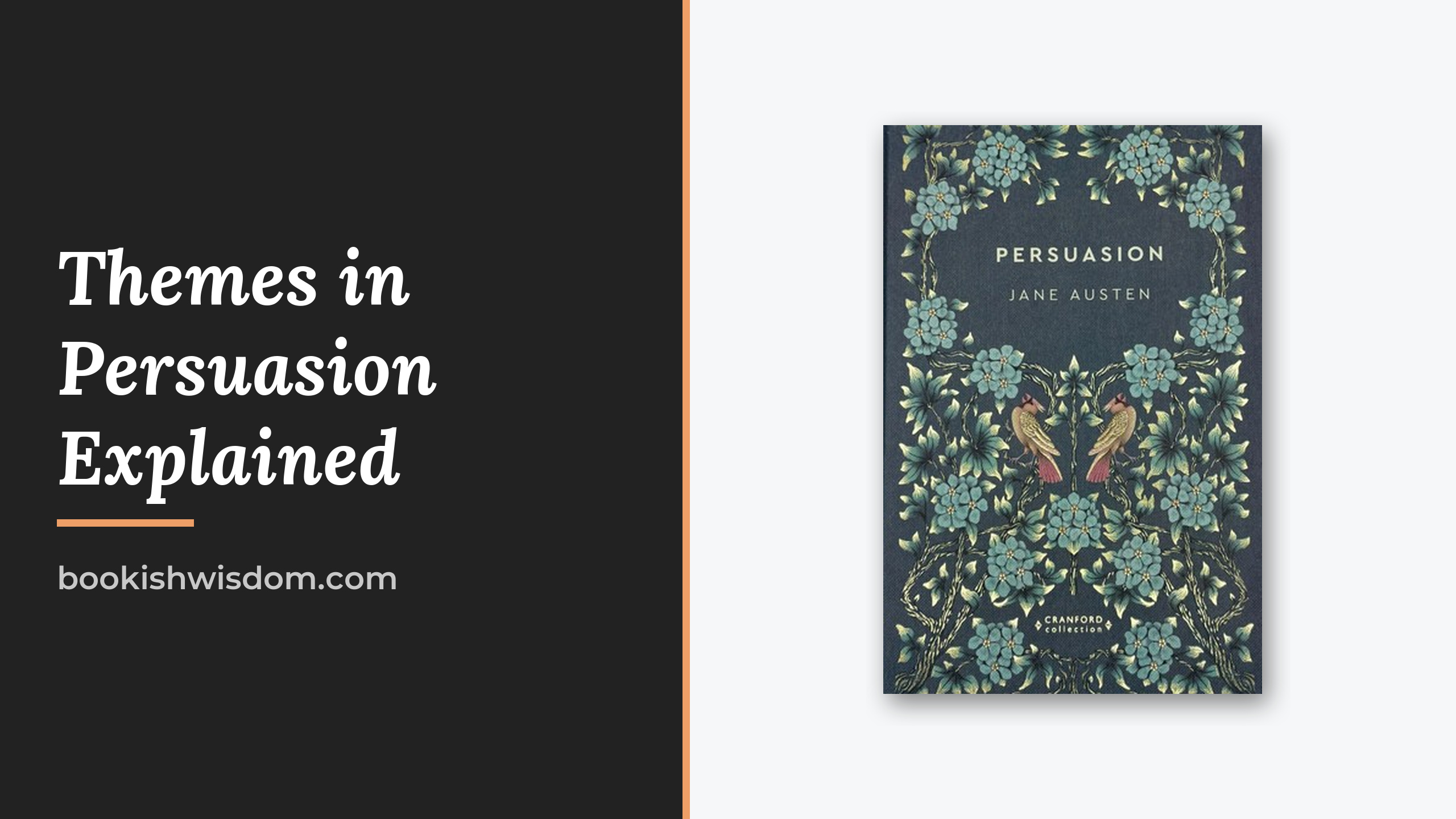
Disclosure: As an Amazon Associate, Bookish Wisdom earns from qualifying purchases. This doesn't change our picks or your price.
Spoiler warning: this analysis discusses the whole book, including the ending of Persuasion.
Quick answer: The main themes in Persuasion by Jane Austen are persuasion and judgement, second chances, constancy, class and merit and regret and maturity. Each is explained below with what it means, how it develops in the story and questions you can use for study or discussion.
Quick facts
- Book: Persuasion by Jane Austen
- First published: 1817
- Main themes: persuasion and judgement, second chances, constancy, class and merit and regret and maturity
Table of Contents
About Persuasion
Eight years before the story begins, Anne Elliot, then nineteen, was persuaded by her family and her trusted friend Lady Russell to break off her engagement to Frederick Wentworth, a young naval officer with no fortune. Now twenty-seven, Anne is unmarried and overlooked by her vain father, Sir Walter, and her selfish sisters. When financial trouble forces the family to rent out their estate, Kellynch Hall, Wentworth returns as a wealthy, successful captain. Anne must watch him court other women while hiding her lasting love, until a famous letter changes everything.
Check price of Persuasion on Amazon
The Main Themes in Persuasion
1. Persuasion and judgement
Anne regrets being persuaded to give up Wentworth. Austen explores when it is right to listen to others and when to trust yourself.
Question to consider: Where in Persuasion does persuasion and judgement matter most to the characters, and what does Jane Austen want readers to think about it?
2. Second chances
Anne and Wentworth get a second chance at love. The novel is Austen's most mature love story.
Question to consider: Where in Persuasion does second chances matter most to the characters, and what does Jane Austen want readers to think about it?
3. Constancy
Anne remains loyal to her love for years. Anne's quiet loyalty contrasts with her family's vanity.
Question to consider: Where in Persuasion does constancy matter most to the characters, and what does Jane Austen want readers to think about it?
4. Class and merit
Wentworth's success comes from merit, not birth. Naval officers earn fortunes through skill.
Question to consider: Where in Persuasion does class and merit matter most to the characters, and what does Jane Austen want readers to think about it?
5. Regret and maturity
Anne has grown wiser. She judges more wisely now.
Question to consider: Where in Persuasion does regret and maturity matter most to the characters, and what does Jane Austen want readers to think about it?
Symbols and Motifs
- The letter. Wentworth's letter represents love finally spoken.
- The navy. It symbolises merit and new society.
- Lyme. The seaside town stands for turning points.
- Kellynch Hall. It represents the old, fading aristocracy.
How the Themes Connect
Persuasion, second chances, constancy, class and maturity shape Austen's last completed novel, often called her most romantic. Wentworth's letter, in which he writes that he is “half agony, half hope,” is one of literature's most famous love letters, and the ending rewards patience and faithfulness.
How to Write About the Themes of Persuasion
If you are writing an essay or preparing for class, these steps help:
- Pick one theme. A focused argument is stronger than a list of everything.
- Find evidence in the text. Point to specific scenes, characters and choices rather than general impressions.
- Explain, don't just describe. After each example, say what it shows about the theme.
- Connect to the ending. Ask how the final chapters resolve or complicate the theme.
- Consider other readings. A fair essay acknowledges that readers can disagree.
Discussion Questions
- Which of the themes above feels most relevant to your own life, and why?
- Do the characters in Persuasion handle persuasion and judgement well or badly?
- How does the title relate to the themes of the book?
- Would the story change if it were set in a different time or place?
- What does Jane Austen leave unresolved, and why might that be?
Books With Similar Themes
- Pride and Prejudice by Jane Austen
- Sense and Sensibility by Jane Austen
Related: Persuasion by Jane Austen: Summary and Key Takeaways · Persuasion Ending Explained
Frequently Asked Questions
What is the main theme of Persuasion?
The central theme is persuasion and judgement, supported by second chances and constancy.
How many themes does Persuasion have?
This guide covers 5 main themes, but readers may find others.
Who wrote Persuasion?
Persuasion was written by Jane Austen and first published in 1817.
Is Persuasion a good book for studying themes?
Yes. Its themes are clear enough to follow and rich enough to support essays and group discussion.
What should I read after Persuasion?
Try Pride and Prejudice by Jane Austen or Sense and Sensibility by Jane Austen.