
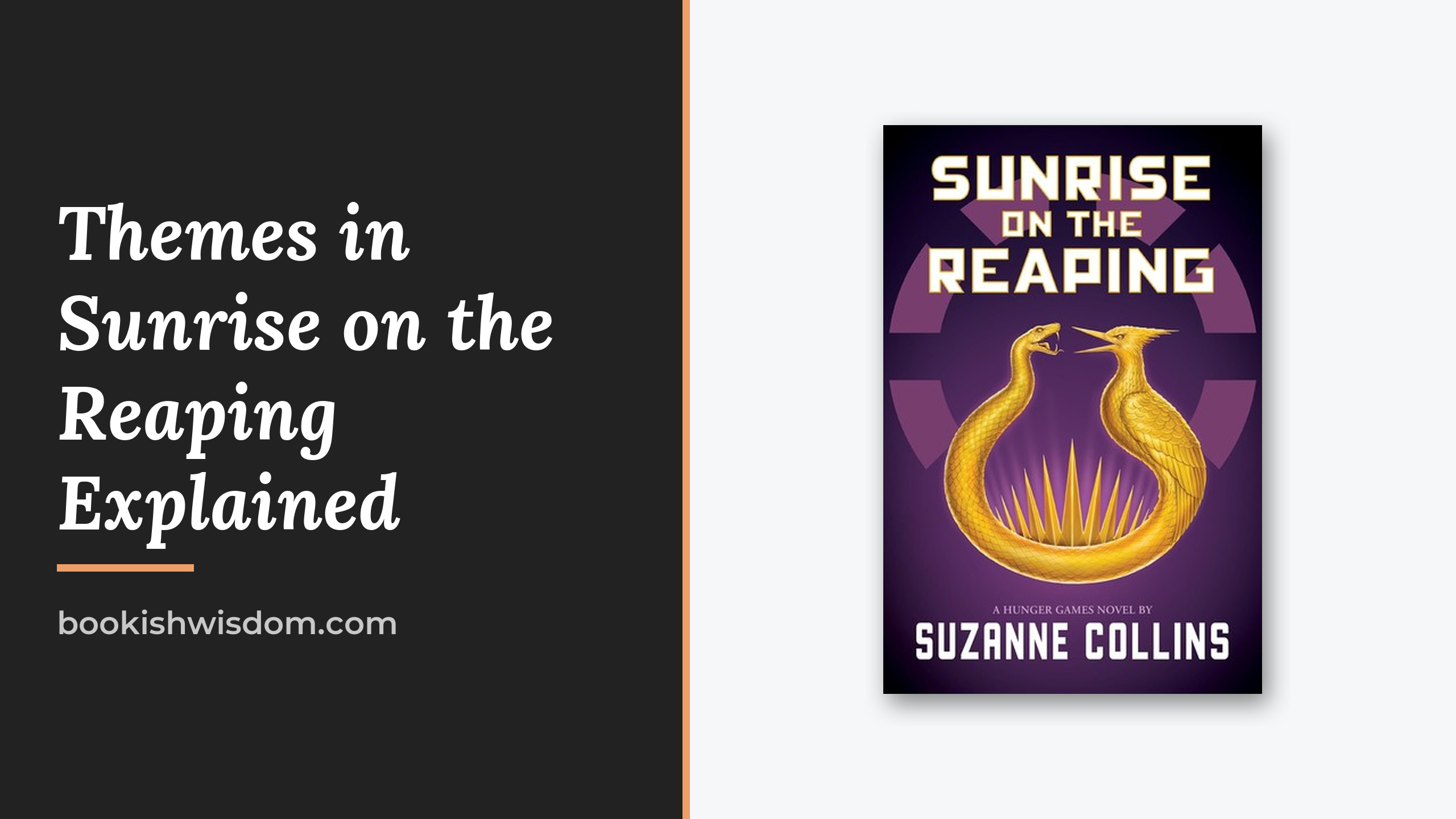
Disclosure: As an Amazon Associate, Bookish Wisdom earns from qualifying purchases. This doesn't change our picks or your price.
Spoiler warning: this analysis discusses the whole book, including the ending of Sunrise on the Reaping.
Quick answer: The main themes in Sunrise on the Reaping by Suzanne Collins are propaganda and truth, rebellion and its cost, grief and trauma, alliance and trust and power and control. Each is explained below with what it means, how it develops in the story and questions you can use for study or discussion.
Quick facts
- Book: Sunrise on the Reaping by Suzanne Collins
- First published: 2025
- Main themes: propaganda and truth, rebellion and its cost, grief and trauma, alliance and trust and power and control
Table of Contents
About Sunrise on the Reaping
Set during the 50th Hunger Games, the second Quarter Quell, this prequel follows sixteen-year-old Haymitch Abernathy of District 12. Reaped in place of another boy, he is thrown into an arena twice as crowded as usual and decides that if he cannot escape the Capitol, he will at least try to damage the machine that runs the Games.
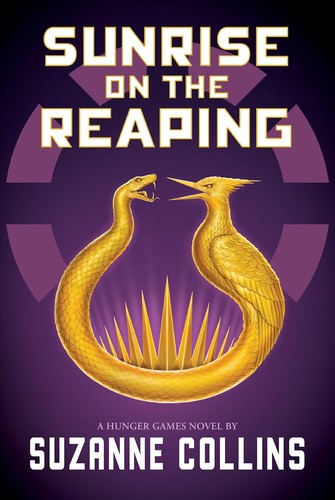
Check price of Sunrise on the Reaping on Amazon
The Main Themes in Sunrise on the Reaping
1. Propaganda and truth
The Capitol edits footage and rewrites events so the Games always tell its story. Haymitch learns that what happens matters less than what is shown, and the novel asks readers to question the versions of history they are handed.
Question to consider: Where in Sunrise on the Reaping does propaganda and truth matter most to the characters, and what does Suzanne Collins want readers to think about it?
2. Rebellion and its cost
Haymitch's defiance is real but expensive. Every act against the Capitol is punished through people he loves, showing that resistance under tyranny is rarely heroic in the moment and often paid for by others.
Question to consider: Where in Sunrise on the Reaping does rebellion and its cost matter most to the characters, and what does Suzanne Collins want readers to think about it?
3. Grief and trauma
The book explains the bitter, drinking mentor readers met in The Hunger Games. Collins traces his losses step by step, so his later cynicism reads as a wound rather than a personality flaw.
Question to consider: Where in Sunrise on the Reaping does grief and trauma matter most to the characters, and what does Suzanne Collins want readers to think about it?
4. Alliance and trust
In a crowded arena, Haymitch must choose whom to rely on. His partnerships with other tributes show how trust becomes a weapon and a weakness when the rules reward betrayal.
Question to consider: Where in Sunrise on the Reaping does alliance and trust matter most to the characters, and what does Suzanne Collins want readers to think about it?
5. Power and control
President Snow treats people as pieces on a board. The novel shows how fear, spectacle and hostage-taking keep the districts obedient, and how control depends on making people feel they have no choices.
Question to consider: Where in Sunrise on the Reaping does power and control matter most to the characters, and what does Suzanne Collins want readers to think about it?
Symbols and Motifs
- The Quarter Quell. A twisted anniversary that doubles the cruelty to remind districts of their defeat.
- The mockingjay. A creature the Capitol never meant to exist, foreshadowing the later rebellion.
- Lenore Dove's songs. Music carries memory and quiet defiance.
- The cameras. Everything filmed becomes Capitol property, even grief.
How the Themes Connect
Each theme feeds the next. Propaganda hides the real cost of rebellion, that cost becomes Haymitch's grief, and grief explains why trust is so hard for him later. Underneath it all is Snow's use of power, which turns ordinary people into a story the Capitol tells about itself.
How to Write About the Themes of Sunrise on the Reaping
If you are writing an essay or preparing for class, these steps help:
- Pick one theme. A focused argument is stronger than a list of everything.
- Find evidence in the text. Point to specific scenes, characters and choices rather than general impressions.
- Explain, don't just describe. After each example, say what it shows about the theme.
- Connect to the ending. Ask how the final chapters resolve or complicate the theme.
- Consider other readings. A fair essay acknowledges that readers can disagree.
Discussion Questions
- Which of the themes above feels most relevant to your own life, and why?
- Do the characters in Sunrise on the Reaping handle propaganda and truth well or badly?
- How does the title relate to the themes of the book?
- Would the story change if it were set in a different time or place?
- What does Suzanne Collins leave unresolved, and why might that be?
Books With Similar Themes
- The Ballad of Songbirds and Snakes by Suzanne Collins
- Red Queen by Victoria Aveyard
Related: Sunrise on the Reaping by Suzanne Collins: Summary and Key Takeaways · Sunrise on the Reaping Ending Explained
Frequently Asked Questions
What is the main theme of Sunrise on the Reaping?
The central theme is propaganda and truth, supported by rebellion and its cost and grief and trauma.
How many themes does Sunrise on the Reaping have?
This guide covers 5 main themes, but readers may find others.
Who wrote Sunrise on the Reaping?
Sunrise on the Reaping was written by Suzanne Collins and first published in 2025.
Is Sunrise on the Reaping a good book for studying themes?
Yes. Its themes are clear enough to follow and rich enough to support essays and group discussion.
What should I read after Sunrise on the Reaping?
Try The Ballad of Songbirds and Snakes by Suzanne Collins or Red Queen by Victoria Aveyard.