
Disclosure: As an Amazon Associate, Bookish Wisdom earns from qualifying purchases. This doesn't change our picks or your price.
Spoiler warning: this analysis discusses the whole book, including the ending of The Boy in the Striped Pajamas.
Quick answer: The main themes in The Boy in the Striped Pajamas by John Boyne are innocence and ignorance, friendship, prejudice and hatred, family and complicity and boundaries. Each is explained below with what it means, how it develops in the story and questions you can use for study or discussion.
Quick facts
- Book: The Boy in the Striped Pajamas by John Boyne
- First published: 2006
- Main themes: innocence and ignorance, friendship, prejudice and hatred, family and complicity and boundaries
Table of Contents
About The Boy in the Striped Pajamas
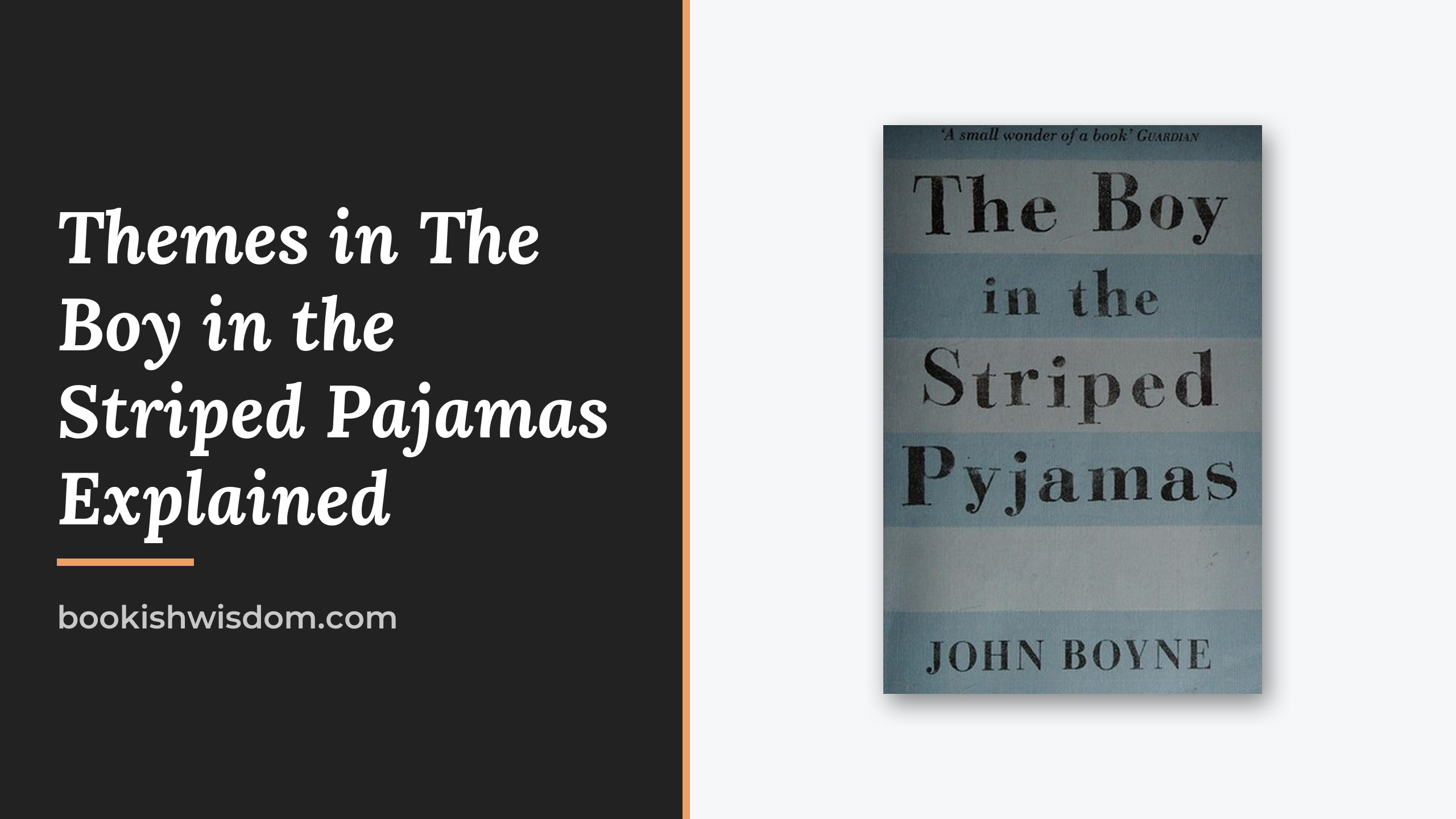
Nine-year-old Bruno lives a comfortable life in Berlin during World War II until his father, a Nazi commandant, is given a new post. The family moves to a lonely house near a fenced camp Bruno calls “Out-With.” Bored and curious, Bruno explores along the fence and meets Shmuel, a Jewish boy his age in striped pyjamas on the other side. The two boys become secret friends, meeting every day, until Bruno decides to help Shmuel search for his missing father, with devastating results.
Check price of The Boy in the Striped Pajamas on Amazon
The Main Themes in The Boy in the Striped Pajamas
1. Innocence and ignorance
Bruno does not understand the horror around him. Boyne uses his innocent perspective to show the terrible reality of the Holocaust, while some critics argue the book's innocence risks softening history.
Question to consider: Where in The Boy in the Striped Pajamas does innocence and ignorance matter most to the characters, and what does John Boyne want readers to think about it?
2. Friendship
Bruno and Shmuel's friendship crosses the fence. Boyne shows how children can connect despite the barriers adults build.
Question to consider: Where in The Boy in the Striped Pajamas does friendship matter most to the characters, and what does John Boyne want readers to think about it?
3. Prejudice and hatred
The Nazi ideology teaches hatred. The book shows how prejudice destroys lives and families.
Question to consider: Where in The Boy in the Striped Pajamas does prejudice and hatred matter most to the characters, and what does John Boyne want readers to think about it?
4. Family and complicity
Bruno's father commands the camp. The novel asks how ordinary families became part of atrocity.
Question to consider: Where in The Boy in the Striped Pajamas does family and complicity matter most to the characters, and what does John Boyne want readers to think about it?
5. Boundaries
The fence divides people. The novel questions the boundaries societies create.
Question to consider: Where in The Boy in the Striped Pajamas does boundaries matter most to the characters, and what does John Boyne want readers to think about it?
Symbols and Motifs
- The fence. It represents division and prejudice.
- The striped pyjamas. They symbolise the dehumanisation of prisoners.
- The house. It stands for complicity and comfort.
- The exploration. Bruno's curiosity represents innocence seeking truth.
How the Themes Connect
Innocence and ignorance shape the story's perspective, while friendship crosses the barriers built by prejudice and hatred. Family and complicity show how ordinary people became involved in atrocity, and boundaries tie it together, as the fence becomes the book's central image. The shocking ending makes readers feel the cost of hatred, though readers are encouraged to pair the novel with real Holocaust history.
How to Write About the Themes of The Boy in the Striped Pajamas
If you are writing an essay or preparing for class, these steps help:
- Pick one theme. A focused argument is stronger than a list of everything.
- Find evidence in the text. Point to specific scenes, characters and choices rather than general impressions.
- Explain, don't just describe. After each example, say what it shows about the theme.
- Connect to the ending. Ask how the final chapters resolve or complicate the theme.
- Consider other readings. A fair essay acknowledges that readers can disagree.
Discussion Questions
- Which of the themes above feels most relevant to your own life, and why?
- Do the characters in The Boy in the Striped Pajamas handle innocence and ignorance well or badly?
- How does the title relate to the themes of the book?
- Would the story change if it were set in a different time or place?
- What does John Boyne leave unresolved, and why might that be?
Books With Similar Themes
- Number the Stars by Lois Lowry
- The Book Thief by Markus Zusak
Related: The Boy in the Striped Pajamas by John Boyne: Summary and Key Takeaways · The Boy in the Striped Pajamas Ending Explained
Frequently Asked Questions
What is the main theme of The Boy in the Striped Pajamas?
The central theme is innocence and ignorance, supported by friendship and prejudice and hatred.
How many themes does The Boy in the Striped Pajamas have?
This guide covers 5 main themes, but readers may find others.
Who wrote The Boy in the Striped Pajamas?
The Boy in the Striped Pajamas was written by John Boyne and first published in 2006.
Is The Boy in the Striped Pajamas a good book for studying themes?
Yes. Its themes are clear enough to follow and rich enough to support essays and group discussion.
What should I read after The Boy in the Striped Pajamas?
Try Number the Stars by Lois Lowry or The Book Thief by Markus Zusak.