
Disclosure: As an Amazon Associate, Bookish Wisdom earns from qualifying purchases. This doesn't change our picks or your price.
Spoiler warning: this analysis discusses the whole book, including the ending of The Girl with the Dragon Tattoo.
Quick answer: The main themes in The Girl with the Dragon Tattoo by Stieg Larsson are violence against women, justice and revenge, journalism and truth, family secrets and outsiders. Each is explained below with what it means, how it develops in the story and questions you can use for study or discussion.
Quick facts
- Book: The Girl with the Dragon Tattoo by Stieg Larsson
- First published: 2005
- Main themes: violence against women, justice and revenge, journalism and truth, family secrets and outsiders
Table of Contents
About The Girl with the Dragon Tattoo
Disgraced journalist Mikael Blomkvist is hired by the aging industrialist Henrik Vanger to solve a forty-year-old mystery: the disappearance of his grandniece Harriet from the family's island estate. Blomkvist teams up with Lisbeth Salander, a brilliant, guarded hacker with a painful past. Together they uncover a trail of hidden violence inside the wealthy Vanger family, and the case forces both of them to confront how power protects abusers.

Check price of The Girl with the Dragon Tattoo on Amazon
The Main Themes in The Girl with the Dragon Tattoo
1. Violence against women
Larsson opens each section with statistics about abuse in Sweden. The novel shows how violence against women hides behind respectable families, comfortable homes and powerful institutions, and how rarely it is punished without someone willing to dig.
Question to consider: Where in The Girl with the Dragon Tattoo does violence against women matter most to the characters, and what does Stieg Larsson want readers to think about it?
2. Justice and revenge
Lisbeth does not trust courts or police, who have failed her many times. She takes justice into her own hands, and the book asks readers whether her revenge is wrong or simply the only option a broken system leaves her.
Question to consider: Where in The Girl with the Dragon Tattoo does justice and revenge matter most to the characters, and what does Stieg Larsson want readers to think about it?
3. Journalism and truth
Mikael's career collapses after a libel case, yet he never stops believing in exposing powerful people. The novel shows investigative journalism as slow, stubborn work that matters because it brings hidden truths into the light.
Question to consider: Where in The Girl with the Dragon Tattoo does journalism and truth matter most to the characters, and what does Stieg Larsson want readers to think about it?
4. Family secrets
The Vanger family looks rich and proud, but its history is full of cruelty, hatred and buried crimes. Larsson shows how families protect their reputation at the cost of the people they harm.
Question to consider: Where in The Girl with the Dragon Tattoo does family secrets matter most to the characters, and what does Stieg Larsson want readers to think about it?
5. Outsiders
Lisbeth is judged as strange, difficult and even dangerous by almost everyone. The story reveals her intelligence and loyalty, and it challenges readers to look past labels society gives to people who do not fit in.
Question to consider: Where in The Girl with the Dragon Tattoo does outsiders matter most to the characters, and what does Stieg Larsson want readers to think about it?
Symbols and Motifs
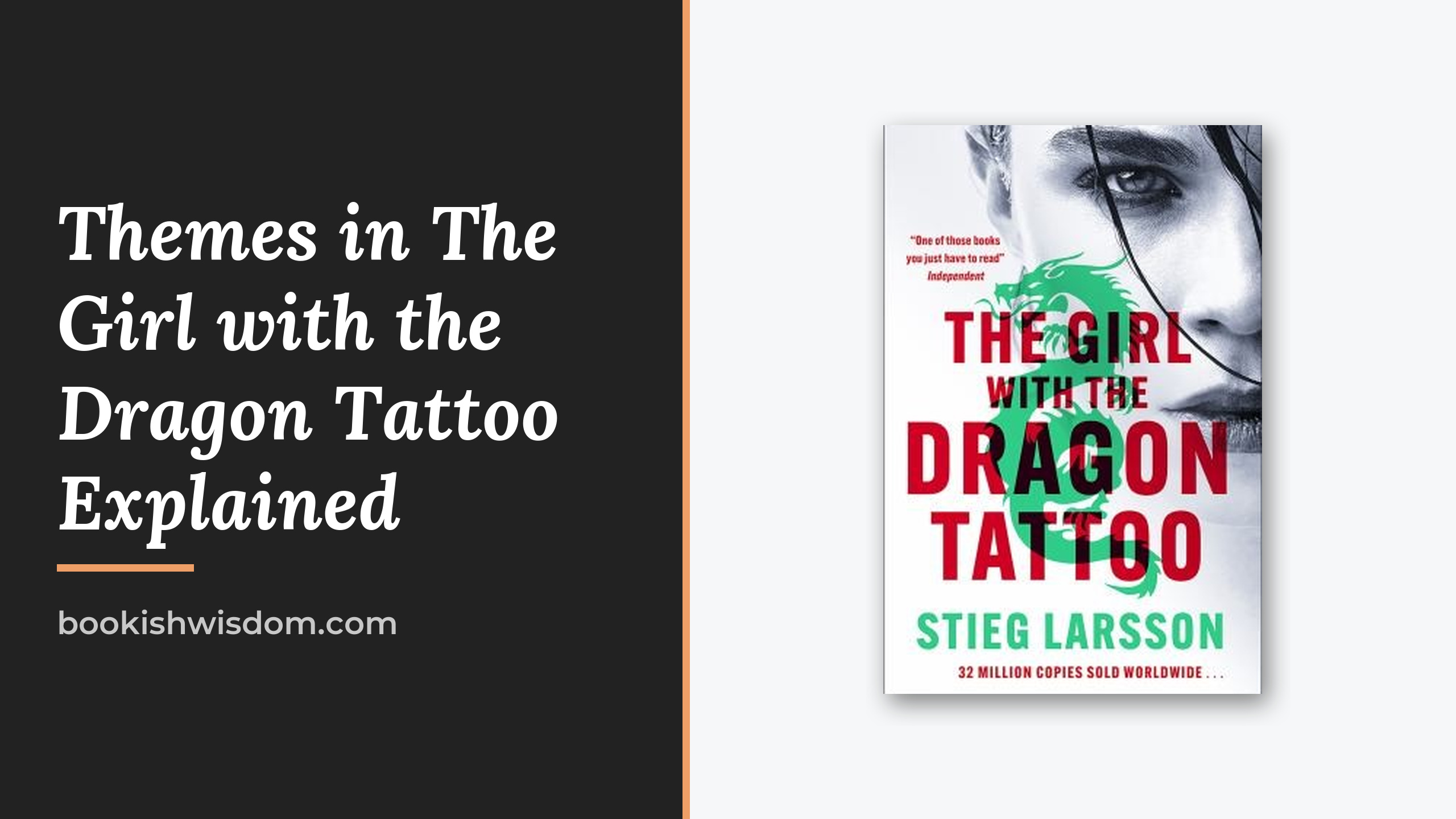
- The dragon tattoo. It marks Lisbeth's toughness and her refusal to be controlled by anyone.
- Hedeby Island. The isolated island stands for the closed, secretive world of the Vanger family.
- The pressed flowers. The yearly gift to Henrik keeps the wound of Harriet's loss open.
- Lisbeth's laptop. It represents her power to uncover truths others try to hide.
How the Themes Connect
The themes work as a single argument. Violence against women is the hidden crime, family secrets keep it buried and journalism and truth are the tools that dig it out. Lisbeth's role as an outsider gives her the clarity to see what respectable people ignore, while her hunger for revenge shows how a failed justice system pushes victims to act alone.
How to Write About the Themes of The Girl with the Dragon Tattoo
If you are writing an essay or preparing for class, these steps help:
- Pick one theme. A focused argument is stronger than a list of everything.
- Find evidence in the text. Point to specific scenes, characters and choices rather than general impressions.
- Explain, don't just describe. After each example, say what it shows about the theme.
- Connect to the ending. Ask how the final chapters resolve or complicate the theme.
- Consider other readings. A fair essay acknowledges that readers can disagree.
Discussion Questions
- Which of the themes above feels most relevant to your own life, and why?
- Do the characters in The Girl with the Dragon Tattoo handle violence against women well or badly?
- How does the title relate to the themes of the book?
- Would the story change if it were set in a different time or place?
- What does Stieg Larsson leave unresolved, and why might that be?
Books With Similar Themes
- Big Little Lies by Liane Moriarty
- Gone Girl by Gillian Flynn
Related: The Girl with the Dragon Tattoo by Stieg Larsson: Summary and Key Takeaways · The Girl with the Dragon Tattoo Ending Explained
Frequently Asked Questions
What is the main theme of The Girl with the Dragon Tattoo?
The central theme is violence against women, supported by justice and revenge and journalism and truth.
How many themes does The Girl with the Dragon Tattoo have?
This guide covers 5 main themes, but readers may find others.
Who wrote The Girl with the Dragon Tattoo?
The Girl with the Dragon Tattoo was written by Stieg Larsson and first published in 2005.
Is The Girl with the Dragon Tattoo a good book for studying themes?
Yes. Its themes are clear enough to follow and rich enough to support essays and group discussion.
What should I read after The Girl with the Dragon Tattoo?
Try Big Little Lies by Liane Moriarty or Gone Girl by Gillian Flynn.