
Disclosure: As an Amazon Associate, Bookish Wisdom earns from qualifying purchases. This doesn't change our picks or your price.
Spoiler warning: this analysis discusses the whole book, including the ending of The Remains of the Day.
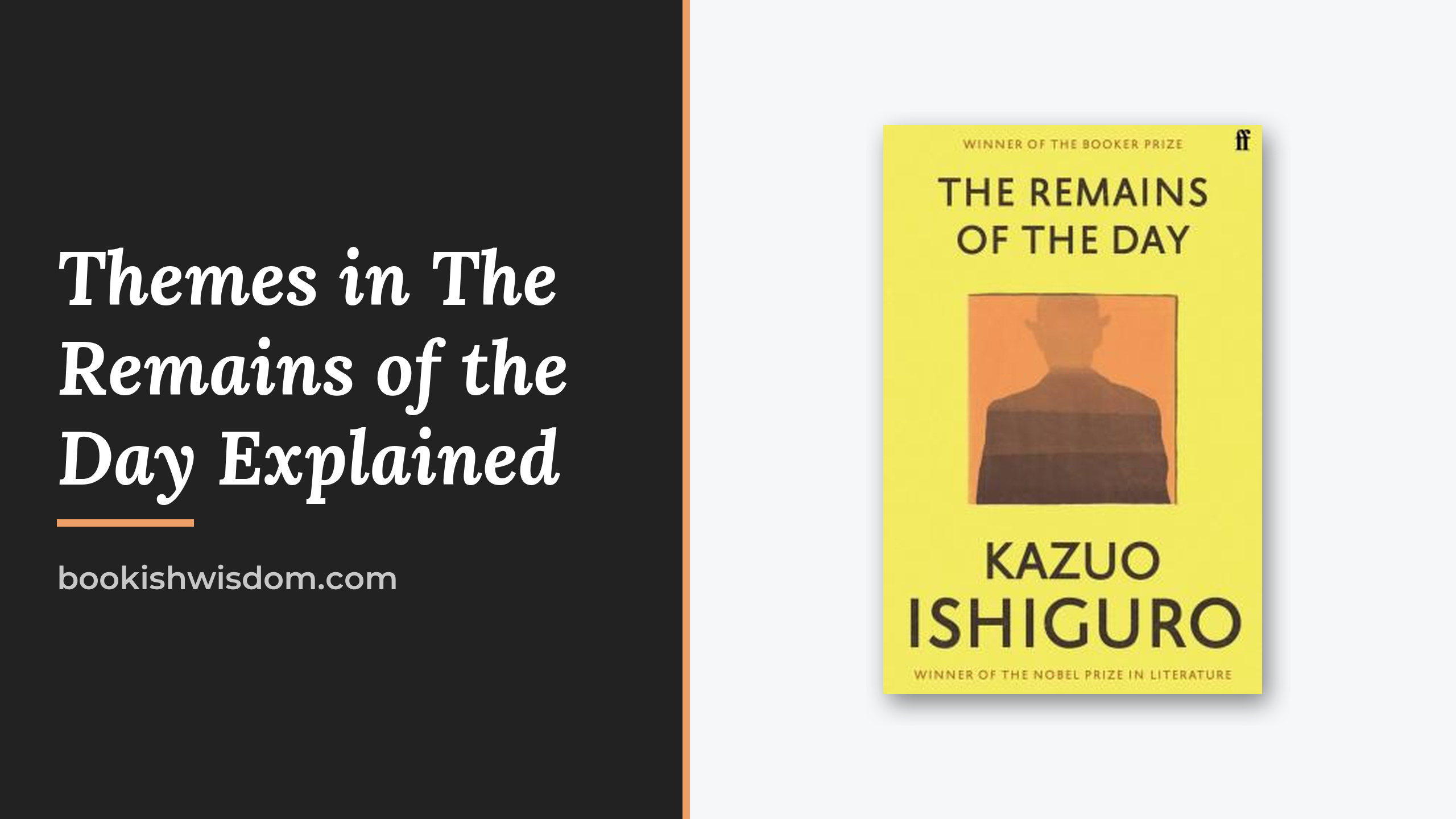
Quick answer: The main themes in The Remains of the Day by Kazuo Ishiguro are dignity and duty, regret, self-deception, loyalty and blind obedience and class and change. Each is explained below with what it means, how it develops in the story and questions you can use for study or discussion.
Quick facts
- Book: The Remains of the Day by Kazuo Ishiguro
- First published: 1989
- Main themes: dignity and duty, regret, self-deception, loyalty and blind obedience and class and change
Table of Contents
About The Remains of the Day
In the summer of 1956, Stevens, the ageing English butler of Darlington Hall, takes a rare motoring trip to the West Country to visit Miss Kenton, the former housekeeper. As he drives, he reflects on his decades of service to Lord Darlington, whom he admired completely. Slowly, through his careful, polite memories, readers see what Stevens cannot admit: that Lord Darlington supported the Nazis before the war, and that Stevens let his chance at love with Miss Kenton slip away. The novel won the Booker Prize.

Check price of The Remains of the Day on Amazon
The Main Themes in The Remains of the Day
1. Dignity and duty
Stevens believes a great butler must hide his feelings and serve completely. Ishiguro shows how this idea of dignity becomes a prison, costing Stevens love, family and self-knowledge.
Question to consider: Where in The Remains of the Day does dignity and duty matter most to the characters, and what does Kazuo Ishiguro want readers to think about it?
2. Regret
As the journey continues, Stevens slowly faces his mistakes. The novel's quiet sadness comes from realising too late what he has lost.
Question to consider: Where in The Remains of the Day does regret matter most to the characters, and what does Kazuo Ishiguro want readers to think about it?
3. Self-deception
Stevens is an unreliable narrator who avoids painful truths. Ishiguro shows how people protect themselves with careful stories.
Question to consider: Where in The Remains of the Day does self-deception matter most to the characters, and what does Kazuo Ishiguro want readers to think about it?
4. Loyalty and blind obedience
Stevens served Lord Darlington faithfully, even when his master was wrong. The novel asks whether loyalty without judgement is a virtue.
Question to consider: Where in The Remains of the Day does loyalty and blind obedience matter most to the characters, and what does Kazuo Ishiguro want readers to think about it?
5. Class and change
Postwar England is changing, and the old aristocratic world is fading.
Question to consider: Where in The Remains of the Day does class and change matter most to the characters, and what does Kazuo Ishiguro want readers to think about it?
Symbols and Motifs
- Darlington Hall. It represents the old order and Stevens's devoted life.
- The journey. It symbolises self-discovery.
- The evening. The pier at sunset stands for the remains of the day, the time left.
- Bantering. Stevens's effort to banter represents his struggle to connect.
How the Themes Connect
Dignity and duty shaped Stevens's life, while regret shows what that life cost him. Self-deception explains why it takes him so long to see the truth, loyalty and blind obedience raise moral questions about his service and class and change show the world moving on. The final scene on the pier, as Stevens considers the remains of his day, is both heartbreaking and quietly hopeful.
How to Write About the Themes of The Remains of the Day
If you are writing an essay or preparing for class, these steps help:
- Pick one theme. A focused argument is stronger than a list of everything.
- Find evidence in the text. Point to specific scenes, characters and choices rather than general impressions.
- Explain, don't just describe. After each example, say what it shows about the theme.
- Connect to the ending. Ask how the final chapters resolve or complicate the theme.
- Consider other readings. A fair essay acknowledges that readers can disagree.
Discussion Questions
- Which of the themes above feels most relevant to your own life, and why?
- Do the characters in The Remains of the Day handle dignity and duty well or badly?
- How does the title relate to the themes of the book?
- Would the story change if it were set in a different time or place?
- What does Kazuo Ishiguro leave unresolved, and why might that be?
Books With Similar Themes
- An Artist of the Floating World by Kazuo Ishiguro
- Never Let Me Go by Kazuo Ishiguro
Related: The Remains of the Day by Kazuo Ishiguro: Summary and Key Takeaways · The Remains of the Day Ending Explained
Frequently Asked Questions
What is the main theme of The Remains of the Day?
The central theme is dignity and duty, supported by regret and self-deception.
How many themes does The Remains of the Day have?
This guide covers 5 main themes, but readers may find others.
Who wrote The Remains of the Day?
The Remains of the Day was written by Kazuo Ishiguro and first published in 1989.
Is The Remains of the Day a good book for studying themes?
Yes. Its themes are clear enough to follow and rich enough to support essays and group discussion.
What should I read after The Remains of the Day?
Try An Artist of the Floating World by Kazuo Ishiguro or Never Let Me Go by Kazuo Ishiguro.