
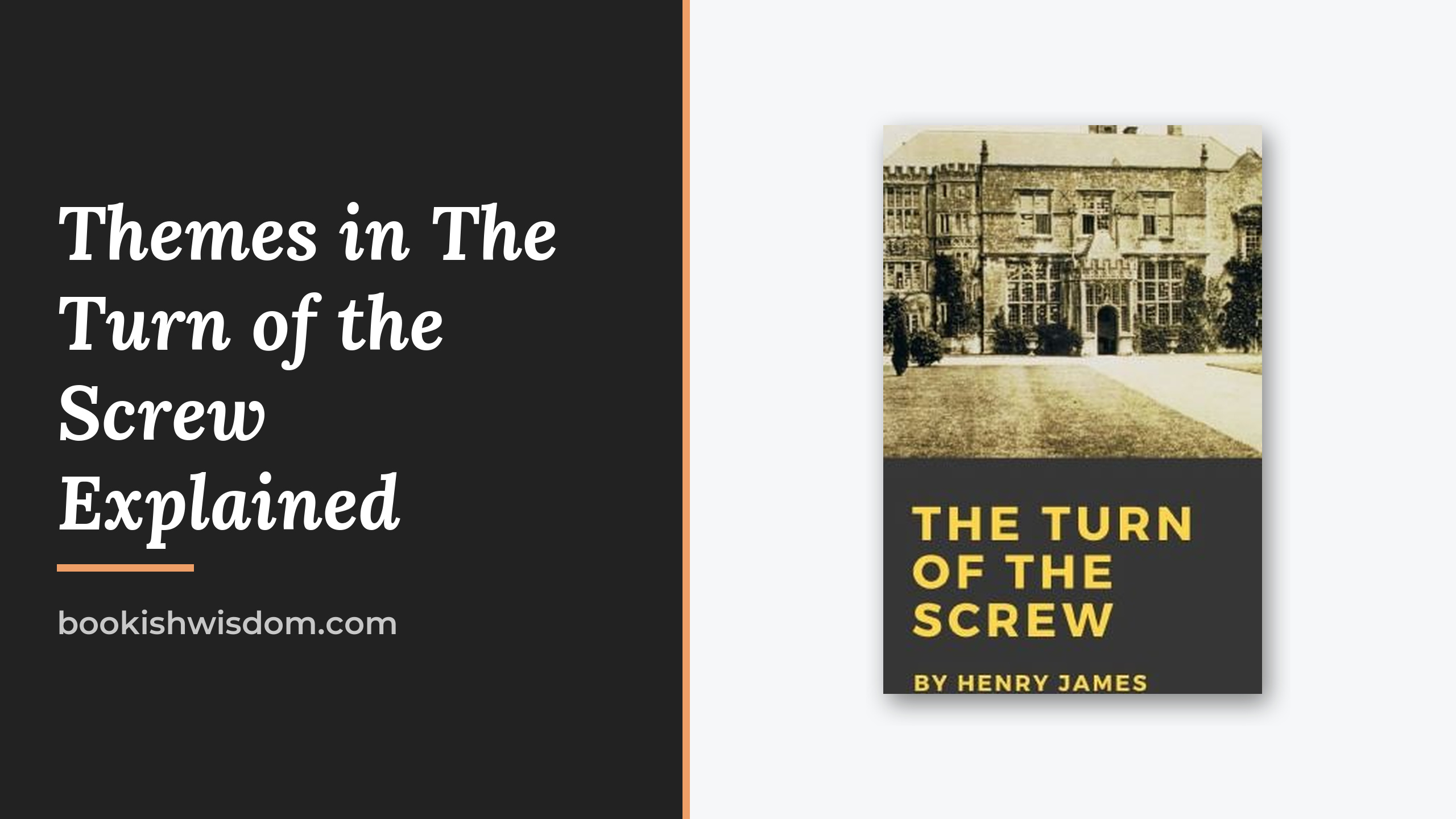
Disclosure: As an Amazon Associate, Bookish Wisdom earns from qualifying purchases. This doesn't change our picks or your price.
Spoiler warning: this analysis discusses the whole book, including the ending of The Turn of the Screw.
Quick answer: The main themes in The Turn of the Screw by Henry James are ambiguity, innocence and corruption, madness and perception, power and control and isolation. Each is explained below with what it means, how it develops in the story and questions you can use for study or discussion.
Quick facts
- Book: The Turn of the Screw by Henry James
- First published: 1898
- Main themes: ambiguity, innocence and corruption, madness and perception, power and control and isolation
Table of Contents
About The Turn of the Screw
A young, inexperienced governess takes a job caring for two orphaned children, Miles and Flora, at Bly, a remote country house in England. Their uncle, who hired her, insists she must never contact him. Soon she begins seeing the ghosts of Peter Quint, the former valet, and Miss Jessel, the previous governess, both of whom died. She becomes convinced the ghosts want to possess the children. But no one else seems to see them, and readers must decide whether the ghosts are real or products of her troubled mind.
Check price of The Turn of the Screw on Amazon
The Main Themes in The Turn of the Screw
1. Ambiguity
James never confirms whether the ghosts are real. This ambiguity has fuelled more than a century of debate, as readers argue over whether the story is a ghost tale or a psychological study.
Question to consider: Where in The Turn of the Screw does ambiguity matter most to the characters, and what does Henry James want readers to think about it?
2. Innocence and corruption
The governess fears the children have been corrupted by Quint and Miss Jessel. The novella explores adult fears about children's innocence.
Question to consider: Where in The Turn of the Screw does innocence and corruption matter most to the characters, and what does Henry James want readers to think about it?
3. Madness and perception
The governess may be mentally unstable. James shows how fear can shape what people see.
Question to consider: Where in The Turn of the Screw does madness and perception matter most to the characters, and what does Henry James want readers to think about it?
4. Power and control
The governess has total control over the children. Her desire to protect them may become harmful.
Question to consider: Where in The Turn of the Screw does power and control matter most to the characters, and what does Henry James want readers to think about it?
5. Isolation
Bly is isolated, and the governess has no one to turn to. Isolation magnifies her fears.
Question to consider: Where in The Turn of the Screw does isolation matter most to the characters, and what does Henry James want readers to think about it?
Symbols and Motifs
- The tower. Where Quint first appears, it represents fear and male power.
- The lake. It symbolises danger and hidden threat.
- The letter from school. Miles's expulsion letter stands for secrets.
- The uncle. His absence represents neglect.
How the Themes Connect
Ambiguity is the novella's core, and innocence and corruption shape the governess's fears about the children. Madness and perception explain why readers question her story, while power and control show how her protectiveness becomes dangerous. Isolation ties it together, and the shocking ending with Miles leaves readers debating what really happened at Bly.
How to Write About the Themes of The Turn of the Screw
If you are writing an essay or preparing for class, these steps help:
- Pick one theme. A focused argument is stronger than a list of everything.
- Find evidence in the text. Point to specific scenes, characters and choices rather than general impressions.
- Explain, don't just describe. After each example, say what it shows about the theme.
- Connect to the ending. Ask how the final chapters resolve or complicate the theme.
- Consider other readings. A fair essay acknowledges that readers can disagree.
Discussion Questions
- Which of the themes above feels most relevant to your own life, and why?
- Do the characters in The Turn of the Screw handle ambiguity well or badly?
- How does the title relate to the themes of the book?
- Would the story change if it were set in a different time or place?
- What does Henry James leave unresolved, and why might that be?
Books With Similar Themes
- The Haunting of Hill House by Shirley Jackson
- Rebecca by Daphne du Maurier
Related: The Turn of the Screw by Henry James: Summary and Key Takeaways · The Turn of the Screw Ending Explained
Frequently Asked Questions
What is the main theme of The Turn of the Screw?
The central theme is ambiguity, supported by innocence and corruption and madness and perception.
How many themes does The Turn of the Screw have?
This guide covers 5 main themes, but readers may find others.
Who wrote The Turn of the Screw?
The Turn of the Screw was written by Henry James and first published in 1898.
Is The Turn of the Screw a good book for studying themes?
Yes. Its themes are clear enough to follow and rich enough to support essays and group discussion.
What should I read after The Turn of the Screw?
Try The Haunting of Hill House by Shirley Jackson or Rebecca by Daphne du Maurier.