
Disclosure: As an Amazon Associate, Bookish Wisdom earns from qualifying purchases. This doesn't change our picks or your price.
TL;DR: In 1940, eighteen-year-old Juliet Armstrong is recruited by MI5 to transcribe secret recordings of British Nazi sympathizers meeting with an undercover agent in a London flat. Ten years later, working at the BBC, she finds her wartime past returning: someone is watching her, and old debts must be paid. The final pages reveal she has kept a secret all along.
Table of Contents
Transcription at a Glance
| Author | Kate Atkinson |
| First published | 2018 |
| Type | Novel |
| Best for | readers who enjoy literary spy fiction with wit and twists |
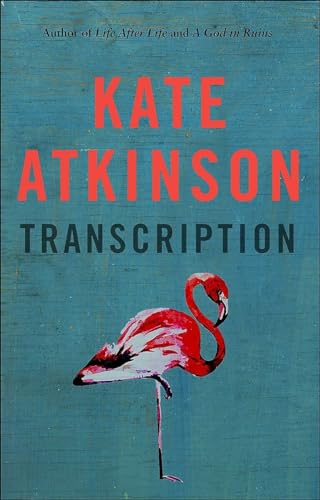
Transcription is a novel by Kate Atkinson, published in 2018. It blends a wartime spy story, a 1950s mystery and Atkinson's sharp, playful style. Below you will find a part-by-part summary, five key takeaways, ideas worth remembering and a note on who will enjoy it.
Content note: Includes violence, a death and wartime danger.
Main Characters
- Juliet Armstrong: A clever young typist turned spy.
- Perry Gibbons: The MI5 officer who recruits Juliet.
- Godfrey Toby: An MI5 agent posing as a Gestapo contact.
- Mrs. Scaife: A wealthy fascist sympathizer Juliet must spy on.
- Hartley: A BBC colleague in 1950.
What Happens, Part by Part (Contains Spoilers)
Recruited
In 1940, Juliet, orphaned and working as a typist, is recruited by MI5. She is sent to a flat in Dolphin Square, where Godfrey Toby, pretending to be a Gestapo agent, meets British fascist sympathizers. Hidden microphones record their talk, and Juliet types the transcripts, full of gaps and trivial chatter.
Going undercover
Perry Gibbons, her boss, asks her to infiltrate an upper-class circle of Nazi sympathizers. Under a false name, she befriends Mrs. Scaife, a society woman. Juliet steals evidence from her house, but the mission goes wrong, and a death occurs that Juliet must help cover up.
The BBC, 1950
Ten years later, Juliet produces children's radio at the BBC. She sees Godfrey Toby in the street, but he denies knowing her. She receives a threatening note saying she will pay for what she did. Old colleagues reappear, and she fears someone from the past wants revenge.
Old ghosts
Juliet is pulled back into secret work, hiding a defector and being watched. She tries to work out who is threatening her and what really happened in 1940. People are not who they seemed, and loyalty is uncertain.
The twist
The ending reveals that Juliet's loyalties were far more complicated than she let anyone see, including the reader. In a final scene in 1981, she reflects on a life spent playing parts, and on how little anyone, even she, truly knew who she was.
5 Key Takeaways
- Secrets shape and distort a life.
- Loyalty in wartime is complicated.
- Small roles can matter in big events.
- Identity can be a performance.
- The past rarely stays buried.
Ideas Worth Remembering
These are paraphrased, not direct quotes:
- The truth is often in the gaps of what is recorded.
- People can play many parts at once.
- Wit can hide fear and doubt.
Who Should Read Transcription?
Read Transcription if you enjoy literary spy fiction, wartime London and clever twists. It suits adults.
Questions to Think About After Reading
These prompts work for solo reading, a book club or a classroom discussion of Transcription:
- Why does Juliet agree to spy?
- How does the twist change the story?
- What do the transcripts reveal about ordinary fascists?
How to Use This Summary
Use this page as a quick reference before a book club meeting, an exam, or a decision about whether Transcription is worth your time. The takeaways are written to stand on their own. If a point interests you, go back to the book for the author's full story, characters and style, which no short summary can replace.
A Note on Accuracy and Spoilers
This summary is based on the published text of Transcription, not on any film, series or stage adaptation, which often change the story. Details are kept at the level of the main events so that nothing is invented. Editions differ slightly in length and wording, so page numbers and small details may vary between copies.
Should You Read the Book?
Yes, if you like slow-burning, witty novels. It is less action-packed than a thriller, but Juliet's voice and the final twist are memorable.
Check price of Transcription on Amazon
What to Read Next
- Life After Life by Kate Atkinson: Atkinson's acclaimed wartime novel
- Tinker Tailor Soldier Spy by John le Carré: spies and double agents
- Atonement by Ian McEwan: a woman's wartime secrets
Frequently Asked Questions
What is Transcription about?
A young woman transcribes spy recordings for MI5 in 1940 and is haunted by her secrets a decade later.
Who wrote Transcription?
Kate Atkinson, in 2018.
Is it based on true events?
It is inspired by real MI5 operations against British fascist sympathizers.
Is there a twist?
Yes. The final chapters reveal that Juliet kept a major secret about where her loyalties lay.
Where is it set?
In London in 1940, 1950 and 1981.
What is Dolphin Square?
A London apartment block where MI5 recorded the meetings.
What age is it for?
Adults.
How long is it?
About 340 pages.
Is it a series?
No, it is a standalone novel.
What is the tone?
Witty and wry, with serious themes underneath.
Who are the main characters in Transcription?
The main characters are Juliet Armstrong, Perry Gibbons, Godfrey Toby, Mrs. Scaife and Hartley. Juliet Armstrong: A clever young typist turned spy. Perry Gibbons: The MI5 officer who recruits Juliet. Godfrey Toby: An MI5 agent posing as a Gestapo contact.
Is Transcription worth reading?
It depends on what you want. The book is best for readers who enjoy literary spy fiction with wit and twists. If that describes you, it is likely a good fit. If not, the titles under What to Read Next may suit you better.