

Disclosure: As an Amazon Associate, Bookish Wisdom earns from qualifying purchases. This doesn't change our picks or your price.
TL;DR: In 1960, John Steinbeck, nearly sixty, sets out in a camper truck named Rocinante with his poodle, Charley, to rediscover America. Over thousands of miles, he meets ordinary people, admires landscapes and reflects on a changing country, from New England forests to California redwoods, ending with a troubling visit to the segregated South.
Table of Contents
Travels with Charley at a Glance
| Author | John Steinbeck |
| First published | 1962 |
| Type | Travel memoir |
| Best for | readers who enjoy travel writing and reflections on America |
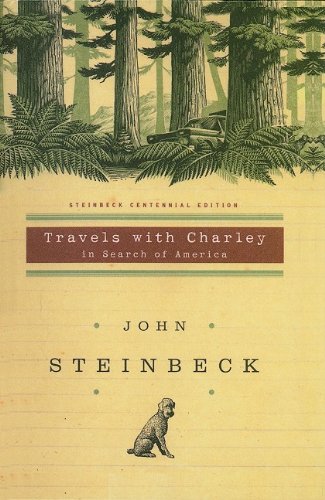
Travels with Charley: In Search of America is a travel book by John Steinbeck, published in 1962. It is part memoir and part portrait of the United States. Below you will find a part-by-part summary of the main ideas, five key takeaways, ideas worth remembering and a note on who will enjoy it. Some scholars think Steinbeck shaped parts of the trip for storytelling.
Content note: Includes racist abuse witnessed in New Orleans.
Key Concepts
- Rocinante: Steinbeck's camper truck, named after Don Quixote's horse.
- Charley: Steinbeck's large, elderly French poodle.
- Rediscovering America: The goal of seeing the country with fresh eyes.
- Regional identity: The differences between parts of the country.
- Change and progress: Steinbeck's worries about waste, sameness and the loss of local character.
The Main Ideas, Part by Part
Setting out
Steinbeck feels he has lost touch with the country he writes about. He buys a truck with a camper, names it Rocinante and leaves Long Island with Charley. He heads north into Maine and New England, enjoying the autumn colors.
The Midwest and the North
He travels through the industrial Midwest and the northern states, meeting farmers, truck drivers and travelers. He notices how mobile, restless and wasteful Americans have become, and how television is making accents and regions more alike.
The West
Steinbeck crosses the Great Plains to Montana, which he falls in love with, and to the Pacific Northwest. He visits the giant redwoods, where Charley is unimpressed. In his hometown of Salinas, he finds that he cannot go home again: everything has changed.
Texas
He drives through the Southwest to Texas, where his wife joins him for a Thanksgiving celebration with wealthy ranchers. He reflects on the size and pride of Texas.
The South
In New Orleans, Steinbeck watches white women, called the “Cheerleaders,” scream abuse at Black children integrating a school. He is sickened. Traveling on, he gives rides to people on both sides of the race issue. Exhausted, he heads home, and the journey ends abruptly in New York traffic.
5 Key Takeaways
- Seeing your country firsthand can challenge your ideas.
- Regions are losing their distinct character.
- Ordinary people reveal a nation's soul.
- Racism is a deep wound in American life.
- Travel can be both joyful and lonely.
Ideas Worth Remembering
These are paraphrased, not direct quotes:
- You cannot go home again; places and people change.
- A dog can open doors to strangers.
- A journey often ends before you reach home.
Who Should Read Travels with Charley?
Read Travels with Charley if you enjoy travel writing, American history or Steinbeck's voice. It suits teens and adults.
Questions to Think About After Reading
These prompts work for solo reading, a book club or a classroom discussion of Travels with Charley:
- What does Steinbeck learn about America?
- Why is the New Orleans scene so important?
- How does Charley help the journey?
How to Use This Summary
Use this page as a quick reference before a book club meeting, an exam, or a decision about whether Travels with Charley is worth your time. The takeaways are written to stand on their own. If a point interests you, go back to the book for the author's full argument, examples and evidence, which no short summary can replace.
A Note on Accuracy and Spoilers
This summary is based on the published text of Travels with Charley, not on any film, series or stage adaptation, which often change the story. Details are kept at the level of the main arguments so that nothing is invented. Editions differ slightly in length and wording, so page numbers and small details may vary between copies.
Should You Read the Book?
Yes. It is warm, funny and reflective, and Charley is a charming companion. Read it as a personal portrait rather than exact reporting.
Check price of Travels with Charley on Amazon
What to Read Next
- Blue Highways by William Least Heat-Moon: a journey on America's back roads
- On the Road by Jack Kerouac: restless travel across America
- Cannery Row by John Steinbeck: Steinbeck's California
Related: 15 Books Like Travels with Charley You’ll Love · The Red Pony by John Steinbeck: Summary and Key Takeaways
Frequently Asked Questions
What is Travels with Charley about?
John Steinbeck's 1960 road trip across America with his poodle.
Who is Charley?
Steinbeck's French poodle.
What is Rocinante?
His camper truck, named after Don Quixote's horse.
Is it true?
It is based on a real trip, though some details may be fictionalized.
When was the trip?
In 1960.
What age is it for?
Teens and adults.
How long is it?
About 280 pages.
Where does the trip end?
Back in New York.
Why is the New Orleans section famous?
It shows ugly racism during school integration.
Did Steinbeck win the Nobel Prize?
Yes, in 1962, the year the book was published.
Who are the main ideas in Travels with Charley?
The key concepts are Rocinante, Charley, Rediscovering America, Regional identity and Change and progress. Rocinante: Steinbeck's camper truck, named after Don Quixote's horse. Charley: Steinbeck's large, elderly French poodle. Rediscovering America: The goal of seeing the country with fresh eyes.
Is Travels with Charley worth reading?
It depends on what you want. The book is best for readers who enjoy travel writing and reflections on America. If that describes you, it is likely a good fit. If not, the titles under What to Read Next may suit you better.