
Disclosure: As an Amazon Associate, Bookish Wisdom earns from qualifying purchases. This doesn't change our picks or your price.
TL;DR: Trust tells the story of a powerful New York financier and his wife in the 1920s, but it tells it four times, in four different forms. A popular novel, a financier's unfinished memoir, a secretary's recollections and a wife's private journal each give a different version of the same lives. As the pieces fit together, the reader learns who really held the power and who controls the story.
Table of Contents
Trust at a Glance
| Author | Hernan Diaz |
| First published | 2022 |
| Type | Literary fiction |
| Best for | readers who want a clever literary puzzle about money, power and storytelling |
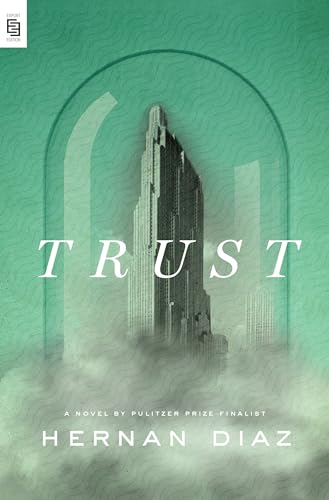
Trust is a novel by Hernan Diaz, published in 2022. It won the Pulitzer Prize for Fiction in 2023 and was longlisted for the Booker Prize. Below you will find a part-by-part summary, five key takeaways, ideas worth remembering and a note on who will enjoy it.
Content note: Includes mental illness, illness and death.
Main Characters
- Andrew Bevel: A rich, powerful financier.
- Mildred Bevel: Andrew's quiet, brilliant wife.
- Ida Partenza: A young writer hired to ghostwrite Bevel's memoir.
- Benjamin and Helen Rask: Fictional versions of the Bevels in a novel.
- Harold Vanner: The novelist who wrote about them.
What Happens, Part by Part (Contains Spoilers)
Bonds
The first part is a novel called Bonds by Harold Vanner. It tells the story of Benjamin Rask, a shy, wealthy financier who grows his fortune in the 1920s, and his wife Helen, a gifted woman who later falls into mental illness and dies in a Swiss clinic. The story seems to be fiction, but readers will soon learn it is based on real people.
My Life
The second part is an unfinished autobiography by Andrew Bevel, the real financier behind the novel. He is furious that Vanner's book suggested his wife went mad and that he profited from the 1929 crash. In his version, Bevel is a heroic patriot and his wife Mildred a gentle, supportive lady.
A Memoir, Remembered
The third part is told by Ida Partenza, years later. In the 1930s, she was hired by Bevel to help write his memoir. She describes how he wanted to control the story and erase Vanner's novel. Ida grows curious about Mildred and begins to suspect that Bevel's story hides the truth.
Futures
The fourth part is Mildred's own journal, discovered by Ida years later in the Bevel archives. It is written in short, broken notes from her final days in a Swiss clinic. Mildred reveals that she was the true genius behind Andrew's success, making many of the key decisions and trades, including during the 1929 crash.
The truth
Mildred's journal changes everything. Andrew silenced her and rewrote history, turning himself into the hero. Ida realizes how power and wealth can shape even the most private stories. The novel ends by asking readers to question every version of the past they are given.
5 Key Takeaways
- Stories can be shaped by power and money.
- History often silences women.
- Truth can be hidden in plain sight.
- Wealth depends on narratives.
- Every version of events serves someone.
Ideas Worth Remembering
These are paraphrased, not direct quotes:
- Ask who is telling the story and why.
- The quietest voice may hold the truth.
- Money and memory are both forms of control.
Who Should Read Trust?
Read Trust if you enjoy literary puzzles, historical fiction and stories about wealth and power. It suits adults.
About Hernan Diaz
Hernan Diaz (born 1973) is an Argentine-born writer who grew up in Sweden and lives in New York. His first novel, In the Distance, was a finalist for the Pulitzer Prize in 2018. Trust won the 2023 Pulitzer Prize for Fiction and the Kirkus Prize. He has also written about Jorge Luis Borges.
Questions to Think About After Reading
These prompts work for solo reading, a book club or a classroom discussion of Trust:
- Which version of the story do you believe most?
- Why did Andrew rewrite his wife's story?
- How does the novel use form to show power?
How to Use This Summary
Use this page as a quick reference before a book club meeting, an exam, or a decision about whether Trust is worth your time. The takeaways are written to stand on their own. If a point interests you, go back to the book for the author's full story, characters and style, which no short summary can replace.
A Note on Accuracy and Spoilers
This summary is based on the published text of Trust, not on any film, series or stage adaptation, which often change the story. Details are kept at the level of the main events so that nothing is invented. Editions differ slightly in length and wording, so page numbers and small details may vary between copies.
Should You Read the Book?
Yes. It is clever, elegant and full of ideas.
Check price of Trust on Amazon
What to Read Next
- In the Distance by Hernan Diaz: Diaz's first novel, set in the American West
- The Great Gatsby by F. Scott Fitzgerald: wealth and illusion in the 1920s
- Atonement by Ian McEwan: a story about who controls the truth
Related: 15 Books Like Trust You’ll Love
Frequently Asked Questions
What is Trust about?
The story of a financier and his wife told in four different versions.
Who wrote it?
Hernan Diaz, in 2022.
Did it win awards?
Yes, the Pulitzer Prize for Fiction in 2023.
How is it structured?
As a novel, a memoir, a recollection and a journal.
Who is the real genius?
Mildred Bevel.
When is it set?
Mainly in the 1920s and 1930s.
Is it historical fiction?
Yes, with fictional characters.
What age is it for?
Adults.
How long is it?
About 400 pages.
Is it hard to read?
It is literary but very readable.
Is it about the stock market?
Partly, especially the 1929 crash.
Is there an adaptation?
An HBO limited series with Kate Winslet was announced.
Should I read the parts in order?
Yes. The surprise depends on reading the four parts as they appear.
Is Trust worth reading?
It depends on what you want. The book is best for readers who want a clever literary puzzle about money, power and storytelling. If that describes you, it is likely a good fit. If not, the titles under What to Read Next may suit you better.