
Disclosure: As an Amazon Associate, Bookish Wisdom earns from qualifying purchases. This doesn't change our picks or your price.
Quick answer: Reading books is often better than watching TV because it builds vocabulary, focus and imagination more actively. When you read, your brain creates the images, voices and settings yourself, and you control the pace. Research also links regular reading to stronger language skills, better concentration and, for many people, lower stress. TV can still be enjoyable and educational, so balance matters.
Table of Contents
Key Facts
| Item | Detail |
|---|---|
| Main benefits of reading | Vocabulary, focus, imagination, empathy and knowledge |
| Mental effort | Reading is active, while TV is mostly passive |
| Before bed | Print books avoid screen light that can disrupt sleep |
| For children | Reading aloud builds language skills |
| Balance | Good TV can complement reading, not replace it |
Why Reading Has the Edge Over TV
1. It builds vocabulary
Books use far more varied words than everyday speech or most TV scripts. Readers meet new words in context, which helps them remember and use them.
2. It strengthens focus
Following a book for an hour trains attention in a way that fast-cut TV does not. That skill helps in school and work.
3. It sparks imagination
Readers picture characters, places and events for themselves, which exercises creativity.
4. It builds empathy
Spending hours inside a character's thoughts helps readers understand other people's feelings and experiences.
5. It lets you control the pace
You can slow down, reread a passage or stop to think, which helps you understand complex ideas.
6. It can improve sleep and calm stress
A paper book before bed avoids bright screens and can help you relax.
Myths About Reading and Screens
- Thinking all TV is bad. Documentaries, adaptations and good drama can inspire reading and learning.
- Believing audiobooks do not count. Audiobooks build vocabulary and comprehension too.
- Forcing reading as a punishment. Children read more when books feel fun, not like a penalty.
- Comparing quantity only. Ten pages read with attention can be worth more than an hour of background TV.
- Assuming e-readers are the same as TV. E-readers without backlights behave much more like paper books.
Making Reading Part of Everyday Life
Small habits make the biggest difference. Keep a book where you naturally spend idle minutes, such as by the bed, in a bag or on your phone through a library app. Set a gentle goal, like ten pages a day, rather than a large number that feels like pressure. Mix formats, since audiobooks count too and can fit into commutes and chores. Let yourself stop reading books you do not enjoy, because forcing your way through them is one of the fastest ways to lose the habit. And talk about what you read with friends or a book club, since sharing a story is one of the best reasons to finish it.
If you want to read more, track what you finish in a notebook or app. Seeing a growing list is motivating, and it helps you notice what you enjoy most, so you can choose better books next time.
Finally, be patient with yourself. Reading habits grow slowly, and a few pages most days will add up to many books over a year.
It also helps to keep a list of books you want to read next. When you finish one book, you will already know what to pick up, which keeps the habit going without a gap.
Above all, choose books that match your mood and interests. Reading should feel like a reward, not a test, and the right book at the right time makes the habit easy.
Helpful Books and Resources
-
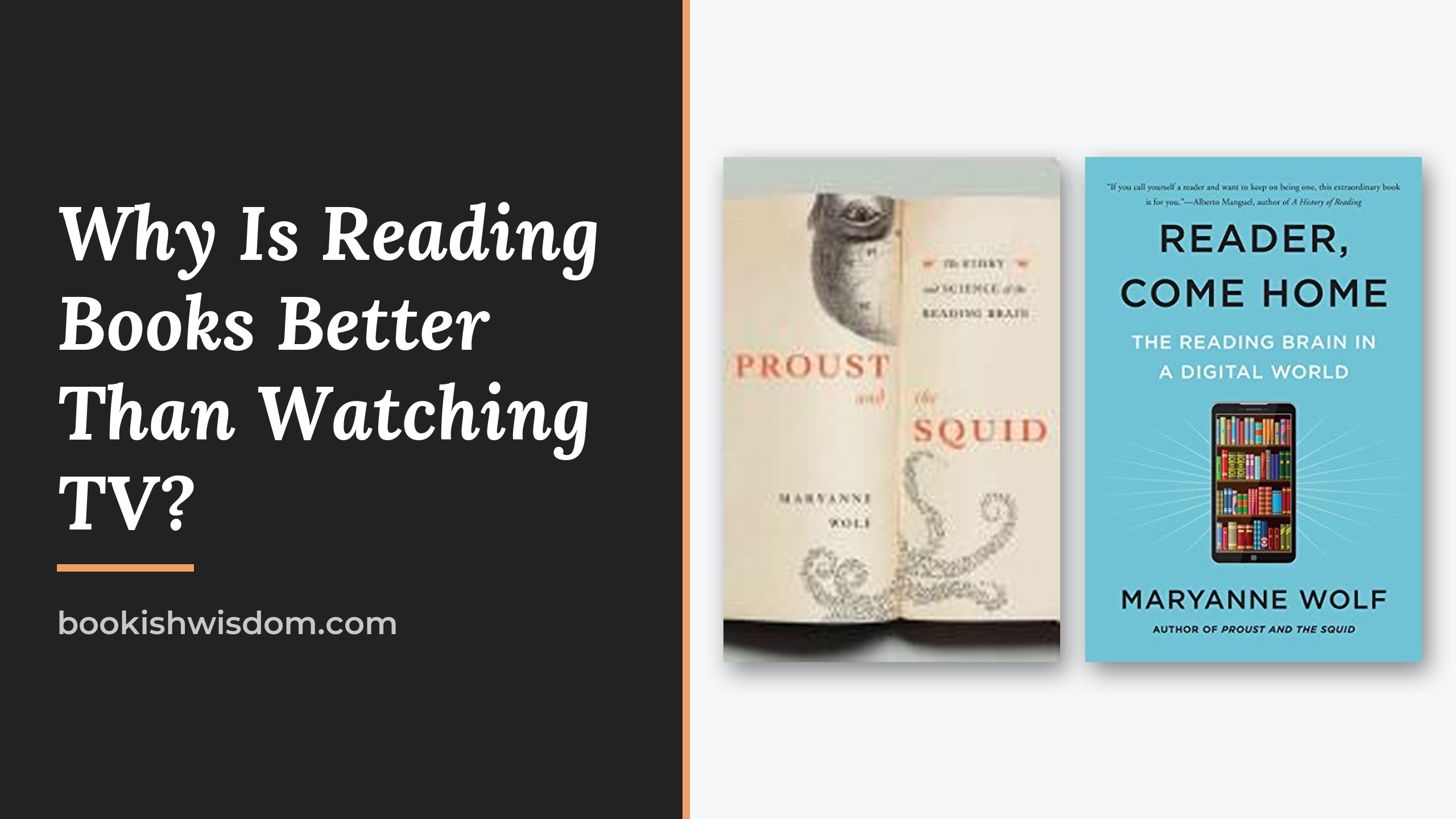
Proust and the Squid by Maryanne Wolf
-
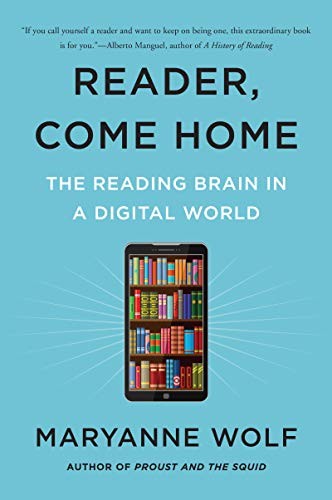
Reader, Come Home by Maryanne Wolf
- The Read-Aloud Handbook by Jim Trelease
Related: 10 Reasons Reading Is More Productive Than Watching TV · Are eBooks Better Than Printed Books? 10 Reasons to Decide
Frequently Asked Questions
Is reading better than watching TV?
For focus, vocabulary and imagination, reading usually has more benefits.
Does reading improve intelligence?
It builds knowledge, vocabulary and reasoning skills linked to intelligence.
Is watching TV bad for kids?
Not in moderation, but reading and play are important too.
Do audiobooks count as reading?
Yes. They build many of the same skills.
How can I read more and watch less?
Swap one episode a night for thirty minutes of reading.
Why is reading relaxing?
It slows the mind and focuses attention on one thing.
Can TV encourage reading?
Yes. Many people pick up a book after loving its adaptation.
What books are good for people who mostly watch TV?
Fast thrillers and books with adaptations are good bridges.
How much reading is enough each day?
Even twenty to thirty minutes a day adds up to many books a year and brings real benefits.
Is reading on a phone as good as a book?
The words are the same, but notifications can break focus, so many readers prefer paper or an e-reader.
What if I find reading boring?
Try a different genre, a graphic novel or an audiobook until you find something that grabs you.