
Disclosure: As an Amazon Associate, Bookish Wisdom earns from qualifying purchases. This doesn't change our picks or your price.
TL;DR: Two deaf children, fifty years apart, run away to New York City in search of something missing. In 1977, Ben, a boy who has lost his mother, follows a clue about the father he never knew. His story is told in words. In 1927, Rose, a girl who loves a silent film star, sets off alone. Her story is told entirely in pictures. Their paths come together in a surprising way.
Table of Contents
Wonderstruck at a Glance
| Author | Brian Selznick |
| First published | 2011 |
| Type | Children's novel |
| Best for | young readers who want a beautiful, inventive story told in words and pictures |
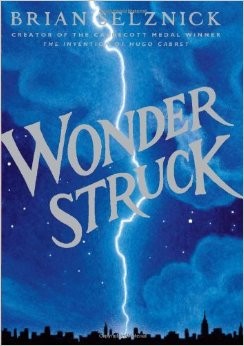
Wonderstruck is a novel by Brian Selznick, published in 2011. It mixes written chapters with hundreds of pages of pencil drawings and was adapted into a 2017 film. Below you will find a part-by-part summary, five key takeaways, ideas worth remembering and a note on who will enjoy it.
Content note: Includes the death of a parent, deafness after an accident and running away.
Main Characters
- Ben: A boy from Minnesota who loses his hearing.
- Rose: A deaf girl from New Jersey in 1927.
- Jamie: A boy Ben meets at the museum.
- Lillian Mayhew: A silent film actress.
- Walter: Rose's brother, who works at a museum.
What Happens, Part by Part (Contains Spoilers)
Ben
In 1977, Ben lives in Gunflint Lake, Minnesota, with his aunt's family after his mother dies in a car accident. He is deaf in one ear. He finds a bookmark from a New York bookstore with a message, which may be a clue about his father. During a storm, lightning strikes the phone line while he is using it, and he loses his hearing in his other ear.
Rose
In 1927, Rose lives in Hoboken, New Jersey, with her strict father. She is deaf and collects newspaper clippings about the actress Lillian Mayhew. She builds model buildings of New York. When she learns that Lillian is performing in the city, Rose runs away to see her. Her story is told only in drawings.
New York
Ben runs away to New York City to find the bookstore. He ends up at the American Museum of Natural History, where he meets Jamie, a boy whose father works there. Jamie shows Ben the museum's hidden places. Rose, in her story, also visits the museum, where her brother Walter works.
Connections
Ben learns that his father once worked at the museum and that his story is linked to a “Cabinet of Wonders,” an old display about collecting. He finds the bookstore and meets an older woman who communicates with him through writing. She is Rose, his grandmother, and she tells him the story of his family.
The panorama
Rose takes Ben to the Queens Museum, where a huge model of New York City is displayed. She explains her life, her family and Ben's father, who died young. During a citywide blackout, Ben, Rose and Jamie watch the stars together. Ben finally feels he belongs to a family.
5 Key Takeaways
- Families can be found in unexpected ways.
- Deafness is part of identity, not a weakness.
- Museums can preserve memories.
- Stories can be told in words and pictures.
- Curiosity can lead to discovery.
Ideas Worth Remembering
These are paraphrased, not direct quotes:
- Everyone is looking for where they belong.
- Small clues can lead to big answers.
- Wonder can be found in everyday things.
Who Should Read Wonderstruck?
Read Wonderstruck if you are a young reader who enjoys mysteries, museums and beautiful illustrations. It suits ages 9 and up.
About Brian Selznick
Brian Selznick (born 1966) is an American author and illustrator. His book The Invention of Hugo Cabret won the Caldecott Medal and was adapted into the film Hugo by Martin Scorsese. Wonderstruck was followed by The Marvels, another story in words and pictures. He also illustrated new editions of Harry Potter covers for their 20th anniversary.
Questions to Think About After Reading
These prompts work for solo reading, a book club or a classroom discussion of Wonderstruck:
- How do Ben and Rose's stories connect?
- Why is Rose's story told in pictures?
- What does the Cabinet of Wonders represent?
How to Use This Summary
Use this page as a quick reference before a book club meeting, an exam, or a decision about whether Wonderstruck is worth your time. The takeaways are written to stand on their own. If a point interests you, go back to the book for the author's full story, characters and style, which no short summary can replace.
A Note on Accuracy and Spoilers
This summary is based on the published text of Wonderstruck, not on any film, series or stage adaptation, which often change the story. Details are kept at the level of the main events so that nothing is invented. Editions differ slightly in length and wording, so page numbers and small details may vary between copies.
Should You Read the Book?
Yes. It is beautiful, unusual and moving.
Check price of Wonderstruck on Amazon
What to Read Next
- The Invention of Hugo Cabret by Brian Selznick: an orphan boy and a mystery in pictures
- The Marvels by Brian Selznick: another story told in words and pictures
- From the Mixed-Up Files of Mrs. Basil E. Frankweiler by E.L. Konigsburg: runaways in a museum
Related: 15 Books Like Wonderstruck You’ll Love
Frequently Asked Questions
What is Wonderstruck about?
Two deaf children in different times run away to New York.
Who wrote it?
Brian Selznick, in 2011.
How is it told?
Ben's story in words, and Rose's story in pictures.
Who is Rose?
A deaf girl in 1927 who is Ben's grandmother.
Who is Ben?
A boy who loses his hearing in 1977.
Where is it set?
Minnesota, New Jersey and New York.
Is there a film?
Yes, the 2017 film directed by Todd Haynes.
What age is it for?
9 and up.
How long is it?
About 640 pages, mostly pictures.
Is it a quick read?
Yes, because many pages are illustrations.
Is it about deafness?
Yes, partly.
What is the Cabinet of Wonders?
An old museum display of collected objects.
Is it good for reluctant readers?
Yes. The many pictures make the long book feel fast and exciting.
Is Wonderstruck worth reading?
It depends on what you want. The book is best for young readers who want a beautiful, inventive story told in words and pictures. If that describes you, it is likely a good fit. If not, the titles under What to Read Next may suit you better.