
Disclosure: As an Amazon Associate, Bookish Wisdom earns from qualifying purchases. This doesn't change our picks or your price.
TL;DR: Set in London and Paris before and during the French Revolution, the novel follows Doctor Manette, released after eighteen years in the Bastille, his daughter Lucie, her husband the French aristocrat Charles Darnay, and the cynical lawyer Sydney Carton, who makes a famous sacrifice for love.
Table of Contents
A Tale of Two Cities at a Glance
| Author | Charles Dickens |
| First published | 1859 |
| Type | Historical novel |
| Best for | readers who want a dramatic historical novel with one of the great endings in literature |
A Tale of Two Cities is a historical novel by Charles Dickens, first published in 1859. Its opening line, “It was the best of times, it was the worst of times”, is one of the most famous in English. Below you will find a part-by-part summary, five key takeaways, ideas worth remembering and a note on who will enjoy it.
Content note: Includes revolutionary violence and executions.
Main Characters
- Sydney Carton: A brilliant but self-destructive lawyer who loves Lucie.
- Charles Darnay: A French aristocrat who rejects his family's cruelty.
- Lucie Manette: A kind young woman who brings her father back to life.
- Doctor Manette: A former prisoner of the Bastille.
- Madame Defarge: A revolutionary who knits the names of those she wants killed.
What Happens, Part by Part (Contains Spoilers)
Recalled to life
In 1775, the banker Jarvis Lorry takes Lucie Manette to Paris to retrieve her father, Doctor Manette, who has been imprisoned in the Bastille for eighteen years. They find him in the attic of Ernest Defarge's wine shop, broken and obsessively making shoes. Lucie's love slowly restores him.
The trial in London
Five years later, Charles Darnay is tried in London for treason. He is acquitted when his lawyer's colleague, Sydney Carton, points out that he and Darnay look almost identical. Both men love Lucie. Darnay marries her, while Carton promises he would give his life for her or anyone she loves.
The Revolution
In Paris, anger grows against the aristocrats. Darnay's uncle, the cruel Marquis St. Evrémonde, is murdered. The Defarges help lead the storming of the Bastille in 1789. Darnay returns to France to help a former servant and is arrested as an aristocrat, the hated Evrémonde heir.
The second trial
Doctor Manette, a hero to the revolutionaries, wins Darnay's release, but he is arrested again. At his new trial, a letter Manette wrote in prison is read aloud, condemning the Evrémonde family for crimes against Madame Defarge's family. Darnay is sentenced to death.
The ending
Carton uses his likeness to Darnay to swap places with him in prison. Darnay escapes with Lucie, while Carton goes to the guillotine in his place. Madame Defarge is killed in a struggle with Lucie's loyal servant Miss Pross. Carton's last thought is, “It is a far, far better thing that I do, than I have ever done.”
5 Key Takeaways
- Love can inspire great sacrifice.
- Cruelty by the powerful breeds violent revenge.
- Revolutions can become as cruel as the tyrannies they replace.
- People can be redeemed through selfless acts.
- The past can return to shape the present.
Ideas Worth Remembering
These are paraphrased, not direct quotes:
- A wasted life can find meaning in one great act.
- Injustice left unanswered grows into rage.
- Love can recall people to life.
Who Should Read A Tale of Two Cities?
Read A Tale of Two Cities if you want history, drama and one of literature's great endings. It is shorter than most Dickens novels, but its style takes patience.
Questions to Think About After Reading
These prompts work for solo reading, a book club or a classroom discussion of A Tale of Two Cities:
- Why does Carton sacrifice himself?
- Is Madame Defarge a villain or a victim?
- What does Dickens suggest about revolution?
How to Use This Summary
Use this page as a quick reference before a book club meeting, an exam, or a decision about whether A Tale of Two Cities is worth your time. The takeaways are written to stand on their own. If a point interests you, go back to the book for the author's full story, characters and style, which no short summary can replace.
A Note on Accuracy and Spoilers
This summary is based on the published text of A Tale of Two Cities, not on any film, series or stage adaptation, which often change the story. Details are kept at the level of the main events so that nothing is invented. Editions differ slightly in length and wording, so page numbers and small details may vary between copies.
Should You Read the Book?
If the summary caught your interest, read the opening chapters before you decide. A summary tells you what happens, but the voice and pacing are what make a book work or not.
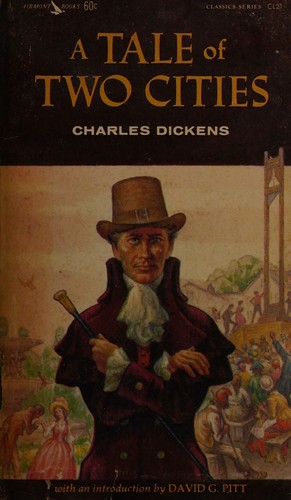
Check price of A Tale of Two Cities on Amazon
What to Read Next
- Les Misérables by Victor Hugo: the great French novel of redemption
- The Scarlet Pimpernel by Baroness Orczy: an adventure about rescuing aristocrats
- Great Expectations by Charles Dickens: Dickens's most beloved novel
Related: Great Expectations by Charles Dickens: Summary and Key Takeaways
Frequently Asked Questions
What is A Tale of Two Cities about?
Lives in London and Paris are entangled in the French Revolution, ending in a great sacrifice.
What are the two cities?
London and Paris.
What is the famous first line?
“It was the best of times, it was the worst of times.”
What is the famous last line?
“It is a far, far better thing that I do, than I have ever done.”
Who is Madame Defarge?
A revolutionary who seeks revenge on the Evrémonde family.
Why does Carton look like Darnay?
Their resemblance is a plot device that allows the final swap.
Is it Dickens's best-selling book?
It is often called one of the best-selling novels of all time.
How long is it?
It is shorter than most Dickens novels.
Is A Tale of Two Cities worth reading?
It depends on what you want. The book is best for readers who want a dramatic historical novel with one of the great endings in literature. If that describes you, it is likely a good fit. If not, the titles under What to Read Next may suit you better.