
Disclosure: As an Amazon Associate, Bookish Wisdom earns from qualifying purchases. This doesn't change our picks or your price.
TL;DR: The animals of Manor Farm overthrow their human owner to build a society of equals, but the pigs gradually take power and become as cruel as the humans they replaced. The fable is an allegory of the Russian Revolution and the rise of Stalin.
Table of Contents
Animal Farm at a Glance
| Author | George Orwell |
| First published | 1945 |
| Type | Political fable |
| Best for | readers who want a short, sharp story about how revolutions go wrong |
Animal Farm is a short novel by George Orwell, first published in 1945. Written as a simple fable, it uses farm animals to tell the story of the Russian Revolution and its betrayal. Below you will find a part-by-part summary, five key takeaways, ideas worth remembering and a note on who will enjoy it.
What Happens, Part by Part (Contains Spoilers)
Old Major's dream
Old Major, a respected boar, tells the animals of Manor Farm about his dream of a world without humans, where animals keep the fruits of their own work. He teaches them the song “Beasts of England”. Soon after, he dies, and the pigs, led by Napoleon and Snowball, organize the idea into a philosophy called Animalism.
The rebellion
When the drunken farmer Mr. Jones forgets to feed them, the animals rebel and drive him away. They rename the farm Animal Farm and paint Seven Commandments on the barn wall, including “All animals are equal”. At first, the farm thrives and the animals work together happily.
Napoleon takes power
Snowball proposes building a windmill, while Napoleon opposes it. Napoleon uses dogs he has raised in secret to chase Snowball off the farm, then takes control. His spokesman Squealer twists the truth, and Snowball is blamed for everything that goes wrong.
The commandments change
The pigs move into the farmhouse, sleep in beds and trade with humans, while the commandments are quietly rewritten. Boxer, the loyal, hardworking horse, collapses from overwork and is sold to a slaughterhouse, while Squealer tells the others he died in a hospital.
The ending
Years later, the pigs walk on two legs, carry whips and host human farmers. The final commandment reads “All animals are equal, but some animals are more equal than others”. Looking from pig to man, the other animals can no longer tell which is which.
5 Key Takeaways
- Revolutions can be betrayed by leaders who seek power for themselves.
- Propaganda, like Squealer's speeches, can make people accept lies.
- Rewriting rules and history lets the powerful justify anything.
- Loyal, hardworking people like Boxer are often the most exploited.
- Without education and vigilance, ordinary people cannot hold leaders to account.
Ideas Worth Remembering
These are paraphrased, not direct quotes:
- All animals are equal, but some are more equal than others.
- Blind loyalty can be used against the loyal.
- Power tends to corrupt those who promised to fight it.
Who Should Read Animal Farm?
Read Animal Farm if you want a short, accessible book about politics, power and propaganda. It is often taught in middle and high school, and adults will see deeper meaning in its history.
Questions to Think About After Reading
These prompts work for solo reading, a book club or a classroom discussion of Animal Farm:
- Which character do you think represents the biggest lesson, and why?
- How does Squealer use language to control the other animals?
- Could the revolution have turned out differently?
How to Use This Summary
Use this page as a quick reference before a book club meeting, an exam, or a decision about whether Animal Farm is worth your time. The takeaways are written to stand on their own. If a point interests you, go back to the book for the author's full story, characters and style, which no short summary can replace.
A Note on Accuracy and Spoilers
This summary is based on the published text of Animal Farm, not on any film, series or stage adaptation, which often change the story. Details are kept at the level of the main events so that nothing is invented. Editions differ slightly in length and wording, so page numbers and small details may vary between copies.
Should You Read the Book?
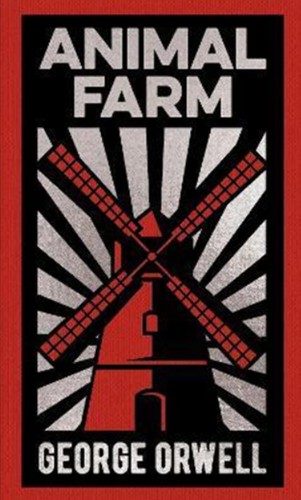
Yes, if you have an afternoon. Animal Farm is short enough to read in one sitting, and its plain fable style hides a sharp, bitter story. Reading it in full shows how slowly and cleverly the pigs change the rules, which is the heart of Orwell's warning.
Check price of Animal Farm on Amazon
What to Read Next
- 1984 by George Orwell: Orwell's full-length dystopia
- Darkness at Noon by Arthur Koestler: a novel about Soviet show trials
- The Prince by Niccolò Machiavelli: a classic guide to power
Related: 15 Books Like Animal Farm You’ll Love · 1984 by George Orwell: Summary and Key Takeaways
Frequently Asked Questions
What is Animal Farm about?
Farm animals overthrow their owner, but the pigs become new tyrants.
What does Animal Farm represent?
It is an allegory of the Russian Revolution and Stalin's rule.
Who do Napoleon and Snowball represent?
Napoleon represents Stalin and Snowball represents Trotsky.
What happens to Boxer?
He is sold to a slaughterhouse after collapsing from overwork.
How long is Animal Farm?
It is short, about 100 pages.
Can this summary replace reading Animal Farm?
No. The book is short and worth reading for its full effect.
What is the significance of the windmill?
It stands for the big projects that leaders use to demand sacrifice, and its repeated destruction shows how promises keep moving.
Who is Benjamin the donkey?
A cynical old donkey who sees through the pigs but does little to stop them.
Is Animal Farm worth reading?
It depends on what you want. The book is best for readers who want a short, sharp story about how revolutions go wrong. If that describes you, it is likely a good fit. If not, the titles under What to Read Next may suit you better.