
Disclosure: As an Amazon Associate, Bookish Wisdom earns from qualifying purchases. This doesn't change our picks or your price.
TL;DR: The endless lawsuit Jarndyce and Jarndyce drags through England's Court of Chancery, ruining lives. Orphan Esther Summerson, taken in by kind John Jarndyce, uncovers secrets about her own birth linked to the proud Lady Dedlock, while a murder, a determined detective and a fog-bound London tie dozens of characters together.
Table of Contents
Bleak House at a Glance
| Author | Charles Dickens |
| First published | 1853 |
| Type | Novel |
| Best for | readers who want a big, rich Dickens novel with mystery and satire |
Bleak House is a novel by Charles Dickens, published in monthly parts in 1852–53. It attacks the slow, corrupt legal system and features one of the first detectives in English fiction, Inspector Bucket. Below you will find a part-by-part summary, five key takeaways, ideas worth remembering and a note on who will enjoy it.
Content note: Includes deaths, illness and poverty.
Main Characters
- Esther Summerson: A modest, kind orphan and one of the narrators.
- John Jarndyce: Esther's generous guardian.
- Lady Dedlock: A cold, aristocratic woman with a secret past.
- Mr. Tulkinghorn: A secretive lawyer who uncovers Lady Dedlock's secret.
- Inspector Bucket: A shrewd police detective.
What Happens, Part by Part (Contains Spoilers)
The case
The novel opens with fog over London and the Court of Chancery, where the inheritance case Jarndyce and Jarndyce has dragged on for generations. Young wards Ada Clare and Richard Carstone are taken in by their kind relative John Jarndyce at Bleak House, along with Esther Summerson as Ada's companion.
Lady Dedlock's secret
Lady Dedlock faints when she recognizes the handwriting on a legal document. The lawyer Tulkinghorn investigates and learns that, before her marriage, she had a lover, Captain Hawdon, who has died in poverty as a law-copyist. Their child, she believed, died at birth. In fact, the child is Esther.
Richard's obsession
Richard becomes obsessed with the Jarndyce case, believing it will make him rich. He secretly marries Ada, drifts between careers and wastes his money and health. Meanwhile, Esther catches smallpox while nursing others and is left scarred. Lady Dedlock privately reveals to her that she is her mother.
Murder
Tulkinghorn threatens to expose Lady Dedlock and is found shot dead. Inspector Bucket investigates, and suspicion falls on Lady Dedlock and others. Bucket reveals that the murderer was Hortense, Lady Dedlock's vengeful former maid. Lady Dedlock, fearing disgrace, flees.
Endings
Bucket and Esther track Lady Dedlock through the snow, but find her dead at the gate of the graveyard where her lover is buried. The Jarndyce case finally ends when legal costs swallow the entire estate. Richard dies, broken. John Jarndyce releases Esther from an engagement so she can marry the man she loves, the doctor Allan Woodcourt, and gives them their own Bleak House.
5 Key Takeaways
- Slow, corrupt institutions can destroy lives.
- Obsession with wealth can consume a person.
- Kindness and duty matter more than birth.
- Secrets from the past shape the present.
- Society neglects the poor at its peril.
Ideas Worth Remembering
These are paraphrased, not direct quotes:
- Patience and goodness can survive a broken system.
- Hope pinned on money can become a trap.
- Everyone in a society is connected, rich or poor.
Who Should Read Bleak House?
Read Bleak House if you enjoy big Victorian novels, mystery and social satire. It suits adults and patient older teens.
Questions to Think About After Reading
These prompts work for solo reading, a book club or a classroom discussion of Bleak House:
- How does the fog symbolize the legal system?
- Why is Esther so modest about herself?
- What does Richard's fate warn against?
How to Use This Summary
Use this page as a quick reference before a book club meeting, an exam, or a decision about whether Bleak House is worth your time. The takeaways are written to stand on their own. If a point interests you, go back to the book for the author's full story, characters and style, which no short summary can replace.
A Note on Accuracy and Spoilers
This summary is based on the published text of Bleak House, not on any film, series or stage adaptation, which often change the story. Details are kept at the level of the main events so that nothing is invented. Editions differ slightly in length and wording, so page numbers and small details may vary between copies.
Should You Read the Book?
Yes. It is long and complex, but many consider it Dickens's masterpiece, with unforgettable characters and a gripping mystery at its heart.
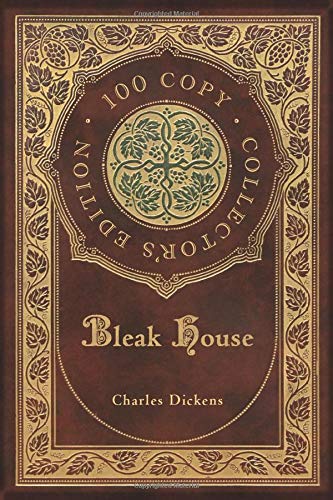
Check price of Bleak House on Amazon
What to Read Next
- Great Expectations by Charles Dickens: secrets, money and identity
- The Moonstone by Wilkie Collins: an early detective mystery
- Little Dorrit by Charles Dickens: another attack on institutions
Related: Hard Times by Charles Dickens: Summary and Key Takeaways · David Copperfield by Charles Dickens: Summary and Key Takeaways
Frequently Asked Questions
What is Bleak House about?
An endless lawsuit and the secret of an orphan's birth, tied together in Victorian London.
Who wrote Bleak House?
Charles Dickens.
What is Jarndyce and Jarndyce?
A never-ending inheritance case in the Court of Chancery.
Who is Esther's mother?
Lady Dedlock.
Who killed Tulkinghorn?
Hortense, Lady Dedlock's former maid.
Who is Inspector Bucket?
A detective, one of the first in English fiction.
What age is it for?
Adults and older teens.
How long is it?
About 1,000 pages.
Is there a TV adaptation?
Yes, a highly praised 2005 BBC series.
Who are the main characters in Bleak House?
The main characters are Esther Summerson, John Jarndyce, Lady Dedlock, Mr. Tulkinghorn and Inspector Bucket. Esther Summerson: A modest, kind orphan and one of the narrators. John Jarndyce: Esther's generous guardian. Lady Dedlock: A cold, aristocratic woman with a secret past.
Is Bleak House worth reading?
It depends on what you want. The book is best for readers who want a big, rich Dickens novel with mystery and satire. If that describes you, it is likely a good fit. If not, the titles under What to Read Next may suit you better.