

Disclosure: As an Amazon Associate, Bookish Wisdom earns from qualifying purchases. This doesn't change our picks or your price.
Quick answer: If you read Open Veins of Latin America, continue with Eduardo Galeano's Memory of Fire, then try The Shock Doctrine, Bitter Fruit, The Motorcycle Diaries and One Hundred Years of Solitude. All look at Latin America's history, politics and imagination.
Galeano's 1971 book tells the story of Latin America as a continent whose wealth was taken first by Spain and Portugal, then by Britain and the United States. The books below extend that story through history, reportage and fiction. Most are nonfiction with a few novels, and all are real, in-print books.
Table of Contents
Quick Picks at a Glance
| Book | Author | Ages | Best For |
|---|---|---|---|
| Memory of Fire (Genesis) | Eduardo Galeano | Adult | more Galeano |
| Century of the Wind | Eduardo Galeano | Adult | short history pieces |
| Soccer in Sun and Shadow | Eduardo Galeano | Adult | sport and politics |
| The Shock Doctrine | Naomi Klein | Adult | economic history |
| Confessions of an Economic Hit Man | John Perkins | Adult | insider claims |
| Bitter Fruit | Stephen Schlesinger and Stephen Kinzer | Adult | a key case study |
| The Motorcycle Diaries | Ernesto Che Guevara | Adult | travel and politics |
| The Labyrinth of Solitude | Octavio Paz | Adult | national identity |
| One Hundred Years of Solitude | Gabriel García Márquez | Adult | history as myth |
| The House of the Spirits | Isabel Allende | Adult | family and politics |
| The Wretched of the Earth | Frantz Fanon | Adult | anticolonial theory |
| How Europe Underdeveloped Africa | Walter Rodney | Adult | parallel for Africa |
| Pedagogy of the Oppressed | Paulo Freire | Adult | education and liberation |
| King Leopold's Ghost | Adam Hochschild | Adult | accessible history |
| Capitalism and Slavery | Eric Williams | Adult | economic history |
1. Memory of Fire (Genesis) by Eduardo Galeano
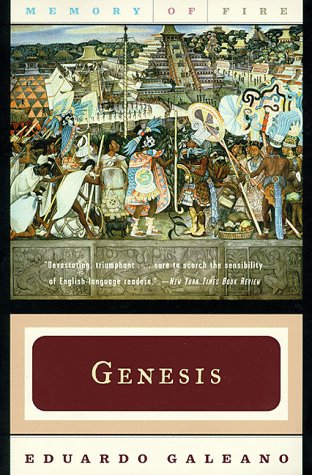
The first volume of Galeano's trilogy retells Latin American history in short, poetic pieces. Fresh, vivid and moving.
Best for: more Galeano.
2. Century of the Wind by Eduardo Galeano
The third volume of Memory of Fire covers the twentieth century with short stories and anecdotes. Sharp and compact.
Best for: short history pieces.
3. Soccer in Sun and Shadow by Eduardo Galeano

A love letter to football and an analysis of how money and politics shape it. Funny and angry.
Best for: sport and politics.
4. The Shock Doctrine by Naomi Klein
Argues that crises are used to push through harsh economic policies, with examples from Chile and elsewhere. Controversial and influential.
Best for: economic history.
5. Confessions of an Economic Hit Man by John Perkins
A former consultant claims he helped trap countries in debt. Popular but debated.
Best for: insider claims.
6. Bitter Fruit by Stephen Schlesinger and Stephen Kinzer
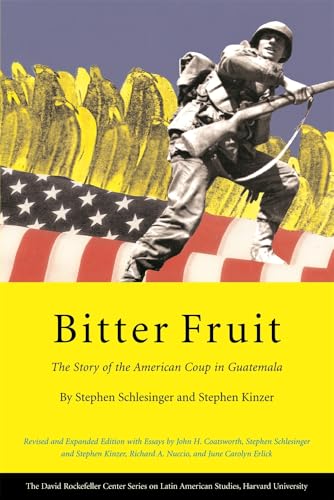
The story of the 1954 coup in Guatemala and the role of the CIA and the United Fruit Company. Clear and shocking.
Best for: a key case study.
7. The Motorcycle Diaries by Ernesto Che Guevara
Two young men travel across South America and see poverty and injustice. Fresh and youthful.
Best for: travel and politics.
8. The Labyrinth of Solitude by Octavio Paz
A Nobel-winning poet reflects on Mexican identity. Elegant and demanding.
Best for: national identity.
9. One Hundred Years of Solitude by Gabriel García Márquez
The Buendía family across seven generations in Macondo. The great Latin American novel.
Best for: history as myth.
10. The House of the Spirits by Isabel Allende
A Chilean family saga with clairvoyance and political upheaval. Warm and sweeping.
Best for: family and politics.
11. The Wretched of the Earth by Frantz Fanon

A psychiatrist and revolutionary writes on violence, colonialism and national liberation. Fiery and influential.
Best for: anticolonial theory.
12. How Europe Underdeveloped Africa by Walter Rodney
Argues that colonialism drained Africa's resources. A classic of development economics.
Best for: parallel for Africa.
13. Pedagogy of the Oppressed by Paulo Freire
A Brazilian educator argues for teaching that frees people. Influential in education and politics.
Best for: education and liberation.
14. King Leopold's Ghost by Adam Hochschild
The story of Belgian exploitation in the Congo and the campaign against it. Narrative history that reads like a novel.
Best for: accessible history.
15. Capitalism and Slavery by Eric Williams
Argues that slavery funded Britain's industrial rise. A landmark in Caribbean history.
Best for: economic history.
How to Choose
For more Galeano, begin with Memory of Fire. For history and politics, Bitter Fruit and The Shock Doctrine. For narrative and travel, The Motorcycle Diaries. For fiction, One Hundred Years of Solitude. For comparison with other regions, How Europe Underdeveloped Africa. Open Veins is passionate and partisan, so read at least one source with a different view. A useful way to read is to pair history with story. After a chapter of Galeano, read a few pages of a Latin American novel and notice how the same themes appear. Many libraries and universities offer free lectures on Latin American history.
Related: 15 Books Like Wings of Fire Kids Will Love: Dragons, Quests and Animal Adventures · 12 Dystopian Books Like the Hunger Games | Best Books to Read Like Hunger Games
Frequently Asked Questions
What is Open Veins of Latin America about?
It argues that Latin America's poverty is tied to centuries of resource extraction by outside powers.
Who was Eduardo Galeano?
A Uruguayan journalist and writer who lived in exile during the dictatorship.
Is the book still relevant?
Many readers still find it a powerful introduction to the history, though some of its claims are debated.
Did Galeano change his mind?
In 2014 he said he could not read the book again because his prose was too heavy, though he stood by its aims.
Is it a hard read?
It is long and angry, but written in vivid language.
How long is Open Veins of Latin America?
About 300 pages, divided into two parts: the wealth taken from the continent and the structure of dependence.
Has the book been criticized?
Yes. Economists and historians have challenged some of its claims, but it remains a widely read starting point.
Is it a good first book on the topic?
It is vivid and angry, so pair it with a more balanced history if you want multiple views.