
Disclosure: As an Amazon Associate, Bookish Wisdom earns from qualifying purchases. This doesn’t change our picks or your price.
TL;DR: Building a Second Brain teaches you to create a digital system for capturing and organizing the ideas, notes and information you encounter, so you can stop relying on memory and actually use what you learn. Tiago Forte’s two core frameworks are CODE (Capture, Organize, Distill, Express) and PARA (Projects, Areas, Resources, Archives).
We consume more information than ever, from articles and podcasts to books, meetings and social media, yet most of it is forgotten within days. Productivity expert Tiago Forte developed the Building a Second Brain method through his popular online course and turned it into a book in 2022. Rather than just storing information, a “second brain” helps you turn notes into finished work: projects, articles, presentations and decisions. Here’s a complete summary of the method and how to start.
Table of Contents
Building a Second Brain at a Glance
| Detail | Info |
|---|---|
| Author | Tiago Forte |
| Published | 2022 |
| Genre | Productivity / personal knowledge management |
| Core frameworks | CODE and PARA |
| Best for | Students, knowledge workers, writers and anyone overwhelmed by information |
What Is Building a Second Brain About?
Your biological brain is great at having ideas but not at storing them. A second brain is an external, usually digital, system (in a notes app like Notion, Evernote, Apple Notes or Obsidian) where you save the most valuable information you come across. The goal isn’t to hoard information but to make it easy to find and reuse when you need it.
Key Ideas From the Book
The CODE Method
- Capture: Save only what resonates with you: insights, quotes, ideas and useful information. Don’t try to save everything.
- Organize: Organize notes by how actionable they are, not by subject, using the PARA system.
- Distill: Highlight the essence of each note so your future self can grasp it quickly.
- Express: Use your notes to create something, whether that’s a report, a blog post or a decision. Knowledge becomes valuable when it’s used.
The PARA System
- Projects: Short-term efforts with a clear goal and deadline.
- Areas: Ongoing responsibilities like health, finances or a team you manage.
- Resources: Topics of interest that may be useful later.
- Archives: Inactive items from the other three categories.
Progressive Summarization
Instead of summarizing everything at once, Forte suggests distilling notes in layers: first save the passage, then bold the most important parts, then highlight the very best lines, and finally write a short summary in your own words when a note proves especially useful.
Intermediate Packets
Break your work into small, reusable pieces like outlines, research notes, drafts and slides. These “intermediate packets” can be combined and reused across projects, making creative work faster.
Creative Tricks for Expressing
Forte shares techniques like the “archipelago of ideas” (gathering notes before writing), the “Hemingway bridge” (ending each session knowing what you’ll do next) and “dialing down the scope” to ship smaller versions of projects.
5 Key Takeaways From Building a Second Brain
- Don’t rely on memory. Write down ideas so your mind is free to think.
- Capture selectively. Save only what’s truly useful or inspiring.
- Organize by action. PARA keeps your notes tied to what you’re working on.
- Distill for your future self. Make notes easy to scan later.
- Create, don’t just collect. The point of notes is to produce something.
Ideas Worth Remembering
- Your mind is for having ideas, not holding them. (a principle Forte borrows from productivity writer David Allen)
- Information becomes knowledge only when you use it. (paraphrased)
- Organize for action, not for perfect categories. (paraphrased)
Who Should Read Building a Second Brain?
It’s ideal for students, writers, researchers, consultants, managers and anyone who reads a lot but struggles to remember or use what they learn. You don’t need a specific app; the method works with almost any notes tool.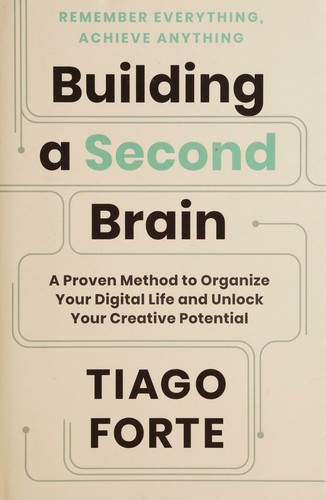
What to Read Next
- Getting Things Done by David Allen, the classic system for managing tasks.
- How to Take Smart Notes by Sönke Ahrens on the Zettelkasten note-taking method.
- Show Your Work! by Austin Kleon on sharing what you create.
Related: 12 tips to remember what you read and best books for organizing your life.
Frequently Asked Questions
What is the CODE method?
CODE stands for Capture, Organize, Distill and Express. It’s Tiago Forte’s four-step process for saving useful information, organizing it, summarizing it and using it to create work.
What is the PARA method?
PARA is an organizing system with four categories: Projects (short-term goals), Areas (ongoing responsibilities), Resources (topics of interest) and Archives (inactive items).
What app is best for a second brain?
Forte says the method works with almost any notes app. Popular choices include Notion, Evernote, Obsidian, Apple Notes and Microsoft OneNote.