
Disclosure: As an Amazon Associate, Bookish Wisdom earns from qualifying purchases. This doesn’t change our picks or your price.
TL;DR: In Hidden Potential: The Science of Achieving Greater Things, organizational psychologist Adam Grant argues that how far you go matters more than where you start. Potential isn’t about innate talent; it’s about character skills like proactivity and resilience, supportive structures that keep you motivated, and systems that give people real opportunities to grow.
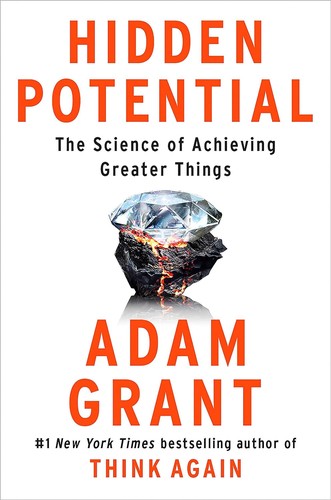
Adam Grant, a Wharton professor and bestselling author of Give and Take, Originals and Think Again, published Hidden Potential in 2023. The book challenges the idea that greatness is mostly about natural gifts. Using research and stories from education, sports, music and business, Grant shows how ordinary people achieve extraordinary growth, and how schools, teams and organizations can unlock potential that often goes unnoticed. Here’s a complete summary of the book’s three parts and key lessons.
Table of Contents
Hidden Potential at a Glance
| Detail | Info |
|---|---|
| Author | Adam Grant, organizational psychologist at Wharton |
| Published | 2023 |
| Genre | Psychology / personal growth |
| Structure | Three parts: Skills of Character, Structures for Motivation, Systems of Opportunity |
| Best for | Learners, parents, teachers, managers and late bloomers |
What Is Hidden Potential About?
Grant’s central message is that we often underestimate people, including ourselves, because we judge them by their starting point instead of their growth. He argues that the most important skills for growth aren’t cognitive abilities but character skills, and that the right structures and systems can help anyone go further than expected.
Key Ideas, Part by Part
Part One: Skills of Character
Character skills are behaviors that help us act on our values even when it’s hard. Grant highlights several: being proactive rather than waiting for opportunities; acting like a sponge by seeking out new information and actively asking for advice rather than just feedback; and embracing imperfectionism, knowing which flaws are acceptable so perfectionism doesn’t hold you back. He also encourages getting comfortable with discomfort when learning something new.
Part Two: Structures for Motivation
Motivation is easier to sustain with the right structures. Grant explains how turning practice into “deliberate play” keeps learning enjoyable, how temporary support, or scaffolding, helps people climb to new levels, and how taking detours or changing approach can help when progress stalls. He shares his own story of improving as a springboard diver despite little natural ability.
Part Three: Systems of Opportunity
Schools, teams and organizations can either unlock or bury potential. Grant points to examples like Finland’s education system, which focuses on supporting every student’s growth, and argues that hiring and admissions should look for people whose trajectories show steep growth, not just impressive starting points. He also discusses how groups can surface the best ideas, including from quieter members.
5 Key Takeaways From Hidden Potential
- Judge growth, not starting points. How far someone has come says more than where they started.
- Build character skills. Proactivity, discipline and openness matter more than raw talent.
- Ask for advice, not feedback. Advice focuses on the future and is easier to act on.
- Make practice playful. Enjoyable practice keeps motivation high over time.
- Create systems that lift everyone. Opportunity, not just ability, shapes achievement.
Ideas Worth Remembering
- Potential isn’t about how good you are at the start, but how good you can become. (paraphrased)
- Progress depends less on talent and more on the willingness to learn. (paraphrased)
- Great systems help people who start behind find their way forward. (paraphrased)
Who Should Read Hidden Potential?
It’s ideal for students and lifelong learners, parents and teachers who want to help kids grow, managers who hire and develop people, and anyone who feels they started behind. If you enjoyed Mindset or Range, this is a natural next read.
What to Read Next
- Think Again by Adam Grant on the power of rethinking.
- Mindset by Carol Dweck on believing your abilities can grow.
- Range by David Epstein on why generalists often triumph.
Related: Mindset summary and Range summary.
Frequently Asked Questions
What is the main idea of Hidden Potential?
The main idea is that potential depends less on natural talent and more on how far you grow, which is driven by character skills, supportive structures and fair systems of opportunity.
What are character skills in Hidden Potential?
Character skills are behaviors that help people act on their values under pressure, such as being proactive, seeking advice, absorbing new information and managing perfectionism.
Who wrote Hidden Potential?
Hidden Potential was written by Adam Grant, an organizational psychologist and professor at the Wharton School, and published in 2023.