

Disclosure: As an Amazon Associate, Bookish Wisdom earns from qualifying purchases. This doesn’t change our picks or your price.
TL;DR: Can’t Hurt Me by David Goggins is the memoir of a man who overcame abuse, poverty and self-doubt to become a Navy SEAL, Army Ranger and ultra-endurance athlete. Goggins offers a blunt method for building mental toughness, including the accountability mirror, the cookie jar and the 40% rule, with challenges at the end of each chapter.
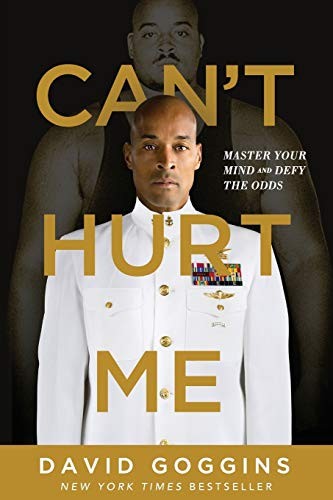
Can’t Hurt Me, published in 2018, is part memoir and part self-help manual. David Goggins tells the story of a childhood marked by an abusive father, poverty, racism and learning difficulties, and then of the drastic change that took him from an overweight pest-control worker to one of the toughest athletes on the planet. His voice is intense and profane, and his message is simple: most of us stop at a fraction of what we can do. Here’s a summary of the story and the main ideas. The book describes abuse and extreme physical challenges, and the advice isn’t medical guidance.
Table of Contents
Can’t Hurt Me at a Glance
| Detail | Info |
|---|---|
| Author | David Goggins |
| Published | 2018 |
| Genre | Memoir, self-help |
| Core idea | You can do far more than you think if you train your mind |
| Structure | Autobiographical chapters, each with a challenge |
| Best for | Readers who want a blunt push toward discipline and resilience |
What Is Can’t Hurt Me About?
Goggins grew up in Buffalo, New York, and then in Brazil, Indiana, where his mother moved the family to escape his father. He describes beatings at home, being one of the few Black children in his town and struggling at school, where he hid his reading difficulties. As a young adult he drifted, working nights as a pest-control exterminator, and weighed nearly three hundred pounds.
A turning point came when he saw a TV program about Navy SEAL training and decided to join. He lost over a hundred pounds in about three months, and after two earlier attempts that ended without finishing Hell Week, he completed it in BUD/S Class 235. He later became an Army Ranger and Air Force Tactical Air Controller, and a record-setting ultramarathoner and pull-up athlete.
Key Ideas, Part by Part
The Early Years: Abuse and Escape
The first chapters describe his father’s violence and the family’s escape, and how those years left Goggins with anger and shame. He explains that for years he hid from his own history, working jobs he didn’t care about and fearing failure. The lesson is that you can’t change what happened to you, but you can decide what to do with it.
He introduces the idea that we all carry inner critics, and that listening to them keeps us small. Facing them honestly is the first step toward change.
The Accountability Mirror
Goggins describes a ritual he started when he decided to change: standing in front of a bathroom mirror and telling himself the truth about his weaknesses and goals, in plain language, and then writing sticky notes of tasks around it. The accountability mirror is a way of facing reality without excuses, and many readers adopt a version of it.
He argues that real change starts with honesty, even when it’s uncomfortable, and that success depends on holding yourself responsible each day.
The Cookie Jar and the 40% Rule
Two of his best-known tools are the cookie jar and the 40% rule. The cookie jar is a mental collection of past accomplishments and hardships overcome, which you can recall when you’re struggling. The 40% rule says that when your mind tells you you’re done, you’ve really used only about forty percent of your capacity.
Goggins uses these ideas to explain how he finished grueling events, including Hell Week and an ultramarathon he ran with a stress fracture. The point is not to ignore injury but to question the first signal of quitting.
Callousing the Mind and Taking Souls
He describes callousing the mind: like hands that toughen with repeated work, the mind becomes resilient through repeated discomfort. He recommends doing hard things on purpose, such as early-morning workouts, to build confidence.
The phrase taking souls refers to how, when you outwork others, they notice and sometimes lose heart. He also talks about the armored mind, a mindset of preparedness and purpose. Each chapter ends with a challenge, which readers are encouraged to try.
7 Key Takeaways From Can’t Hurt Me
- Own your story. Use past pain as fuel without being defined by it.
- Be honest with yourself. The accountability mirror forces truth, not excuses.
- Remember your wins. The cookie jar reminds you what you’ve overcome.
- Question the urge to quit. The 40% rule suggests you have more in reserve.
- Do hard things regularly. Callousing the mind builds mental toughness.
- Take action. Change comes from daily effort, not motivation alone.
- Use challenges. Small, deliberate tests prove you can do more.
Ideas Worth Remembering
- Most of us quit long before we’ve reached our real limits. (paraphrased)
- Facing your weaknesses honestly is the first step toward changing them. (paraphrased)
- A collection of your past victories can carry you through hard moments. (paraphrased)
- Discomfort, chosen on purpose, makes you stronger over time. (paraphrased)
How to Apply Can’t Hurt Me in Real Life
- Try the accountability mirror. Write down three honest truths about where you are and what you want to change.
- Start a cookie jar. List ten times you did something hard and keep it where you can see it.
- Do one hard thing daily. Choose a small challenge, such as a cold shower or a longer walk.
- Set a safe stretch. When you want to stop a workout, try one more minute, unless you’re injured.
- Rest and recover. Sleep and nutrition are part of toughness; ask a doctor before extreme training.
Criticisms and Limits
Critics say that Can’t Hurt Me promotes an extreme, win-at-all-costs attitude that can lead to injury or burnout, and that its profanity and intensity aren’t for everyone. Some note that Goggins’s approach is one person’s story, and that his success depended on a rare combination of physical gifts and circumstances, so it can’t be copied directly.
Others point out that the book gives little attention to rest, therapy or the role of support systems. It is best read as inspiration and as a set of mental tools, balanced with common sense and professional advice where needed.
David Goggins’ Achievements
Goggins completed Navy SEAL training, Army Ranger School and Air Force Tactical Air Controller training, the only person known to have completed all three. He has run dozens of ultramarathons, including Badwater 135, a 135-mile race through Death Valley, and in 2013 set a world record of 4,030 pull-ups in 17 hours. He has raised money for the Special Operations Warrior Foundation. His follow-up book, Never Finished, continues the story, and he hosts a podcast and speaks to many audiences.
How to Read the Book Wisely
Can’t Hurt Me is motivating, but it’s also extreme. Goggins describes training through serious injuries and pushing himself to levels that most doctors would advise against. Readers should treat the book as a source of mindset, not a training plan. It’s good to scale challenges to your health and circumstances, and to talk to a doctor before attempting anything strenuous. The emotional content, especially the descriptions of abuse, can be heavy, so take breaks as needed.
Mental Toughness Without Self-Punishment
Some psychologists caution that an all-out approach can lead to burnout or neglect of mental health. Many athletes and military trainers emphasize recovery, flexible goals and support from others. You can take Goggins’s lesson, that you can do more than you think, without adopting his habit of constant self-criticism. Pairing the book with self-compassion practices, such as those in Kristin Neff’s Self-Compassion, offers a balanced approach, in which you push yourself and treat yourself with respect.
Discussion Questions
Good questions for reflection include: What parts of your story do you use as fuel, and which hold you back? What would your accountability mirror say? What belongs in your cookie jar? Where do you stop at forty percent? What hard thing could you choose this week, and what would you learn? Discussing the answers with a friend or in a group adds accountability and helps you set realistic challenges.
A Four-Week Mental Toughness Plan
To try the book’s ideas safely, use a month-long plan. In week one, practice the accountability mirror every morning for two minutes, naming one honest fact and one goal. In week two, start a cookie jar list and add one entry daily, big or small. In week three, pick one hard but safe task, such as a daily cold shower, a longer walk or a difficult conversation, and do it at the same time each day. In week four, review your notes, decide what helped and set a larger challenge. Keep rest days, eat well and stop if you feel pain or dizziness.
Examples of Goggins-Style Challenges
Each chapter ends with a challenge, such as writing down your fears and goals, doing something that scares you or identifying one habit that is holding you back. You don’t need extreme feats. Many readers choose to wake up an hour earlier, finish a report they’ve been avoiding or train for a first 5K. The idea is that doing something difficult on purpose teaches you that discomfort passes and that you’re capable of more than you thought.
When Toughness Needs Support
Mental toughness is easier with help. Coaches, therapists and friends can offer feedback, and many athletes work with sports psychologists. If you notice signs of depression, anxiety or burnout, such as exhaustion, hopelessness or trouble sleeping, treat them seriously. In the US you can call or text 988 to reach the 988 Suicide and Crisis Lifeline. Goggins himself talks about the importance of mindset, but also of preparation, recovery and learning from others. Asking for help is part of strength, not a weakness.
Who Should Read Can’t Hurt Me?
Read it if you want a blunt, high-energy push, if you’re training for something hard or if you need to see how someone turned adversity into purpose. It may suit athletes, veterans and anyone feeling stuck. If you prefer a gentler tone, pair it with Atomic Habits or The Obstacle Is the Way. If you struggle with trauma or depression, consider reading with support.
What to Read Next
- Never Finished by David Goggins his follow-up on continuing to grow
- Living with a SEAL by Jesse Itzler a funny account of a month spent with Goggins
- Endure by Alex Hutchinson the science behind human limits
Related: books like Can’t Hurt Me and The Obstacle Is the Way summary and key takeaways.
Frequently Asked Questions
What is the main idea of Can’t Hurt Me?
That most people stop far short of their potential, and that you can build mental toughness by facing discomfort and being honest with yourself.
What is the 40% rule?
The idea that when your mind says you’re done, you’ve used only about 40% of your capacity.
What is the cookie jar?
A mental collection of your past achievements and hardships overcome, used to motivate you.
Is Can’t Hurt Me a true story?
Yes. It’s Goggins’s memoir.
Is Can’t Hurt Me suitable for teens?
It includes abuse and strong language, so it’s best for older teens and adults.