
Disclosure: As an Amazon Associate, Bookish Wisdom earns from qualifying purchases. This doesn't change our picks or your price.
TL;DR: At the Mississippi plantation home of Big Daddy Pollitt on his birthday, the family gathers as Big Daddy is dying (though he does not know it). His son Brick, a former football star who drinks heavily, and Brick's wife Maggie are at the center of a conflict over truth, inheritance and desire.
Table of Contents
Cat on a Hot Tin Roof at a Glance
| Author | Tennessee Williams |
| First published | 1955 |
| Type | Stage play |
| Best for | readers who like intense family dramas and classic American theater |
Cat on a Hot Tin Roof is a play by Tennessee Williams, first published in 1955. The play won the Pulitzer Prize for Drama in 1955. It was adapted into a 1958 film. Below you will find a part-by-part summary, five key takeaways, a few ideas worth remembering and a note on who will enjoy it most. The part-by-part section gives away the plot, including the ending, so skip it if you have not read the book yet.
Content note: Contains discussion of homosexuality, alcoholism and family cruelty.
The Play, Act by Act (Contains Spoilers)
Maggie
Maggie, the “cat,” is frustrated that Brick will not sleep with her.
Brick's drinking
Brick drinks after the death of his friend Skipper.
Big Daddy
Big Daddy returns from the doctor, believing he is healthy.
Truth
Big Daddy confronts Brick about his drinking.
Gooper and Mae
Brick's brother and sister-in-law push for inheritance.
Maggie's plan
Maggie claims to be pregnant. The play ends with her plan.
The Summary at a Glance
| Part | In one line |
|---|---|
| Maggie | Maggie, the “cat,” is frustrated that Brick will not sleep with her. |
| Brick's drinking | Brick drinks after the death of his friend Skipper. |
| Big Daddy | Big Daddy returns from the doctor, believing he is healthy. |
| Truth | Big Daddy confronts Brick about his drinking. |
| Gooper and Mae | Brick's brother and sister-in-law push for inheritance. |
| Maggie's plan | Maggie claims to be pregnant. |
5 Key Takeaways
- Truth and lies shape families.
- Greed can distort love.
- Desire and denial are powerful.
- Death changes relationships.
- Survival requires adaptation.
Ideas Worth Remembering
These are paraphrased, not direct quotes:
- The play is dialogue-driven.
- Maggie is a strong character.
- The ending is ambiguous.
Who Should Read Cat on a Hot Tin Roof?
Read it if you like classic American drama. It is intense.
Questions to Think About After Reading
These prompts work for solo reading, a book club or a classroom discussion of Cat on a Hot Tin Roof:
- Which speech would you most like to hear performed?
- Which character is the most sympathetic, and does that change by the end?
- What would a modern staging need to change?
Quick Facts to Remember
- Book: Cat on a Hot Tin Roof by Tennessee Williams (1955)
- Type: Stage play
- Best for: readers who like intense family dramas and classic American theater
- Main idea in one line: Truth and lies shape families.
Reading Time and Format
A play is short enough to read in an evening, but it is meant for the stage. Look for an edition with notes, or watch a recorded performance after you read. Whichever format you choose, a library copy is a low-cost way to try the book before you buy, and used or digital editions are often cheaper than new print copies.
How to Use This Summary
Use this page as a quick reference before a book club meeting, an exam, or a decision about whether Cat on a Hot Tin Roof is worth your time. The takeaways are written to stand on their own. If a point interests you, go back to the book for the author's full argument, examples and style, which no short summary can carry.
A simple way to get the most from it: first read the TL;DR and the takeaways to decide if the book fits your interests, then read the part-by-part section for the structure, and finally write down one idea you want to remember or one question you want answered by the full text.
A Note on Accuracy and Spoilers
This summary is based on the published text of Cat on a Hot Tin Roof, not on any film, series or stage adaptation, which often change the story. Details are kept at the level of the main events so that nothing is invented. Editions differ slightly in length and wording, so page numbers and small details may vary from your copy.
Should You Read the Book?
A play is written to be performed, so try reading the speeches aloud or watching a staged version. Then use this summary to follow the structure. If you are still unsure, read a free sample or the first chapter, because the opening pages usually show whether the voice and subject suit you. Reviews from readers with tastes like yours can help too, but your own reaction to a few pages is the best test.
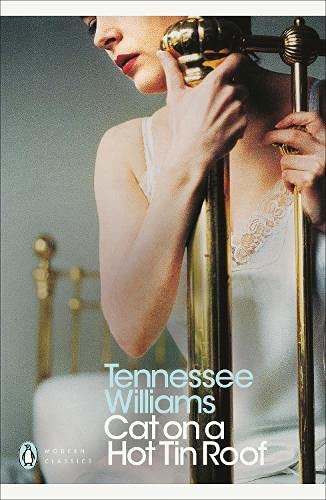
Check price of Cat on a Hot Tin Roof on Amazon
What to Read Next
- A Streetcar Named Desire by Tennessee Williams: a play about desire and illusion
- The Glass Menagerie by Tennessee Williams: a memory play
- Death of a Salesman by Arthur Miller: a family tragedy
Related: The Glass Menagerie by Tennessee Williams: Summary and Key Takeaways
Frequently Asked Questions
Who wrote Cat on a Hot Tin Roof?
Tennessee Williams.
Did it win an award?
Yes, the 1955 Pulitzer Prize for Drama.
Is there a movie?
Yes, a 1958 film.
Is Cat on a Hot Tin Roof worth reading?
It depends on what you want. The book is best for readers who like intense family dramas and classic American theater. If that describes you, it is likely a good fit. If not, the titles under What to Read Next may suit you better.
Can this summary replace reading Cat on a Hot Tin Roof?
No. A summary covers the main events and ideas, but it cannot carry the author's voice, detail or pacing. Use it to decide whether to read the book, to refresh your memory or to prepare for a discussion.