
Disclosure: As an Amazon Associate, Bookish Wisdom earns from qualifying purchases. This doesn't change our picks or your price.
TL;DR: In the Second World War, a mathematician, a Marine and a Japanese engineer become caught up in secret codebreaking and a hidden hoard of gold. In the 1990s, their grandchildren and other descendants work to build a secure data haven in Southeast Asia and stumble on clues to that same buried treasure. The two stories, full of codes and humor, slowly come together.
Table of Contents
Cryptonomicon at a Glance
| Author | Neal Stephenson |
| First published | 1999 |
| Type | Techno-thriller |
| Best for | readers who want a huge, funny, brainy novel about codes, war and technology |
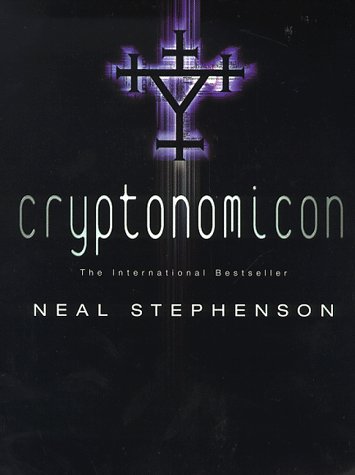
Cryptonomicon is a novel by Neal Stephenson, published in 1999. It mixes history, cryptography and modern tech culture, and it has a devoted following. Below you will find a part-by-part summary, five key takeaways, ideas worth remembering and a note on who will enjoy it.
Content note: Includes war violence, torture, death and strong language.
Main Characters
- Lawrence Waterhouse: A brilliant American mathematician and codebreaker.
- Bobby Shaftoe: A tough U.S. Marine with a gift for survival.
- Goto Dengo: A Japanese mining engineer.
- Randy Waterhouse: Lawrence's grandson, a 1990s computer programmer.
- Amy Shaftoe: Bobby's granddaughter, who runs a diving business.
What Happens, Part by Part (Contains Spoilers)
Two timelines
The novel moves between the 1940s and the 1990s. In the war chapters, Lawrence Waterhouse, a math genius, joins the secret effort to break Axis codes and to hide the fact that the Allies have broken them. He meets real figures, including Alan Turing. Bobby Shaftoe, a Marine, fights in the Pacific and later works for a secret unit staging false clues for the enemy.
Gold in the jungle
Goto Dengo, a Japanese engineer, survives terrible hardship in New Guinea and is sent to the Philippines. There he is forced to design a hidden underground vault for a vast hoard of gold stolen during the war. When it is finished, the workers are killed to keep the location secret, and Goto barely escapes.
The data haven
In the 1990s, Randy Waterhouse, a programmer, works with his friend Avi on a startup called Epiphyte. They plan a “data haven” in a small sultanate, where information can be stored safely beyond the reach of governments. Randy meets Amy Shaftoe, who runs a salvage diving company. Together they find a sunken submarine full of gold.
Codes and enemies
Randy learns that his grandfather's old wartime work is connected to the gold, and that several powerful people want it. He is pursued by lawyers, investors and government agents. He uses cryptography, the art of secret writing, to protect information. Randy's own relationship with Amy grows, and he finds new confidence.
The treasure
The two timelines meet. Clues from the 1940s help the 1990s characters locate the hidden vault. An elderly Goto Dengo, now a successful businessman, helps them. The team digs out the gold and plans to use it to fund a better future, while the novel suggests that information, not gold, is the true wealth of the modern world.
5 Key Takeaways
- Information can be more valuable than gold.
- Codes and secrecy shape wars and economies.
- Past and present are deeply connected.
- Intelligence comes in many forms.
- Humor can live alongside serious history.
Ideas Worth Remembering
These are paraphrased, not direct quotes:
- Protecting privacy is a modern struggle.
- Ordinary people can be caught in history's biggest events.
- Curiosity drives discovery.
Who Should Read Cryptonomicon?
Read Cryptonomicon if you enjoy long, detailed novels about technology, history and math. It suits adults.
About Neal Stephenson
Neal Stephenson (born 1959) is an American writer known for ambitious, idea-heavy novels. His books include Snow Crash, which helped popularize the term “metaverse,” The Diamond Age, Anathem and Seveneves. He also wrote the Baroque Cycle, a three-volume historical series connected to Cryptonomicon. He has worked as an adviser to technology companies.
Questions to Think About After Reading
These prompts work for solo reading, a book club or a classroom discussion of Cryptonomicon:
- Why does the novel compare gold with information?
- How are the two timelines connected?
- What does the book say about privacy?
How to Use This Summary
Use this page as a quick reference before a book club meeting, an exam, or a decision about whether Cryptonomicon is worth your time. The takeaways are written to stand on their own. If a point interests you, go back to the book for the author's full story, characters and style, which no short summary can replace.
A Note on Accuracy and Spoilers
This summary is based on the published text of Cryptonomicon, not on any film, series or stage adaptation, which often change the story. Details are kept at the level of the main events so that nothing is invented. Editions differ slightly in length and wording, so page numbers and small details may vary between copies.
Should You Read the Book?
Yes, if you like big books. It is long and dense, but it is also funny and rewarding.
Check price of Cryptonomicon on Amazon
What to Read Next
- Snow Crash by Neal Stephenson: a fast, satirical cyberpunk classic
- The Code Book by Simon Singh: a history of codes and codebreaking
- Gravity's Rainbow by Thomas Pynchon: a huge, complex Second World War novel
Frequently Asked Questions
What is Cryptonomicon about?
Codebreakers in the Second World War and their descendants in the 1990s search for hidden gold.
Who wrote it?
Neal Stephenson, in 1999.
What is cryptography?
The science of writing and breaking secret codes.
Does Alan Turing appear?
Yes, as a minor character.
What is a data haven?
A secure place to store information out of governments' reach.
Where is it set?
Europe, the Pacific, the Philippines and the United States.
Is it historical fiction?
Partly. It mixes history with fiction.
Is it long?
Yes, about 900 to 1,100 pages.
What age is it for?
Adults.
Is it related to the Baroque Cycle?
Yes, the Baroque Cycle features ancestors of the same families.
Is it funny?
Yes, it has a lot of humor.
Do I need math to enjoy it?
No, though math fans will enjoy the details.
Is Cryptonomicon a good first Stephenson book?
It can be, if you enjoy long books. Readers who want something shorter often start with Snow Crash.
Is Cryptonomicon worth reading?
It depends on what you want. The book is best for readers who want a huge, funny, brainy novel about codes, war and technology. If that describes you, it is likely a good fit. If not, the titles under What to Read Next may suit you better.