
Disclosure: As an Amazon Associate, Bookish Wisdom earns from qualifying purchases. This doesn't change our picks or your price.
TL;DR: Linguist Amanda Montell explores the language used by cults, from well-known groups to fitness brands and multilevel marketing companies. She argues that language is a key tool for control and belonging, and she shows how everyday life contains cult-like speech.
Table of Contents
Cultish at a Glance
| Author | Amanda Montell |
| First published | 2021 |
| Type | Linguistics / social science |
| Best for | readers who like pop-culture nonfiction and psychology |
Cultish is a nonfiction book by Amanda Montell, first published in 2021. The subtitle is “The Language of Fanaticism.” Montell mixes research, interviews and humor. Below you will find a part-by-part summary, five key takeaways, a few ideas worth remembering and a note on who will enjoy it most. The summary paraphrases the author's ideas rather than quoting them at length, so it works as a refresher or a preview, not a replacement for the book.
Content note: Discusses coercion and mass-casualty events in some groups.
Key Ideas, Part by Part
What is a cult
Montell explains how the term is used and why language matters in group formation.
Leaders and speech
She looks at how charismatic leaders use vague, loaded words to attract followers.
Insider language
Groups create special words that make members feel like insiders and block outside criticism.
Modern cults
She argues that fitness communities, wellness brands and multilevel marketing can use similar tactics.
Online communities
The book looks at social media groups that use shared language to create loyalty.
Resisting influence
Montell offers ways to notice the signs of manipulation.
Why it matters
Montell closes by noting that the goal is not to avoid every group but to notice when language is being used to cut off questions. Understanding the tricks makes it easier to enjoy community without losing independence.
The Summary at a Glance
| Part | In one line |
|---|---|
| What is a cult | Montell explains how the term is used and why language matters in group formation. |
| Leaders and speech | She looks at how charismatic leaders use vague, loaded words to attract followers. |
| Insider language | Groups create special words that make members feel like insiders and block outside criticism. |
| Modern cults | She argues that fitness communities, wellness brands and multilevel marketing can use similar tactics. |
| Online communities | The book looks at social media groups that use shared language to create loyalty. |
| Resisting influence | Montell offers ways to notice the signs of manipulation. |
| Why it matters | Montell closes by noting that the goal is not to avoid every group but to notice when language is being used to cut off questions. |
5 Key Takeaways
- Language shapes belonging.
- Persuasion can be subtle.
- Groups can be harmless or harmful.
- Insider words can create a sense of identity.
- Awareness is a defense.
Ideas Worth Remembering
These are paraphrased, not direct quotes:
- The book is playful and informative.
- It treats many examples as a spectrum.
- Some of its claims are debated.
Who Should Read Cultish?
Read it if you like linguistics, culture and psychology. It is light but informative.
Questions to Think About After Reading
These prompts work for solo reading, a book club or a classroom discussion of Cultish:
- Which idea could you use this week, and what would the first step be?
- Where do you disagree with the author, and what evidence would change your mind?
- Who in your life would benefit most from this book, and why?
Quick Facts to Remember
- Book: Cultish by Amanda Montell (2021)
- Type: Linguistics / social science
- Best for: readers who like pop-culture nonfiction and psychology
- Main idea in one line: Language shapes belonging.
Reading Time and Format
Nonfiction is easy to read in pieces. Many readers like an audiobook for the commute and a print or e-book copy for notes and highlights. Check the page count of your edition before you plan your reading time. Whichever format you choose, a library copy is a low-cost way to try the book before you buy, and used or digital editions are often cheaper than new print copies.
How to Use This Summary
Use this page as a quick reference before a book club meeting, an exam, or a decision about whether Cultish is worth your time. The takeaways are written to stand on their own. If a point interests you, go back to the book for the author's full argument, examples and style, which no short summary can carry.
A simple way to get the most from it: first read the TL;DR and the takeaways to decide if the book fits your interests, then read the part-by-part section for the structure, and finally write down one idea you want to remember or one question you want answered by the full text.
A Note on Accuracy and Spoilers
This summary is based on the published text of Cultish, not on any film, series or stage adaptation, which often change the story. Details are kept at the level of the main events so that nothing is invented. Editions differ slightly in length and wording, so page numbers and small details may vary from your copy.
Should You Read the Book?
If you decide to read it, skim the contents page first and read the sections that match your goal. Take notes in your own words, because ideas stick better when you rephrase them. If you are still unsure, read a free sample or the first chapter, because the opening pages usually show whether the voice and subject suit you. Reviews from readers with tastes like yours can help too, but your own reaction to a few pages is the best test.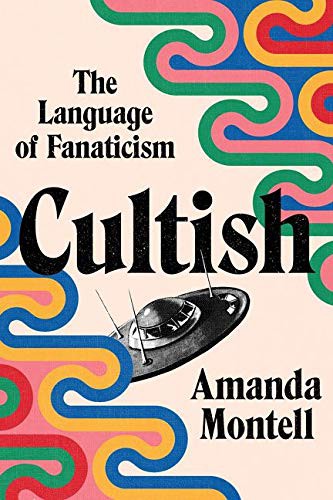
Check price of Cultish on Amazon
What to Read Next
- Wordslut by Amanda Montell: Montell's book on language and gender
- The Cult of We by Eliot Brown and Maureen Farrell: the story of WeWork
- Influence by Robert Cialdini: a classic book on persuasion
Related: 15 Books Like Cultish You’ll Love
Frequently Asked Questions
Who wrote Cultish?
Amanda Montell.
Is Cultish about religion?
It covers many groups, including fitness and wellness communities.
Is it academic?
No. It is written for general readers.
Is Cultish worth reading?
It depends on what you want. The book is best for readers who like pop-culture nonfiction and psychology. If that describes you, it is likely a good fit. If not, the titles under What to Read Next may suit you better.
Can this summary replace reading Cultish?
No. A summary covers the main events and ideas, but it cannot carry the author's voice, detail or pacing. Use it to decide whether to read the book, to refresh your memory or to prepare for a discussion.