
Disclosure: As an Amazon Associate, Bookish Wisdom earns from qualifying purchases. This doesn't change our picks or your price.
TL;DR: Henry Marsh, a British neurosurgeon, writes about his career operating on the brain, a field where success and disaster are separated by millimeters. He shares cases, mistakes and doubts, and the human side of surgery.
Table of Contents
Do No Harm at a Glance
| Author | Henry Marsh |
| First published | 2014 |
| Type | Medical memoir |
| Best for | readers who like honest stories about medicine and risk |
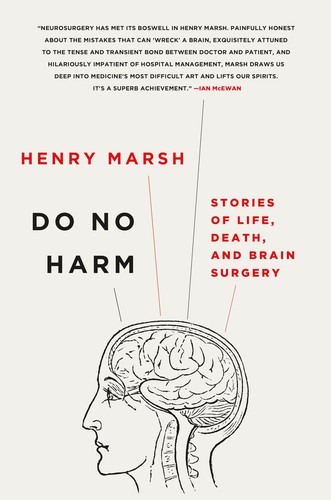
Do No Harm is a memoir by Henry Marsh, first published in 2014. The subtitle is “Stories of Life, Death and Brain Surgery.” Marsh's honesty about his errors was widely praised. Below you will find a part-by-part summary, five key takeaways, a few ideas worth remembering and a note on who will enjoy it most. The summary paraphrases the author's ideas rather than quoting them at length, so it works as a refresher or a preview, not a replacement for the book.
Content note: Contains descriptions of surgery, serious illness and death.
The Story, Part by Part
A surgeon's life
Marsh describes his work in a London hospital and how he came to neurosurgery. He is both fascinated and humbled by the brain.
High stakes
Many chapters focus on individual patients, from those who recover to those who die or are left disabled.
Mistakes
Marsh recounts cases in which he made errors or in which things went wrong. He believes surgeons should acknowledge their failures.
Hope and hype
He discusses the pressure to give patients hope and the risk of false optimism. He also describes the tension between honesty and comfort.
The system
The book covers frustrations with hospital bureaucracy, funding and administration.
Reflection
As he approaches the end of his career, Marsh thinks about what he has learned about uncertainty and compassion.
5 Key Takeaways
- Medicine involves uncertainty and risk.
- Honest communication matters as much as technical skill.
- Doctors are human and make mistakes.
- Compassion can be a form of care.
- The brain remains mysterious.
Ideas Worth Remembering
These are paraphrased, not direct quotes:
- The book is candid about failure.
- The stories show the human impact of each medical decision.
- It is a view from one surgeon's career, not a medical guide.
Who Should Read Do No Harm?
Read it if you like medical memoirs such as those by Atul Gawande or Paul Kalanithi. It is serious but accessible.
Questions to Think About After Reading
These prompts work for solo reading, a book club or a classroom discussion of Do No Harm:
- Which moment in the author's life stayed with you longest?
- How does the author's voice shape the way you judge the people in the story?
- What would you want to ask the author if you could?
Quick Facts to Remember
- Book: Do No Harm by Henry Marsh (2014)
- Type: Medical memoir
- Best for: readers who like honest stories about medicine and risk
- Main idea in one line: Medicine involves uncertainty and risk.
Reading Time and Format
A memoir is often best in one or two long sittings so the voice stays consistent. An audiobook read by the author, where one exists, can add a lot. Whichever format you choose, a library copy is a low-cost way to try the book before you buy, and used or digital editions are often cheaper than new print copies.
How to Use This Summary
Use this page as a quick reference before a book club meeting, an exam, or a decision about whether Do No Harm is worth your time. The takeaways are written to stand on their own. If a point interests you, go back to the book for the author's full argument, examples and style, which no short summary can carry.
A simple way to get the most from it: first read the TL;DR and the takeaways to decide if the book fits your interests, then read the part-by-part section for the structure, and finally write down one idea you want to remember or one question you want answered by the full text.
A Note on Accuracy and Spoilers
This summary is based on the published text of Do No Harm, not on any film, series or stage adaptation, which often change the story. Details are kept at the level of the main events so that nothing is invented. Editions differ slightly in length and wording, so page numbers and small details may vary from your copy.
Should You Read the Book?
If you decide to read it, give the first chapters time. A memoir depends on voice, and the details of a life land harder in the author's own telling than in any summary. If you are still unsure, read a free sample or the first chapter, because the opening pages usually show whether the voice and subject suit you. Reviews from readers with tastes like yours can help too, but your own reaction to a few pages is the best test.
Check price of Do No Harm on Amazon
What to Read Next
- When Breath Becomes Air by Paul Kalanithi: a neurosurgeon's memoir about illness
- Being Mortal by Atul Gawande: a surgeon on aging and end-of-life care
- This Is Going to Hurt by Adam Kay: a funny, painful junior doctor memoir
Related: 15 Books Like Do No Harm You’ll Love
Frequently Asked Questions
Is Do No Harm graphic?
Some operations are described in detail.
Is there a sequel?
Yes. Henry Marsh also wrote Admissions.
Who is it for?
General readers interested in medicine.
Is Do No Harm worth reading?
It depends on what you want. The book is best for readers who like honest stories about medicine and risk. If that describes you, it is likely a good fit. If not, the titles under What to Read Next may suit you better.
Can this summary replace reading Do No Harm?
No. A summary covers the main events and ideas, but it cannot carry the author's voice, detail or pacing. Use it to decide whether to read the book, to refresh your memory or to prepare for a discussion.