
Disclosure: As an Amazon Associate, Bookish Wisdom earns from qualifying purchases. This doesn't change our picks or your price.
TL;DR: Walter Isaacson spent two years shadowing Elon Musk to write this biography of one of the world's most famous and divisive businessmen. He traces Musk's difficult childhood in South Africa, his rise through PayPal, and his work leading SpaceX, Tesla and other ventures. The book shows a man driven by huge goals and a love of risk, whose methods inspire and alarm in equal measure.
Table of Contents
Elon Musk at a Glance
| Author | Walter Isaacson |
| First published | 2023 |
| Type | Biography |
| Best for | readers who want an inside look at a controversial tech leader and his companies |
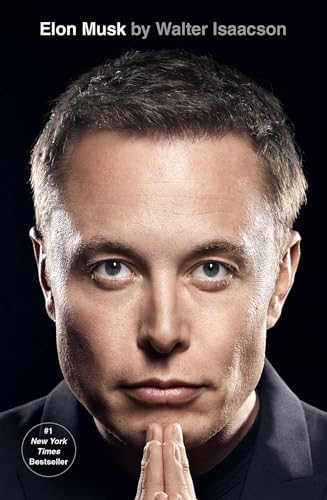
Elon Musk is a biography by Walter Isaacson, published in 2023. It is based on extensive interviews with Musk, his family, friends, colleagues and critics. Below you will find a part-by-part summary, five key takeaways, ideas worth remembering and a note on who will enjoy it.
Content note: Includes childhood bullying, family abuse and workplace conflict.
Key Concepts
- Elon Musk: The founder and leader of SpaceX and Tesla.
- Errol Musk: Elon's father, whose behavior shaped Elon.
- Kimbal Musk: Elon's brother and early business partner.
- SpaceX: Musk's rocket company.
- Tesla: Musk's electric car company.
The Main Ideas, Part by Part
Childhood
Musk grew up in Pretoria, South Africa. He was a bookish, socially awkward boy who was bullied badly at school. His father, Errol, was often harsh and unpredictable. Isaacson argues that these early experiences gave Musk a tolerance for risk and a fierce, sometimes harsh intensity. As a teenager, Musk moved to Canada and then to the United States.
Early companies
Musk and his brother Kimbal founded Zip2, an online business directory, and sold it. Musk then founded X.com, which merged with a rival to become PayPal. When eBay bought PayPal, Musk became wealthy. He used his money to start new ventures in areas others thought impossible.
SpaceX and Tesla
In 2002, Musk founded SpaceX to cut the cost of reaching space, with the long-term dream of settling Mars. Early rockets failed, and the company nearly went bankrupt. He also invested in Tesla and became its leader, aiming to make electric cars mainstream. Both companies faced crises, but they survived and grew.
Management style
Isaacson describes Musk's intense, demanding way of working. He sets near-impossible deadlines, questions every requirement and fires people quickly. He takes huge risks, such as betting the company on the Model 3. Colleagues describe him as brilliant, impulsive and sometimes cruel. His personal life, including many children with different partners, is often complicated.
Twitter and beyond
In 2022, Musk bought Twitter, later renaming it X. He cut staff, changed policies and stirred controversy. The book also covers Starlink's role in the war in Ukraine, his work on AI and Neuralink and his conflicts with critics. Isaacson concludes that Musk's flaws and strengths are tied together, and that his drive has changed several industries.
5 Key Takeaways
- Big goals can drive big achievements.
- Risk-taking can lead to success or failure.
- Leadership styles have costs.
- Childhood experiences shape adults.
- Innovation often comes from questioning assumptions.
Ideas Worth Remembering
These are paraphrased, not direct quotes:
- Strengths and flaws can come from the same source.
- Persistence through failure matters.
- Power brings responsibility.
Who Should Read Elon Musk?
Read Elon Musk if you are interested in technology, business, space or the people who shape the modern world. It suits adults.
About Walter Isaacson
Walter Isaacson (born 1952) is an American journalist and biographer. He has been the editor of Time magazine, the chairman of CNN and the head of the Aspen Institute. His biographies include Steve Jobs, Einstein, Benjamin Franklin, Leonardo da Vinci and The Code Breaker, about the scientist Jennifer Doudna. He teaches history at Tulane University.
Questions to Think About After Reading
These prompts work for solo reading, a book club or a classroom discussion of Elon Musk:
- How did Musk's childhood shape his personality?
- Is Musk's management style effective or harmful?
- What can we learn from his successes and failures?
How to Use This Summary
Use this page as a quick reference before a book club meeting, an exam, or a decision about whether Elon Musk is worth your time. The takeaways are written to stand on their own. If a point interests you, go back to the book for the author's full argument, examples and evidence, which no short summary can replace.
A Note on Accuracy and Spoilers
This summary is based on the published text of Elon Musk, not on any film, series or stage adaptation, which often change the story. Details are kept at the level of the main arguments so that nothing is invented. Editions differ slightly in length and wording, so page numbers and small details may vary between copies.
Should You Read the Book?
Yes, if you want a detailed, balanced picture, though it is long and some readers find it too forgiving.
Check price of Elon Musk on Amazon
What to Read Next
- Steve Jobs by Walter Isaacson: a biography of Apple's founder
- Liftoff by Eric Berger: the early days of SpaceX
- Shoe Dog by Phil Knight: a founder's story of risk and growth
Related: Steve Jobs by Walter Isaacson: Summary and Key Takeaways
Frequently Asked Questions
What is Elon Musk about?
The life and work of Elon Musk, based on two years of interviews.
Who wrote it?
Walter Isaacson, in 2023.
How did Isaacson research it?
By shadowing Musk for two years and interviewing many people.
What companies does it cover?
Zip2, PayPal, SpaceX, Tesla, SolarCity, Neuralink, The Boring Company and X.
Does it cover Twitter?
Yes, including the 2022 purchase.
Is it critical of Musk?
It shows both his strengths and flaws.
How long is it?
About 670 pages.
What age is it for?
Adults.
Is it easy to read?
Yes, it is written in short chapters.
Did Musk approve the book?
He cooperated but did not control the content.
Is there a film?
A film adaptation was announced.
Who else has Isaacson written about?
Steve Jobs, Einstein and Leonardo da Vinci, among others.
Is it a good book for entrepreneurs?
Yes, as a study of risk-taking, though readers should judge his methods carefully.
Is Elon Musk worth reading?
It depends on what you want. The book is best for readers who want an inside look at a controversial tech leader and his companies. If that describes you, it is likely a good fit. If not, the titles under What to Read Next may suit you better.